
 EN
EN
1. Introduction:Drone Batteries as a Hazardous Waste Stream
The rapid expansion of civilian and commercial drone applications has significantly increased the use of lithium-based batteries, particularly lithium-polymer (LiPo) and lithium-ion (Li-ion) chemistries. These batteries provide high energy density and lightweight construction, enabling extended flight times and stable power delivery. As drones become more integrated into industrial operations, recreational activities, and public services, the volume of depleted or damaged batteries continues to rise.
However, the chemical composition and failure modes of lithium batteries introduce complex challenges at end-of-life. Improper disposal can lead to fires, toxic contamination, and violations of hazardous waste regulations. These risks elevate drone batteries from ordinary consumer waste to regulated hazardous materials. Understanding the scientific, environmental, and regulatory dimensions of drone battery disposal is therefore essential for responsible drone operation and sustainable technological development.
This section establishes the importance of proper disposal and outlines the scope of the discussion, emphasizing why drone batteries require specialized end-of-life management.
2. Hazards Associated with Lithium-Based Drone Batteries
Drone batteries pose significant hazards due to their susceptibility to thermal runaway, a self-accelerating exothermic reaction triggered by internal short circuits, mechanical damage, or overcharging. During thermal runaway, temperatures can exceed 500°C in LiPo cells, releasing flammable gases capable of igniting surrounding materials. Waste management facilities have reported a growing number of fires linked to discarded lithium batteries, demonstrating the severity of the risk.
Beyond fire hazards, lithium batteries contain metals such as cobalt, nickel, and manganese. When improperly disposed of in landfills, these metals can leach into soil and groundwater, posing long-term environmental threats. The release of toxic electrolytes and gases further complicates disposal, making lithium batteries a priority concern for environmental protection agencies.
These hazards collectively justify the classification of drone batteries as hazardous waste. Their disposal requires specialized handling, controlled environments, and compliance with strict regulations to prevent accidents and environmental degradation.
3. Classification and Identification of Drone Battery Types
Identifying the specific battery type is a critical step in determining the appropriate disposal method. LiPo batteries, commonly used in consumer drones and FPV racing systems, employ a soft polymer pouch that is highly sensitive to puncture and swelling. Their flexible structure makes them lightweight but also more vulnerable to physical damage.
Li-ion batteries, typically found in professional drones and proprietary smart battery modules, use rigid casings that offer greater structural stability. Despite this, they still pose significant risks when damaged or improperly handled. High-voltage lithium batteries (LiHV), which charge to higher per-cell voltages, share similar disposal requirements with LiPo batteries due to their comparable chemical composition.
Although nickel-metal hydride (NiMH) batteries are less hazardous, they remain subject to electronic waste regulations. They should not be discarded in household trash, as they contain materials that require controlled recycling processes. Proper classification ensures that each battery is handled according to its risk profile and regulatory status.
4. Determining End-of-Life Conditions for Drone Batteries
Recognizing when a drone battery has reached end-of-life is essential for safe disposal. Indicators such as swelling, leakage, rapid self-discharge, overheating, or physical deformation suggest internal chemical instability. A swollen LiPo battery, for example, contains gas buildup that can rupture the pouch and initiate combustion.
Attempting to recharge or reuse a compromised battery significantly increases the likelihood of failure. Even batteries that appear intact may require disposal if their internal resistance rises to levels that compromise performance or safety. Drone operators must adopt systematic inspection routines to identify batteries that pose disposal-related risks.
End-of-life determination is not only a matter of safety but also a regulatory requirement. Batteries exhibiting hazardous characteristics must be treated as regulated waste and handled accordingly.
5. Technical Procedures for Safe Preparation Prior to Disposal
Safe preparation for disposal involves several technical steps designed to minimize the likelihood of short circuits, fires, or chemical exposure. When a battery remains functional, it should be discharged to a low state of charge using the drone or a dedicated discharging device. Lower stored energy reduces the severity of potential thermal events.
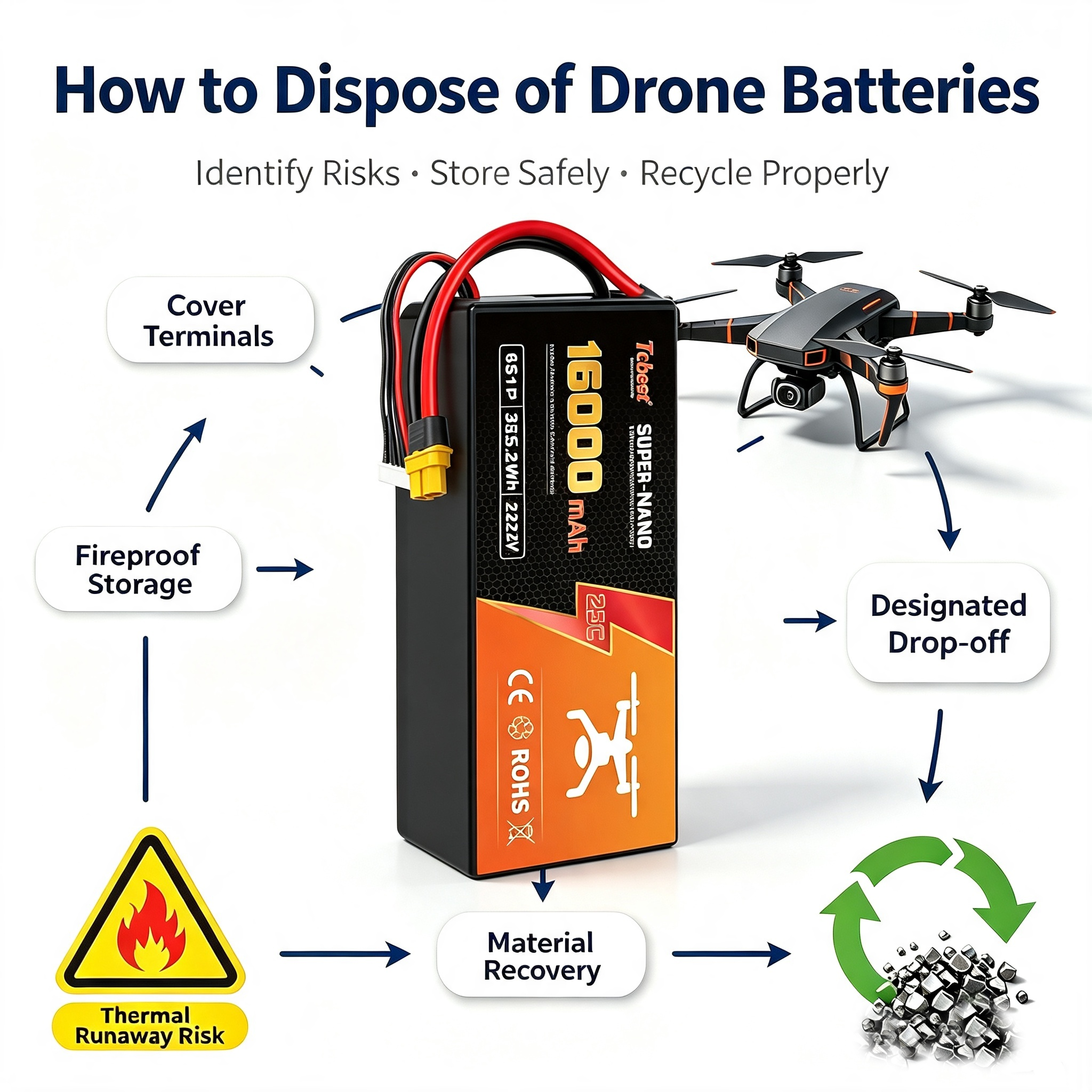
Damaged or swollen batteries, however, should not be discharged, as the process may exacerbate internal instability. Instead, they should be isolated and handled with caution. All terminals must be covered with nonconductive tape to prevent accidental short circuits, and each battery should be placed in an individual plastic or nonconductive bag.
For temporary storage, fire-resistant containers such as LiPo-safe bags or vented metal boxes are recommended. These precautions ensure that the battery remains stable until it reaches a certified disposal facility. Proper preparation is a crucial step in preventing accidents during transport and storage.
6. Disposal Pathways and Recycling Infrastructure
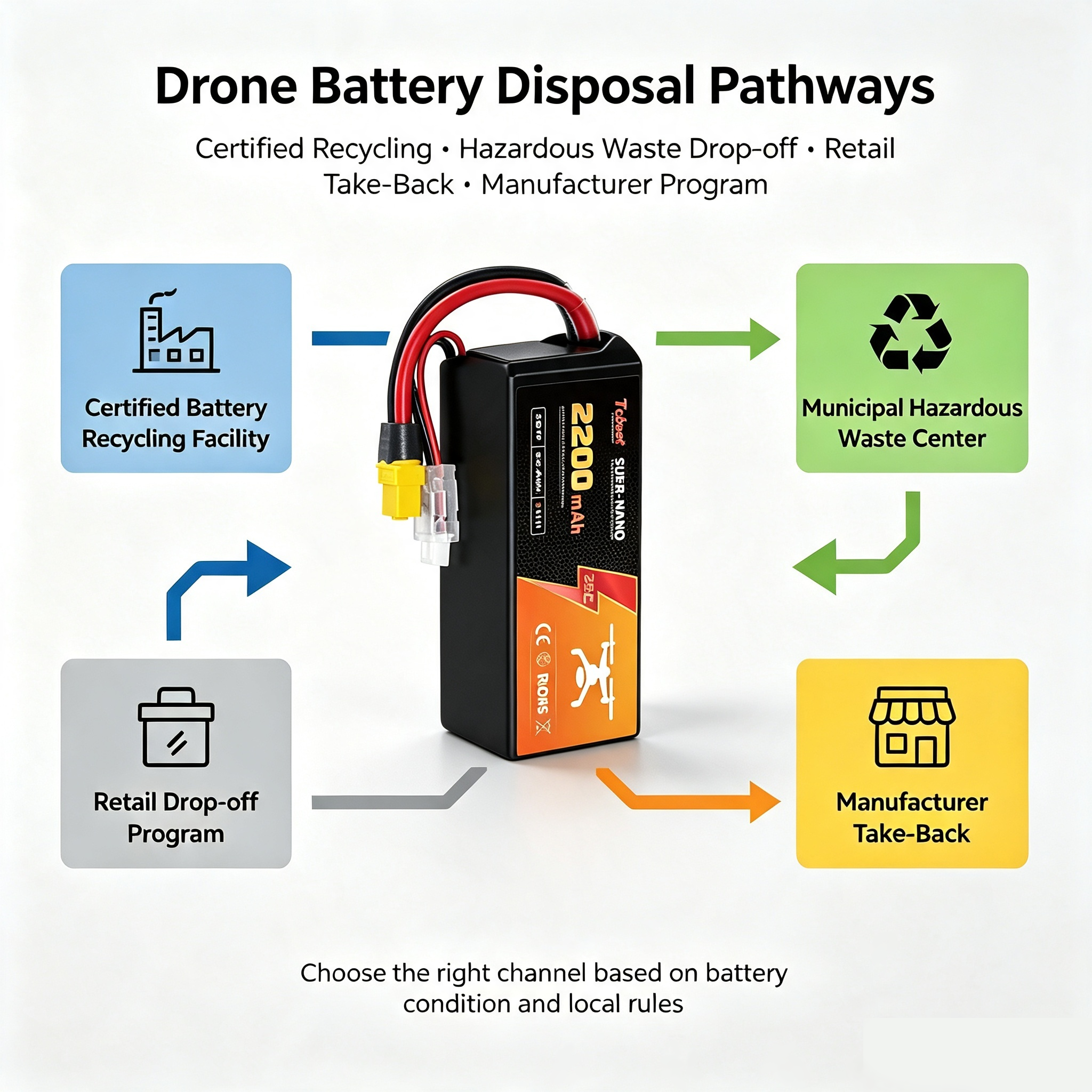
Disposal pathways for drone batteries vary by region but generally fall into several categories. Certified battery recycling facilities represent the most technically appropriate option. These facilities employ controlled processes such as mechanical shredding, hydrometallurgical extraction, and material separation to recover valuable metals while neutralizing hazardous components.
Municipal hazardous waste collection centers also play a significant role in handling damaged or swollen lithium batteries. These centers are equipped to manage hazardous materials and ensure compliance with environmental regulations. Retail drop-off programs offered by electronics stores and hardware retailers provide convenient disposal options for intact batteries, though they may refuse severely damaged units.
Some drone manufacturers maintain take-back programs for proprietary smart batteries, allowing users to return depleted modules for safe recycling. Selecting an appropriate disposal channel requires consideration of battery condition, regulatory requirements, and local infrastructure.
7. Prohibited Disposal Practices and Associated Risks
Improper disposal practices pose significant risks and are prohibited under most regulatory frameworks. Drone batteries must never be discarded in household trash, as this violates hazardous waste regulations and exposes waste management workers to fire hazards. The presence of lithium-based cells in general waste streams has been linked to numerous fires in waste collection vehicles and sorting facilities.
Puncturing, crushing, or incinerating lithium batteries can trigger thermal runaway and release toxic gases. These actions significantly increase the likelihood of catastrophic failure. Damaged batteries must not be shipped without proper hazardous materials packaging, labeling, and documentation, as lithium batteries are classified as Class 9 dangerous goods under transportation regulations.
Violations of disposal regulations can result in substantial fines and legal liability. These restrictions highlight the importance of adhering to established disposal protocols and understanding the consequences of improper handling.
8. Regulatory Frameworks Governing Drone Battery Disposal
Regulatory frameworks governing drone battery disposal vary internationally but share common principles. In the United States, lithium batteries fall under the Resource Conservation and Recovery Act (RCRA), which classifies them as hazardous or universal waste depending on condition and composition. This classification determines how batteries must be stored, transported, and processed.
The Department of Transportation (DOT) regulates the transport of lithium batteries under 49 CFR Parts 171–180, imposing strict packaging and labeling requirements. Several states, including California and New York, enforce additional rules mandating retailer participation in battery recycling programs or imposing higher penalties for improper disposal.
In the European Union, the Waste Electrical and Electronic Equipment (WEEE) Directive and the Battery Directive require producers to finance collection and recycling systems. These regulations reflect a broader commitment to extended producer responsibility and environmental sustainability. Together, these frameworks emphasize safety, environmental protection, and accountability.
9. Temporary Storage Requirements Prior to Final Disposal
Temporary storage of drone batteries prior to disposal requires careful management. Batteries should be stored at partial charge rather than fully charged, as lower energy levels reduce the severity of potential failures. This practice is particularly important for LiPo batteries, which are more sensitive to overcharging and physical stress.
Fire-resistant containers, clear labeling, and separation from flammable materials are essential for safe storage. Damaged batteries should be isolated from functional ones to prevent accidental charging or handling. These measures ensure that batteries remain stable until they can be transported to appropriate facilities.
Proper storage is not only a safety measure but also a regulatory requirement in many jurisdictions. Facilities that store hazardous waste must comply with strict guidelines to prevent accidents and environmental contamination.
10. Environmental, Economic, and Safety Benefits of Proper Disposal
Proper disposal of drone batteries carries significant environmental, safety, and economic benefits. Recycling reduces the demand for mining critical minerals such as lithium and cobalt, supporting a circular economy and reducing ecological degradation. The recovery of valuable materials also contributes to resource efficiency and reduces manufacturing costs.
Safe disposal prevents fires, protects waste management infrastructure, and reduces the risk of toxic contamination. These benefits extend beyond individual drone operators to communities and ecosystems affected by improper waste handling. Compliance with regulatory requirements also shields drone operators from legal penalties and contributes to broader sustainability goals.
As drone usage continues to expand across industries, establishing standardized disposal practices becomes increasingly important for environmental stewardship and technological responsibility.
11. Conclusion:Responsible End-of-Life Management for Drone Batteries
Drone batteries represent a unique intersection of advanced energy storage technology and hazardous waste management. Their chemical instability, environmental impact, and regulatory classification necessitate specialized disposal procedures grounded in scientific understanding and legal compliance. By identifying battery types, recognizing failure indicators, preparing batteries safely, and utilizing certified disposal pathways, drone operators can mitigate risks and contribute to sustainable technological development.
Proper disposal is not merely a technical requirement but a critical component of responsible drone ownership and environmental protection. As drones continue to evolve and proliferate, the importance of safe and sustainable battery management will only increase.
Drone batteries pose fire and environmental risks, requiring careful identification, inspection, safe preparation, and regulated disposal. Proper recycling through certified facilities prevents contamination, supports material recovery, and ensures legal compliance. Responsible end-of-life managem.
Table of Contents
- 1. Introduction:Drone Batteries as a Hazardous Waste Stream
- 2. Hazards Associated with Lithium-Based Drone Batteries
- 3. Classification and Identification of Drone Battery Types
- 4. Determining End-of-Life Conditions for Drone Batteries
- 5. Technical Procedures for Safe Preparation Prior to Disposal
- 6. Disposal Pathways and Recycling Infrastructure
- 7. Prohibited Disposal Practices and Associated Risks
- 8. Regulatory Frameworks Governing Drone Battery Disposal
- 9. Temporary Storage Requirements Prior to Final Disposal
- 10. Environmental, Economic, and Safety Benefits of Proper Disposal
- 11. Conclusion:Responsible End-of-Life Management for Drone Batteries