
 EN
EN

I. Introduction
The main power sources for drones are lithium-ion batteries and lithium-polymer (LiPo) batteries. With their high energy density, lightweight design, and stable discharge performance, they have become the industry standard, meeting the high-current output requirements for drone hovering, acceleration, and wind resistance.
However, many pilots encounter the same confusion: "My battery could fly for 25 minutes when brand new, but after six months of use, the flight time has dropped to only 15 minutes – what's the reason?"
This article will systematically answer these questions, explaining battery cycle definitions, key factors affecting flight time, maintenance solutions, and how to handle swollen batteries, helping everyone extend battery life and ensure flight safety.
II. How Drone Lithium Batteries Work
The core advantages of lithium batteries are their high operating voltage, high energy density, and low self-discharge rate. At the same weight, they can store more electrical energy, providing longer endurance for drones.
During charge and discharge, lithium ions move back and forth between the positive and negative electrodes. When discharging, lithium ions move from the negative electrode through the electrolyte to the positive electrode, releasing electrons to power external devices. The charging process reverses this movement. This reversible "rocking-chair reaction" mechanism gives lithium batteries their rechargeable capability.
Compared to nickel-metal hydride batteries and lead-acid batteries, lithium batteries have no memory effect and offer a stable discharge voltage plateau, making them very suitable for drones that require frequent starts, stops, and sudden power changes.
III. Core Concept of Battery Cycle Count
Definition of one complete battery cycle: the cumulative discharge of energy equal to the battery's rated capacity (for example, a 5000mAh battery completes 1 cycle after discharging a cumulative 5000mAh). Important note: one cycle does not have to be completed in a single discharge. Using 60% today and the remaining 40% the next day – these two partial discharges together count as one complete cycle.
In theory, each cycle causes irreversible micro-damage to the internal electrode materials, leading to capacity degradation and increased internal resistance. Conventional lithium batteries, after 300-500 cycles, will have their remaining capacity drop below 80% of the original capacity, and the actual flight time will be significantly reduced.
The actual cycle life is affected by cell quality, chemistry system, charge/discharge habits, and usage environment. High-quality cells under mild load conditions can exceed 500 cycles; inferior cells under harsh conditions may show severe performance degradation in less than 200 cycles.
IV. Main Reasons for Short Drone Flight Duration
Many factors can significantly shorten flight time. Common causes are summarized below:
Category of Factors |
Detailed Explanation |
High-Power Loads |
Motors draw continuous high current to maintain lift; gimbal cameras and video transmission systems consume extra power. |
Battery Weight |
Higher-capacity batteries weigh more, further increasing the flight load of the aircraft. |
High-Rate Discharge |
Frequent full-throttle acceleration generates instantaneous high current and accelerates internal cell aging. |
Deep Discharge |
Repeatedly discharging the battery down to 3.0V or below seriously damages the chemical structure of cells. |
Natural Degradation |
Under normal use, battery capacity declines irreversibly as the cycle count rises. |
Cell Imbalance |
Cells within a multi-series pack show inconsistency in voltage, internal resistance and capacity; overall pack performance is limited by the weakest cell. |
Improper Operation |
Overcharging (per-cell voltage >4.25V) and over-discharging (per-cell voltage <2.8V) will rapidly damage the battery. |
Air Resistance |
Aerodynamic drag rises sharply during high-speed flight, requiring sustained high power to maintain flight speed. |
Environmental Impact |
Strong winds, low temperatures (below 10°C) and high altitudes reduce the available capacity and discharge efficiency of batteries. |
V. Practical Solutions to Extend Single Flight Time
Based on the causes above, here are feasible measures to improve flight time:
1. Choose higher-capacity cells: Within weight limits, select cell models with higher energy density.
2. Reduce excess payload: Remove unnecessary gimbal accessories, protective covers, and external equipment to lower the overall takeoff weight.
3. Fly in suitable conditions: Avoid strong winds and extreme temperatures to reduce unnecessary power consumption.
4. Optimize flight operations: Accelerate and decelerate smoothly; avoid frequent full-throttle climbs and sharp turns.
5. Preheat batteries in cold conditions: Before taking off in temperatures below 15°C, use a battery warmer or body heat to warm the battery to about 20°C.
6. Upgrade to efficient propellers: Choose propeller blades with higher aerodynamic efficiency to reduce cruise power consumption.
7. Enable power-saving mode: If the flight controller firmware supports it, enable power-saving mode for long-distance cruising.
8. Follow standard charging practices: Always use a balance charger; avoid ultra-fast charging (charging rate should not exceed 1C).
9. Perform regular maintenance: After every 10-15 cycles, perform a complete charge-discharge maintenance cycle to help the battery management system recalibrate.
VI. Calibration Steps for Smart Drone Batteries
For drones equipped with smart battery management systems, when experiencing power jumps, inaccurate remaining flight time predictions, or unexplained low-voltage warnings, calibration is usually required. Calibration allows the battery management system to relearn the battery's actual capacity and discharge curve.
Standard calibration procedure:
1. Discharge the battery to approximately 5% remaining power (never drain it completely, as this may trigger protection lockout).
2. Let the battery rest for several hours to allow the internal chemistry to stabilize.
3. Use the original charger to continuously charge to 100% without interruption.
4. Repeat the entire process 2-3 times to complete the calibration.
5. Important reminder: As procedures vary by brand and model, be sure to consult the official drone manual before performing calibration.
VII. Complete Maintenance Guidelines for Drone Lithium Batteries
Charging Standards:
- Always use original or officially certified dedicated chargers.
- Never overcharge; do not exceed the voltage limit. Do not leave batteries unattended while charging.
Storage Requirements:
- For long-term storage, keep the battery at 40%-60% charge.
- Store in a dry, cool environment with temperature controlled between 15-25°C.
Discharge Precautions:
- Avoid deep discharge; do not leave the battery below 20% for extended periods.
- When single-cell voltage drops below 3.3V, the risk of battery damage increases sharply.
Balance Charging:
- Always enable balance charging mode for multi-cell battery packs to ensure voltage balance across all cells, preventing premature aging caused by long-term voltage imbalance.
Pre/Post-Flight Inspection:
- Visually inspect the battery before each flight: check for swelling, cracks, leakage, or terminal corrosion. Do not use if any abnormality is found.
Do Not Mix Chargers:
- Chargers with different voltages or different connectors must not be used interchangeably, as this poses fire and explosion risks.
VIII. Analysis of Drone Battery Swelling
Battery swelling occurs when internal chemical reactions produce gas inside the cell, causing the casing to expand. This indicates that irreversible side reactions are taking place inside the battery, presenting fire and explosion risks.
Factor |
Explanation |
Overcharge / Over-discharge |
Voltage exceeds limits, causing electrolyte decomposition and gas generation. |
High Temperature Environment |
Long-term operation or storage under high temperature accelerates internal side reactions. |
Physical Damage |
Squeezing, punctures or heavy impacts damage the separator and trigger internal short circuits that produce gas. |
Natural Cell Aging |
As charge cycles accumulate, internal byproducts build up and eventually lead to gas formation and swelling. |
Manufacturing Defects |
Quality issues such as internal impurities and burrs on electrode sheets. |
Handling Procedure:
1. Immediately stop using the battery if swelling is detected.
2. Never puncture the casing to release gas, as this can easily cause short circuits and fire.
3. Dispose of the battery in compliance with local hazardous waste regulations. Do not throw it in regular trash or incinerate it.
4. Replace with a new battery directly. Do not attempt to repair or continue using swollen batteries.
IX. Conclusion
Understanding battery cycle principles and daily maintenance methods not only significantly extends battery life but also serves as a fundamental guarantee for flight safety. Standardized charge-discharge operations, proper storage conditions, and routine visual inspections are the three lines of defense against mid-air failures and crashes.
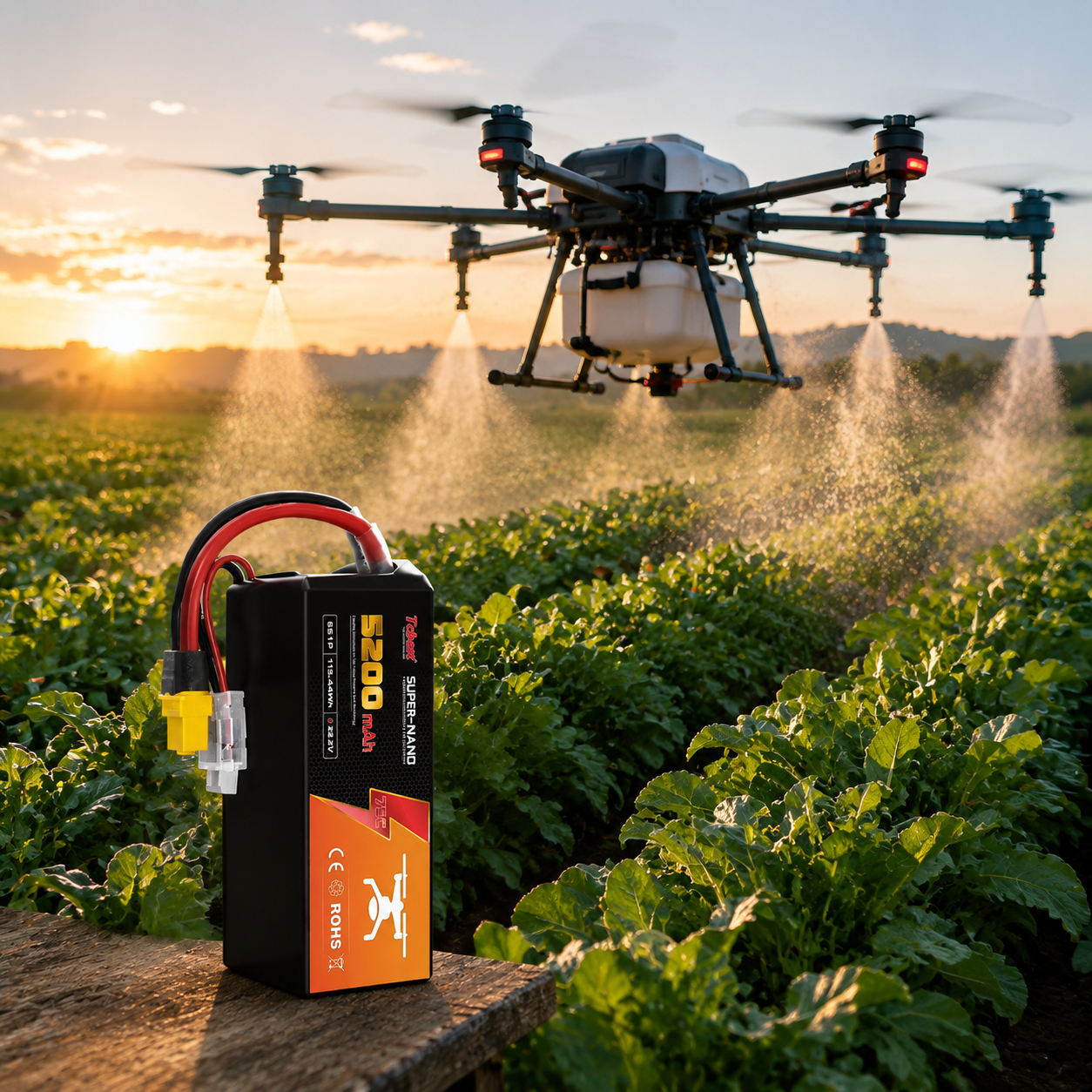
In practice, selecting the right battery model and compatible charging equipment is equally important. Tcbest drone batteries and industrial smart battery solutions are widely used in aerial photography, surveying and mapping, and agricultural protection, providing professional technical support.
For more information on battery selection and maintenance, please feel free to contact our technical team for detailed consultation.
This article explains drone battery cycle definitions, capacity degradation rules, and key factors shortening flight time. It covers proper charging, calibration, daily maintenance, and swollen battery handling to help users extend battery lifespan and ensure safe drone flight.
Table of Contents
- I. Introduction
- II. How Drone Lithium Batteries Work
- III. Core Concept of Battery Cycle Count
- IV. Main Reasons for Short Drone Flight Duration
- V. Practical Solutions to Extend Single Flight Time
- VI. Calibration Steps for Smart Drone Batteries
- VII. Complete Maintenance Guidelines for Drone Lithium Batteries
- VIII. Analysis of Drone Battery Swelling
- IX. Conclusion