
 EN
EN
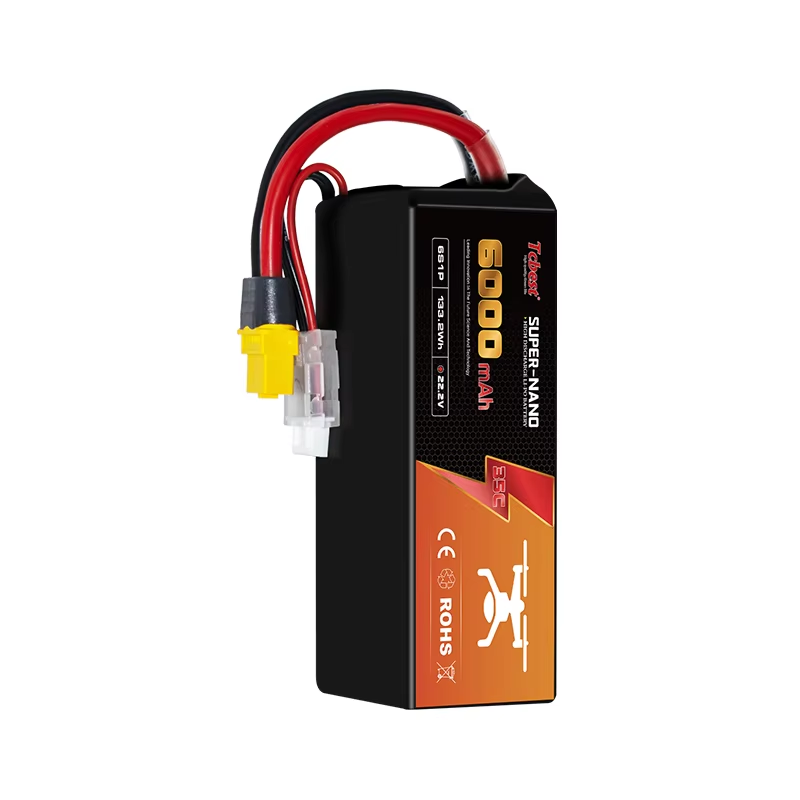
I. Definition and Working Principle of LiPo Batteries
LiPo batteries belong to the lithium-ion battery family, distinguished by their use of a polymer electrolyte (typically a gel-like polymer) in place of the conventional liquid electrolyte. This gives them greater design freedom and improved safety. LiPo cells are typically manufactured in a “polymer pouch” format, enabling flat, shape-customizable battery packs that optimize aerodynamic performance and weight distribution in UAVs.
Key Working Principles
Charge and discharge processes rely on the shuttling of lithium ions between the positive and negative electrodes, with the polymer electrolyte serving as the ion-conducting medium.
High energy density allows more energy to be stored per unit weight or volume, which is critical for aerial photography, cargo transport, and other payload-intensive missions.
Thin, customizable cell dimensions and shapes give designers flexible layout options within the fuselage, enhancing payload capacity and stability.
Comparison with Traditional Batteries
Compared to cylindrical lithium-ion cells, LiPo’s flexible, slim profile offers higher discharge rates and better energy density distribution, while also reducing weight and volume.
Relative to non-polymer electrolyte batteries, LiPo provides significant advantages in mechanical adaptability and design freedom.
II. Critical Role of LiPo Batteries in UAV Performance
Extended Flight Time from High Energy Density
The high energy density of LiPo directly translates into longer endurance, especially in applications carrying high-quality sensors, cameras, or other payloads where the endurance gain is particularly pronounced.
High Discharge Performance for High-Power Demands
UAVs require substantial instantaneous power during takeoff, high-speed maneuvers, and complex mission profiles. LiPo’s high discharge rates (C-ratings) deliver stable, abundant power output, ensuring responsive control and flight stability.
Design Flexibility in Shape and Weight
Customized battery geometries and sizes allow better integration into compact airframes, optimizing weight distribution and aerodynamic efficiency while reducing drag and energy losses.
Stable Voltage and Flight Performance
LiPo batteries maintain relatively stable voltage during discharge, helping sensors and flight controllers receive consistent power levels, thereby improving the reliability of flight control algorithms and overall responsiveness.
III. Enablers of Efficient Operation: From Materials to System Design
Cell and String Design
Optimizing the chemical composition, internal impedance, and thermal characteristics of individual cells reduces energy losses and heat generation. String design focuses on balance management, discharge consistency, and thermal uniformity to avoid capacity loss or safety risks due to hot spots.
Thermal Management and Heat Dissipation
High-power discharge generates heat buildup; excessive temperatures reduce capacity, shorten lifespan, and may compromise safety. Therefore, heat-sink design, thermal interface material (TIM) selection, and airframe ventilation become essential system-level optimizations.
Role of the Battery Management System (BMS)
The BMS monitors voltage, temperature, current, and state of charge, executing cell balancing, protection (overcharge, over-discharge, short-circuit, overheating, etc.), and data logging. For LiPo, a BMS significantly enhances safety, extends service life, and provides critical diagnostic data for maintenance and troubleshooting.
Charge/Discharge Strategies and Charging Infrastructure
Refined charge/discharge protocols (e.g., staged charging, trickle balancing, temperature-controlled charging) help preserve capacity, reduce self-discharge, and minimize parasitic chemical reactions. The voltage/current accuracy, charging profile, and thermal control of the charger directly affect charging efficiency and battery health.
IV. Intelligent BMS: A Key Component of Drone LiPo Batteries
Safety and Reliability Enhancement
The BMS provides overcharge, over-discharge, short-circuit, and temperature protection, automatically disconnecting the circuit under extreme conditions to reduce the risk of fire or explosion.
State Monitoring and Predictive Maintenance
By estimating remaining capacity, state of health, and internal resistance changes in real time, the BMS can issue early warnings and schedule maintenance, avoiding sudden failures that could abort missions.
Cell Balancing and Lifecycle Management
Individual cells in a LiPo pack may differ in capacity. The BMS’s balancing function ensures uniform charge/discharge across all cells, improving overall pack capacity utilization and cycle life.
Data Logging and Telemetry Integration
The BMS uploads operational data, temperature profiles, and fault histories to ground stations, helping operators assess performance and refine designs.
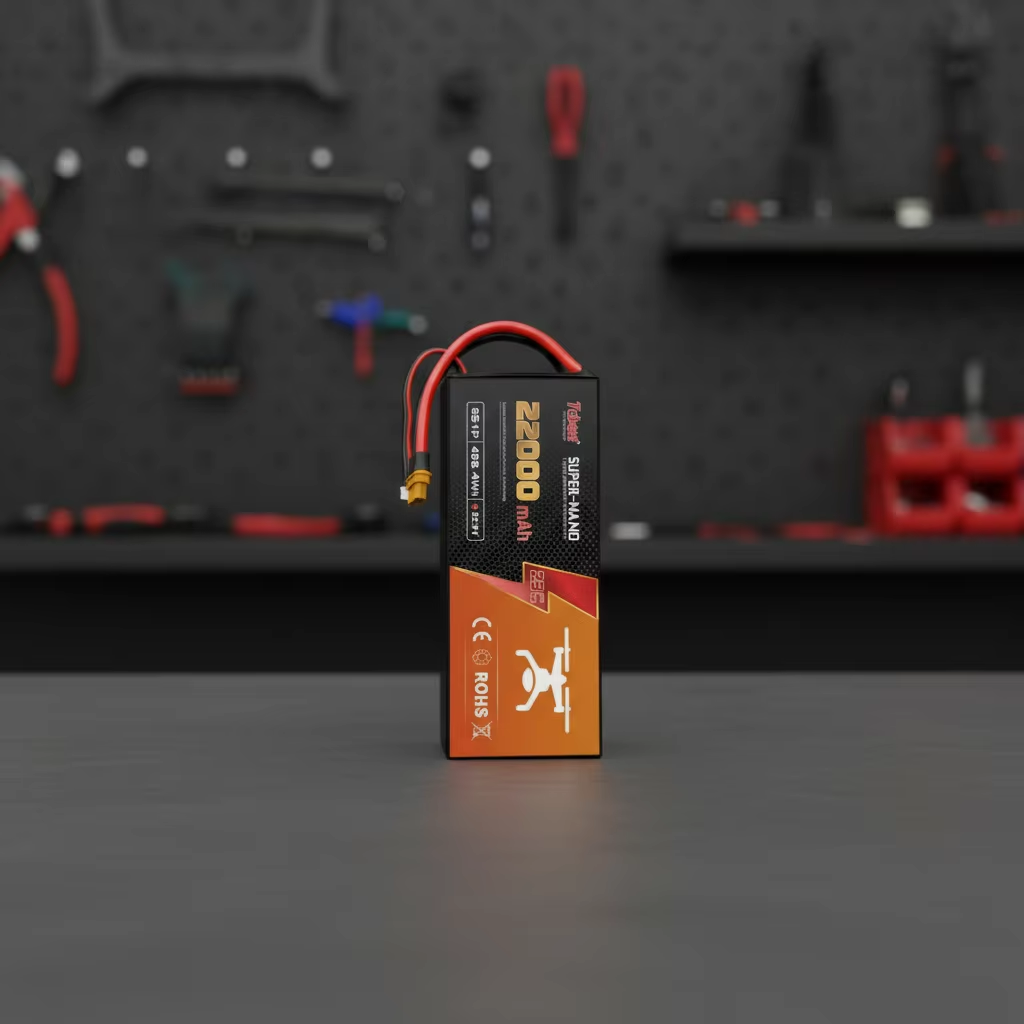
V. Differences Between LiPo and Other Lithium-Battery Types in UAVs
LiPo vs. Li-ion
LiPo offers easier shape customization, lighter weight, and higher discharge rates, making it suitable for high-agility and lightweight UAVs.
Li-ion generally has advantages in volumetric efficiency and cost, and may deliver slightly longer endurance per equivalent weight, but is less flexible in ultra-thin or high-discharge scenarios.
LiPo vs. Lithium Iron Phosphate (LiFePO₄)
LiFePO₄ boasts longer cycle life and better thermal stability, but its lower energy density and added weight make it suboptimal for many applications.
LiPo excels in high energy density and lightweighting, especially for professional UAVs that need to minimize total weight to maximize endurance and agility.
Safety Considerations
LiPo batteries are sensitive to mechanical damage, high temperatures, and overcharging. Therefore, high-quality casing materials, effective thermal management, and robust BMS protection strategies are essential to mitigate risks.
VI. How BMS Technology Improves Flight Safety and Reliability
Multi-Layer Protection Design
Combining hardware protections (e.g., circuit breakers, thermal fuses) with software safeguards (e.g., safe power-down, emergency landing logic) significantly boosts system robustness.
Precise Thermal Management and Temperature Control
The BMS works in concert with the airframe cooling system, regulating charge/discharge and overall pack temperature in real time to prevent localized hot spots that could degrade capacity or cause safety incidents.
Health Assessment and Remaining Life Prediction
Through per-cell monitoring and statistical analysis of the entire pack, the BMS predicts the state of health and remaining cycle life, helping formulate safe flight plans and maintenance intervals.
Pack Coupling and Redundancy Strategies
In high-reliability missions, multiple battery packs are often connected in parallel/series, with redundant power paths, ensuring that even if one pack fails, basic flight capability is maintained.
VII. Value Analysis of Drone LiPo Batteries
Performance Value
LiPo’s high energy density and high discharge rates directly improve flight time, payload capacity, and maneuverability, reducing mission completion time and increasing success rates.
Operating Costs and Lifecycle
Although LiPo batteries may have higher unit costs and maintenance expenses, high-quality BMS and proper charge/discharge practices extend cycle life, lowering total long-term costs. Regular health assessments avoid costly on-site failures.
Safety and Compliance
Equipping batteries with advanced BMS and a comprehensive safety management system helps operators meet safety and regulatory requirements in areas such as aerial photography, surveying, and emergency response, while reducing liability risks.
Environmental and Sustainability Aspects
When managed through efficient recycling and reuse, LiPo batteries can reduce weight and resource consumption while lowering environmental impact. Investments in battery recycling and remanufacturing are increasingly seen as integral to corporate sustainability.
VIII. Core Advantages of LiPo Batteries
High Energy Density and Lightweighting – More energy per unit weight reduces overall aircraft weight, improving endurance and payload capacity.
Design Flexibility – Flat, slim cell structures enable more compact airframes with better aerodynamics.
High Discharge Capability – Provides stable instantaneous power for rapid-response and high-power scenarios such as takeoff, sharp turns, and climbs.
Mature Industry Ecosystem – Wide cell specifications, established manufacturing processes, and comprehensive BMS solutions simplify system integration and facilitate repairs and replacements.
IX. Economic and Environmental Benefits
Economic Gains
Despite higher upfront costs, LiPo’s weight optimization, extended endurance, and payload flexibility yield higher mission throughput and operational efficiency. For commercial UAV operators, cost per mission often decreases.
Environmental Impact
When LiPo batteries are recycled and remanufactured, raw material consumption and waste burdens are reduced. Growing industry investment in battery-material recycling contributes to corporate social responsibility and regulatory compliance.
X. Latest Developments and Future Trends
Balancing High Energy Density and Safety
Ongoing research focuses on increasing energy density while reducing thermal management challenges, improving thermal stability, and enhancing electrolytes and separator materials for greater safety.
Deep Integration of Intelligent BMS
Future BMS will be more intelligent, leveraging cloud-based data analytics, AI-driven predictive maintenance, and seamless ground-station integration to achieve higher levels of flight safety and maintenance efficiency.
Charge/Discharge Strategies and Fast-Charging Technologies
Progress aims to shorten charging times without adversely affecting battery life, while ensuring temperature control and safety during charging. This trend is especially vital for rapid-turnaround operations.
Environmental Protection and Circular Economy
Battery recycling, reuse, and material circularity are becoming industry consensus, pushing design-for-recycling approaches that lower overall environmental costs and improve resource efficiency.
Novel Materials and Structural Innovations
Advances include improved polymer electrolytes, exploration of solid-state batteries, and stronger separator films and thermal management materials. These innovations target higher energy density, longer cycle life, and enhanced safety.
XI. Defining Role in Future Intelligent UAV Energy Systems
LiPo batteries, together with their intelligent BMS companions, will continue to be the core driver of intelligent UAV energy systems. As demands for higher payloads, longer endurance, and more complex missions grow, LiPo’s flexibility, performance, and system-integration capabilities will push the application boundaries of UAVs in commercial, environmental monitoring, disaster response, and other domains. Through sustained innovation in materials, thermal management, BMS, and system-level design, LiPo batteries are poised to become a defining force in the future of intelligent UAV power systems.
Conclusion
The rise of LiPo batteries in the UAV sector is a direct response to the demand for high energy, low weight, strong discharge, and flexible design. Their synergy with intelligent BMS ensures flight safety, reliability, and efficient mission execution. Although challenges remain in thermal management, safety, and cycle life, continuous industry innovation—especially in materials science, system integration, and data-driven predictive maintenance—is steadily lowering these barriers. Looking ahead, LiPo batteries will continue to lead the evolution of UAV energy systems, providing a dependable power source for smarter, more efficient flight operations.
This comprehensive overview examines LiPo batteries for UAVs, emphasizing high energy density, high discharge capability, and design flexibility. It details the intelligent BMS for safety and longevity, compares LiPo with Li-ion and LiFePO₄, addresses thermal management, and outlines future trends in fast charging, materials, and circular economy.
Table of Contents
- I. Definition and Working Principle of LiPo Batteries
- II. Critical Role of LiPo Batteries in UAV Performance
- III. Enablers of Efficient Operation: From Materials to System Design
- IV. Intelligent BMS: A Key Component of Drone LiPo Batteries
- V. Differences Between LiPo and Other Lithium-Battery Types in UAVs
- VI. How BMS Technology Improves Flight Safety and Reliability
- VII. Value Analysis of Drone LiPo Batteries
- VIII. Core Advantages of LiPo Batteries
- IX. Economic and Environmental Benefits
- X. Latest Developments and Future Trends
- XI. Defining Role in Future Intelligent UAV Energy Systems
- Conclusion