
 EN
EN
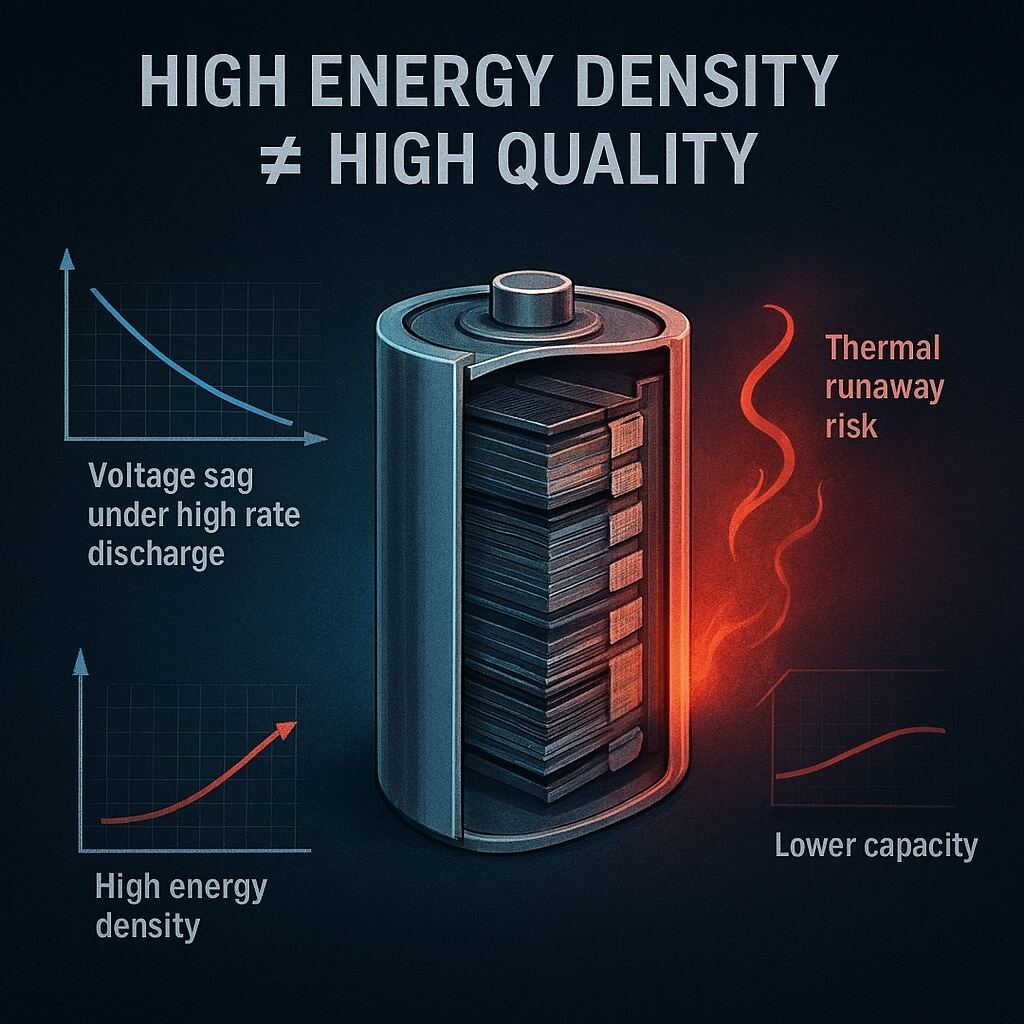
၁။ ဘက်ထရီအကဲဖြတ်ခြင်းတွင် စွမ်းရည်အမှားအမှင်
“ပိုမိုများပေါ်သော စွမ်းရည်သည် ပိုမိုကောင်းမွန်သော ဘက်ထရီကို ညွှန်ပေးသည်” ဟူသော အယူအဆသည် ယေဘုယျအားဖြင့် အလွန်ထင်မှားစေသည့် အယူအဆဖြစ်သည်။ စွမ်းအင်ပိုမိုများပေါ်စွာ သိမ်းဆည်းနိုင်သည့် ဘက်ထရီသည် အလွန်ရှည်လျားသော အလုပ်လုပ်ချိန်၊ ပိုမိုကောင်းမွန်သော ခံနိုင်ရည်နှင့် ပိုမိုနည်းပါးသော အတားအဆီးများကို ပေးစွမ်းနိုင်သည်ဟု ထင်မှားစေပါသည်။ ဤအရည်အသွေးများသည် စားသုံးသူအီလက်ထရွန်နစ်ပစ္စည်းများ၊ လူမပါသော လေယာဉ်များ (UAVs)၊ ရိုဘော့စ်များနှင့် လျှပ်စစ်ယာဉ်များတွင် အထူးအရေးကြီးသည်။ သို့သော် အင်ဂျင်နီယာလုပ်ငန်းလုပ်ဆောင်မှုများ၏ လက်တွေ့အခြေအနေများ—အထူးသဖြင့် ပြောင်းလဲနေသော လေးနက်မှုများ (dynamic load profiles)၊ ပိုမိုတင်းကျပ်သော အပူချိန်ဆိုင်ရာ ကန့်သတ်ချက်များ၊ ရှည်လျားသောကာလ ယုံကြည်စိတ်ချရမှုလိုအပ်ချက်များနှင့် လုံခြုံရေးအရ အရေးကြီးသော ပတ်ဝန်းကျင်များတွင်—ကြည့်လျှင် ဘက်ထရီ၏ စွမ်းဆောင်ရည်ကို အကဲဖြတ်ရာတွင် စွမ်းရည်သည် အချက်တစ်ခုသာ ဖြစ်ကြောင်း ထင်ရှားလေးနက်စွာ သိရှိရပါမည်။ မီလီအမ်ပီယာ-နှစ် (mAh) သို့မဟုတ် ဝပ်-နှစ် (Wh) တန်ဖိုးများဖြင့် အလွန်များပေါ်သော အများကြီးကြောင်းပြသော ဘက်ထရီဆဲလ်သည် အခြားအရေးကြီးသော ပါရာမီတာများကို မလုံလောက်စွာ ဒီဇိုင်းထုတ်မှုပေးထားပါက လုပ်ဆောင်ချက်အားဖြင့် အလွန်သာမန်ဖြစ်ခြင်း၊ ပိုမိုမြန်ဆန်စွာ ပျက်စီးခြင်း သို့မဟုတ် လုံခြုံရေးအရ အန္တရာယ်များ ပိုမိုမြင့်မားခြင်းများကို ဖော်ပြနိုင်ပါသည်။
၂။ စွမ်းရည်ကို နားလည်ခြင်းနှင့် ၎င်း၏ လက်တွေ့ကျသော ကန့်သတ်ချက်များ
ဤအကြောင်းအရာကို စနစ်ကျစွာ နားလည်ရန်အတွက် စွမ်းဆောင်ရည်၏ အဓိပ္ပာယ်ဖော်ပြချက်နှင့် ကန့်သတ်ချက်များကို ရှင်းလင်းစေရန် လိုအပ်ပါသည်။ ဘက်ထရီစွမ်းဆောင်ရည်ကို များသောအားဖြင့် mAh၊ Ah သို့မဟုတ် Wh ဖြင့် ဖော်ပြပါသည်။ ဤတန်ဖိုးများသည် ဆဲလ်တစ်လုံးတွင် သိမ်းဆောင်နိုင်သည့် အားသေးသေး (သို့) စွမ်းအင်ပမာဏကို အတိအကျဖော်ပြပါသည်။ သို့သော် ဤတန်ဖိုးများကို စံသတ်မှတ်ထားသည့် ဓာတ်ခွဲခန်းအခြေအနေများအောက်တွင် ရယူထားခြင်းဖြစ်ပါသည်။ ထိုအခြေအနေများတွင် စွမ်းအင်သုတ်သင်မှုနှုန်းနိမ့်ခြင်း၊ အပူချိန်ကို ထိန်းညှိထားခြင်းနှင့် အသုံးပျော်သော စွမ်းအင်သုတ်သင်မှု ကြောင်းကြောင်းများ ပါဝင်ပါသည်။ ထိုအခြေအနေများသည် ပုံမှန်အသုံးပျော်ပစ္စည်းများ၏ လုပ်ဆောင်မှုပတ်ဝန်းကျင်များနှင့် သိသိသာသာ ကွဲပါသည်။ လက်တွေ့အသုံးပျော်မှုများတွင် အမြန်နှုန်းဖြင့် စွမ်းအင်သုတ်သင်ခြင်းသည် ဗို့အားကျဆင်းမှု (voltage sag)၊ အတွင်းပိုင်း အပူထွက်မှုနှင့် လျှပ်ကူးဓာတု ပိုလာရိဇေးရှင်း (electrochemical polarization) တို့ကို ဖော်ပေါ်စေပါသည်။ ထိုအချက်များသည် အသုံးပျော်နိုင်သည့် စွမ်းဆောင်ရည်ကို လျော့နည်းစေပါသည်။ အလားတူပါသည်။ ဘက်ထရီ၏ သက်တမ်းတစ်လုံးလုံးတွင် အပူချိန်မြင့်မှု၊ နက်ရှိုင်းသော စွမ်းအင်သုတ်သင်မှု အကြိမ်ရေ (deep cycling),အမြန်နှုန်းဖြင့် အားသွင်းခြင်းနှင့် အားသွင်းခြင်းများ၊ အရေးပေါ်ဖိအားများ စသည်တို့သည် အက်တီဗ်မော်ဒျူလ်များကို တဖြည်းဖြည်း ပျက်စီးစေပါသည်။ ထိုကြောင့် စွမ်းဆောင်ရည် လျော့နည်းမှုကို အရှိန်မြင့်ပါသည်။ အများအားဖြင့် စွမ်းအင်သိပ်သည့် ဆဲလ်များသည် ပိုမိုပေါ်လ်က်သော ဓာတုဖော်စပ်မှုများ (aggressive chemistries) သို့မဟုတ် ပိုမိုပေါ်လ်က်သော အီလက်ထရောဒ်များ (thinner electrodes) ကို အသုံးပြုခြင်းဖြင့် သူတို့၏ စွမ်းအင်သိပ်သည့် အရည်အသွေးကို ရရှိပါသည်။ သို့သော် ထိုနည်းလမ်းများသည် အများအားဖြင့် ဖွဲ့စည်းပုံဆိုင်ရာ ခိုင်မာမှုနှင့် အပူချိန် တည်ငြိမ်မှုကို ထိခိုက်စေပါသည်။ ထို့ကြောင့် စွမ်းအင်သုတ်သင်မှု အကြိမ်ရေ အနည်းဆုံး ရှုပ်ထွေးသော အကြိမ်ရေ (several hundred cycles) အကြာတွင် ထိုဆဲလ်များသည် ပိုမိုသိမ်မောပ်ပြီး ခိုင်မာသော ဖွဲ့စည်းပုံများဖြင့် ဒီဇိုင်းထုတ်ထားသည့် စွမ်းဆောင်ရည်နိမ့်သော ဆဲလ်များထက် ပိုမိုဆိုးရွားသော လုပ်ဆောင်မှုကို ပေးစေပါသည်။
၃။ အမြင့်မာန်စွမ်းအင်သိပ်သည်ကို အခြေခံသော အင်ဂျင်နီယာလုပ်ငန်းဆိုင်ရာ အကျိုးဆက်များ
ထို့အပြင် စွမ်းအင်မြင့်မားမှု ရှာဖွေရာတွင် ရှုပ်ထွေးသော အင်ဂျင်နီယာဆိုင်ရာ ချိတ်ဆက်မှုများ ပါဝင်သည်။ စွမ်းအင်သိပ်သည်းမှုကို တိုးမြှင့်ရန်အတွက် ပုံမှန်အားဖြင့် ပိုမို တက်ကြွတဲ့ ပစ္စည်းကို ထည့်သွင်းရန် လိုအပ်ပြီး ၎င်းအတွက် ပိုပါးတဲ့ ခွဲခြားရေးကိရိယာများနှင့် ပိုမိုသည်းသည်းတဲ့ အတွင်းပိုင်း တည်ဆောက်မှုများကို လိုအပ်သည်။ ဒီဒီဇိုင်း ရွေးချယ်မှုတွေဟာ ဆွဲငင်အားနဲ့ ပမာဏဆိုင်ရာ စွမ်းအင် သိပ်သည်းမှုကို တိုးတက်စေပေမဲ့ အထူးသဖြင့် လျှပ်စစ်လျှပ်စစ်မြင့်တဲ့ လုပ်ဆောင်မှု (သို့) မတရားတဲ့ အခြေအနေတွေမှာ အပူထွက်ပြေးမှု ခံနိုင်ရည်ကိုလည်း မြှင့်တင်ပေးတယ်။ ဒီညှိနှိုင်းမှုက လေကြောင်းလို စက်မှု စက်ပစ္စည်းတွေ၊ ဆေးဘက်ဆိုင်ရာ ကိရိယာတွေနဲ့ စက်မှု ရိုဘော့တွေလို ကဏ္ဍတွေမှာ စွမ်းဆောင်ရည်နိမ့်ပေမဲ့ ပိုကောင်းတဲ့ အပူတည်ငြိမ်မှုနဲ့ စက်ဝန်းသက်တမ်းရှိတဲ့ Lithium iron phosphate (LiFePO4) ဓာတုဗေဒကို မကြာခဏ အသုံးပြုတာ ရှင်းပြပါတယ်။ NCM နှင့် NCA တို့ကဲ့သို့ စွမ်းအင်ကို ဦးတည်သော ဓာတုပစ္စည်းများမှာ စွမ်းအင်မြင့်မားနိုင်သော်လည်း မကြာခဏ လျှပ်စစ်လွှတ်လွှတ်နှုန်းများနှင့် အတွင်းခံတိုက်ခိုက်မှု မြင့်မားခြင်းများကို ပြသတတ်ပြီး မြန်မြန်ဆန်ဆန် စွမ်းအင်ပေးပို့မှုလိုအပ်သော အသုံးများအတွက် မသင့်တော်ကြပါ။ ဆန့်ကျင်ဘက်အနေနဲ့ စွမ်းအင်အကောင်းဆုံး ဆဲလ်တွေဟာ UAVs အတွက် လိုအပ်တဲ့ တည်ငြိမ်တဲ့ voltage output၊ လျှပ်စစ်ပိတ်ဆို့မှုနိမ့်ပြီး ခိုင်မာတဲ့ transient response လက္ခဏာတွေရဖို့ စွမ်းအင်အချို့ကို စတေးပေးပါတယ်။ အဲဒီမှာ ပေါက်ကွဲမှုစွမ်းအင်နဲ့ ပေါ့ပါးတဲ့ ဒီဇိုင်း နှစ်ခု စွမ်းအင်တိုးလာခြင်းက ယေဘုယျအားဖြင့် ဒြပ်ထုနဲ့ ပမာဏကို တိုးစေပြီး အလေးချိန်ကို အာရုံခံတဲ့ ပလက်ဖောင်းတွေမှာ စနစ်ရဲ့ စုစုပေါင်း ထိရောက်မှုကို လျှော့ချစေနိုင်ပြီး ဒီနည်းနဲ့ စွမ်းအင် သိုလှောင်မှု ပိုမြင့်တဲ့ သီအိုရီ အကျိုးကျေးဇူးတွေကို လျော့ချစေတာလည်း အသိအမှတ်ပြုဖို့
၄။ ဘက်ထရီအရည်အသွေးအတွက် များပါးသော အချက်များပါဝင်သော အဖွဲ့အစည်း
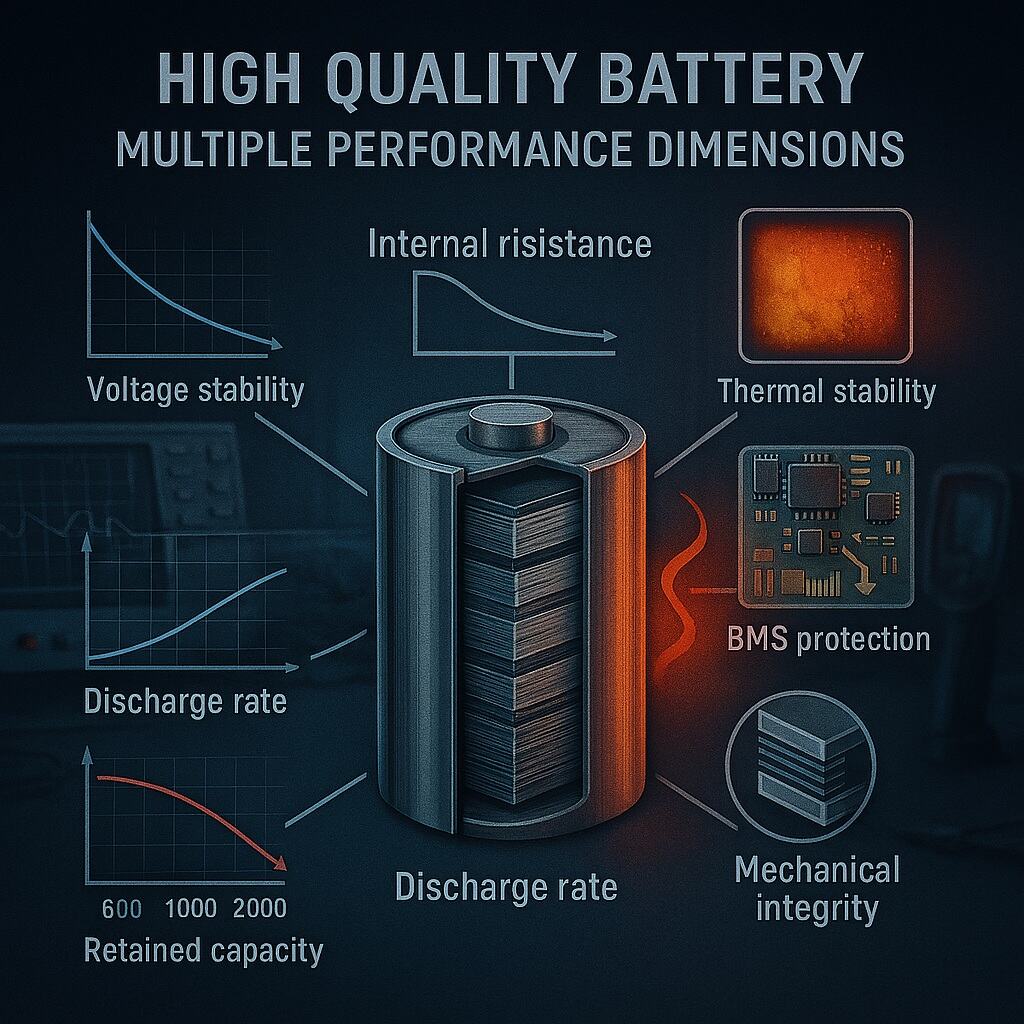
ထို့ကြောင့် “အရည်အသွေးမြင့်” ဘက်ထရီကို သတ်မှတ်ရန်အတွက် များမက်သော အဆင့်များစွာပါဝင်သည့် အကဲဖြတ်မှုစနစ်တစ်ခု လိုအပ်ပါသည်။ အတွင်းပိုင်း ပိုမိုမှုန်းခြင်း (Internal resistance) သည် ဘက်ထရီ၏ အခြေခံမှုန်းခြင်းတန်ဖိုးဖြစ်ပြီး ဘက်ထရီအား တင်ပေးထားသည့် ဖိအားအောက်တွင် ဗို့အားတည်မြဲမှု၊ ပူပိုင်းအပြုအမှုန်းခြင်းနှင့် စွမ်းအင်အသုံးပြုမှု ထိရောက်မှုတို့ကို သက်ရောက်မှုရှိပါသည်။ အတွင်းပိုင်း ပိုမိုမှုန်းခြင်းမြင့်မားသည့် အိုင်ဗီအိုလ်တ်အများအားဖြင့် အများအားဖြင့် အများအားဖြင့် လက်တွေ့အသုံးပျော်မှုအား နိမ့်ပါးစေနိုင်ပါသည်။ ဖွင့်လှစ်မှုစွမ်းရည် (Discharge capability) သည် ပုံမှန်အားဖြင့် C-rate ဖြင့် ဖော်ပြပါသည်။ ဤစွမ်းရည်သည် ဘက်ထရီသည် ဗို့အားပျော့ကျခြင်း၊ ပူပွန်းခြင်း သို့မဟုတ် အသက်တမ်းမြန်မြန်ကုန်ခြင်းများမှ ကင်းကွာပြီး အမြင့်ဆုံးဖိအားကို ထိန်းသိမ်းနိုင်မှုကို ဆုံးဖြတ်ပါသည်။ UAV များသည် မက်မှုန်းမှုများနှင့် ရပ်နေမှုများကို မက်မှုန်းနေသည့်အတွက် ၁၀C မှ ၃၀C အထိ အဆက်မပြတ် ဖွင့်လှစ်မှုစွမ်းရည်သည် အများအားဖြင့် အမည်ဖော်ထားသည့် စွမ်းရည်ထက် ပိုမိုအရေးကြီးပါသည်။ စက်ဘီလ်အရှည် (Cycle life) သည် အခြားသေးငယ်သည့် အရေးကြီးသည့် အချက်ဖြစ်ပါသည်။ ၅၀၀ ကြိမ် အသုံးပြုပြီးနောက် အစပိုင်းစွမ်းရည်၏ ၈၀% ကို ထိန်းသိမ်းနိုင်ခြင်းကို အသုံးပြုမှုအတွက် လက်ခံနိုင်သည့် အဆင့်အဖြစ် သတ်မှတ်ပါသည်။ ၁၀၀၀ ကြိမ်အထိ အသုံးပြုနိုင်ခြင်းကို အလွန်ကောင်းမွန်သည့် အဆင့်အဖြစ် သတ်မှတ်ပါသည်။ ၂၀၀၀ ကြိမ်အထိ အသုံးပြုနိုင်ခြင်းကို စက်မှုလုပ်ငန်းအတွက် အရည်အသွေးမြင့်မှုကို ညွှန်ပြသည့် အချက်အဖြစ် သတ်မှတ်ပါသည်။ အများအားဖြင့် အမြင့်ဆုံးသိပ်သည့် ဘက်ထရီများသည် ဤအချက်တွင် မှုန်းခြင်းမှုမှုန်းမှုမှုန်းမှုမှုန်းမှုမှုန်းမှုမှုန်းမှုမှုန်းမှုမှုန်းမှုမှုန်းမှုမှုန်းမှုမှုန်းမှုမှုန်းမှုမှုန်းမှုမှုန်းမှုမှုန်းမှုမှုန်းမှုမှုန်းမှုမှုန်းမှုမှုန်းမှုမှုန်းမှုမှုန်းမှုမှုန်းမှုမှုန်းမှုမှုန်းမှုမှုန်းမှုမှုန်းမှုမှုန်းမှုမှုန်းမှုမှုန်းမှုမှုန်းမှုမှုန်းမှုမှုန်းမှုမှုန်းမှုမှုန်းမှုမှုန်းမှုမှ......
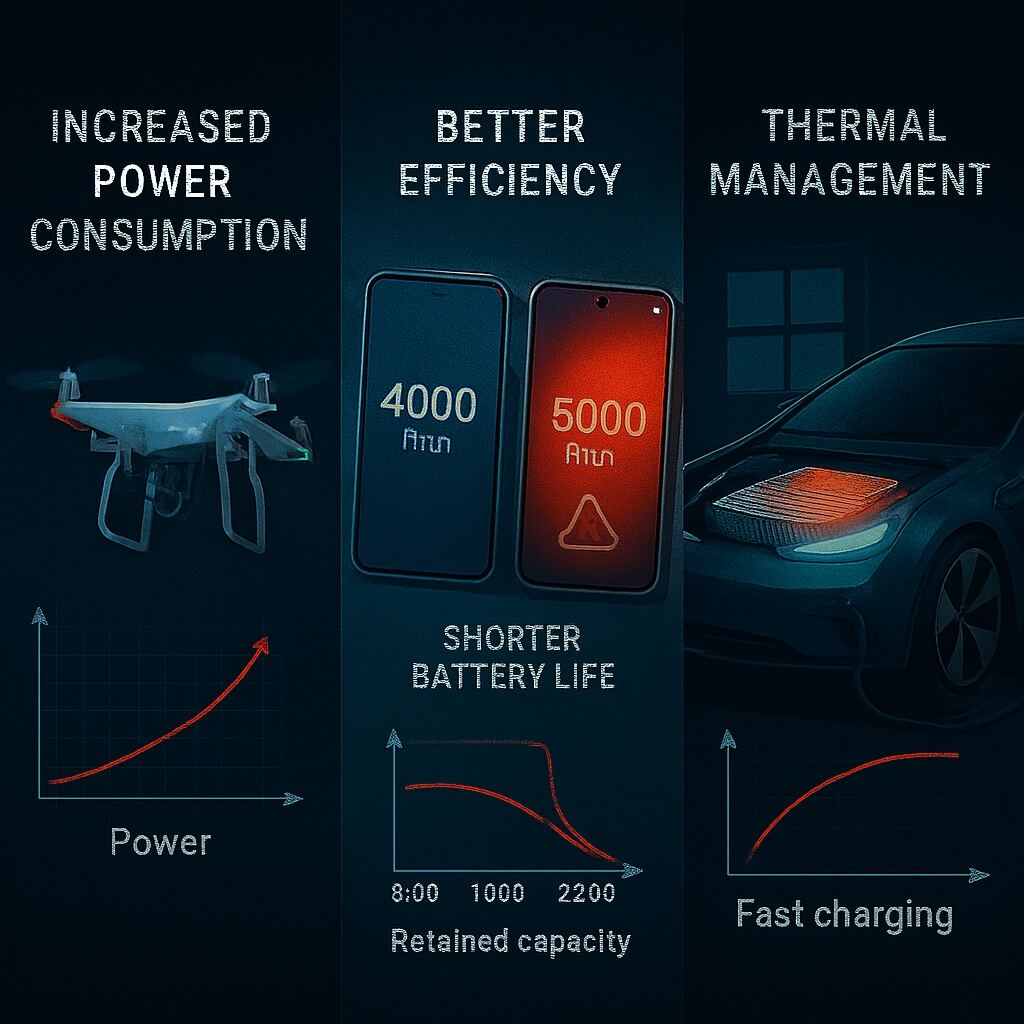
၅။ အသုံးပြုမှုအမျိုးအစားအလိုက် စွမ်းဆောင်ရည် စဉ်းစားရန်များ
ဤအချက်များသည် အသုံးပြုမှုအလွဲအစားအရ အထူးသဖြင့် အရေးပါလာပါသည်။ UAV စနစ်များတွင် အသုံးပြုသူများသည် စွမ်းဆောင်ရည်ပိုမိုမြင့်မားသော ဘက်ထရီကို တပ်ဆင်ခြင်းဖြင့် ပျံသန်းမှုအချိန်ကို ပိုမိုရှည်လျော်စေနိုင်မည်ဟု ယေဘုယျအားဖြင့် ယုံကြည်ကြပါသည်။ လက်တွေ့တွင် ထည့်သွင်းသော အမေးစ်အပိုများသည် စွမ်းအင်သုံးစွဲမှုကို တိုးမောင်းပေးပြီး အတွင်းပိုင်း ပိုမိုမြင့်မားသော ပုံမှန်ခုခံမှု (internal resistance) သည် ဗို့အားနိမ့်ခြင်းကြောင့် ကာကွယ်ရေးစနစ်ကို အလွန်စောစော အသုံးပြုစေနိုင်ပါသည်။ ထို့ကြောင့် ပရော်ဖက်ရှင်နယ် UAV ဘက်ထရီစနစ်များ (ဥပမါ- MC1, MC3 Elite, Smart-MC) သည် စွမ်းအင်သိုလှောင်မှု (capacity) အပြင် အများအားဖြင့် အမြင့်မားသော စွမ်းအင်ထုတ်လုပ်မှုစွမ်းရည် (high discharge capability) နှင့် အပူခံနိုင်ရည် (thermal robustness) တို့ကိုလည်း အလေးပေးပါသည်။ စမတ်ဖုန်းများတွင် ထုတ်လုပ်သူများသည် များသောအားဖြင့် mAh အမှတ်အသားများကို အလေးပေးဖော်ပြလေ့ရှိသော်လည်း အသုံးပြုသူ၏ အတွေ့အကြုံသည် SoC အကောင်အထောင်မှန်ကန်မှု၊ အပူစီမံခန့်ခွဲမှုနှင့် အားသွင်းမှုအယ်လ်ဂေါရီသမ်များပေါ်တွင် ပိုမိုမှီခိုပါသည်။ စွမ်းအင်သုံးစွဲမှုကို ကောင်းမောက်စွာ အရေးပေးထားသော 4000 mAh စက်ပစ္စည်းတစ်ခုသည် စွမ်းအင်သုံးစွဲမှုကို မှန်ကန်စွာ မီးမောင်းထုတ်နိုင်သော 5000 mAh ပြိုင်ဘက်စက်ပစ္စည်းထက် နေ့စဥ်အသုံးပြုမှုတွင် ပိုမိုကောင်းမောက်နိုင်ပါသည်။ လျှပ်စစ်ယာဉ်များတွင် ဘက်ထရီအရည်အသွေးကို အသက်တာတစ်ခုလုံးတွင် အကဲဖြတ်ပါသည်။ စွမ်းအင်သုံးစွဲမှု (capacity) အပြင် ဘက်ထရီအသုံးပြုမှုအကြိမ်ရေ (cycle life)၊ အပူစီမံခန့်ခွဲမှု ထိရောက်မှု၊ မြန်မြန်အားသွင်းနိုင်မှု သ совместимость (fast-charging compatibility) နှင့် မတော်တဆမှုအခြေအနေများတွင် ဘက်ထရီအား အန္တရာယ်ကင်းစေရန် အပိုအကာအကွယ်များ (crash-scenario safety redundancy) တို့သည် စီးပွားရေးအရ အသုံးဝင်မှုနှင့် အသုံးပြုသူများ၏ ယုံကြည်မှုကို ဆုံးဖြတ်ပေးပါသည်။
၆။ စျေးကွက်တွင် မှားယွင်းသော အချက်အလက်များဖော်ပြခြင်းနှင့် စားသုံးသူများအတွက် အန္တရာယ်များ
ကံမကောင်းစွာဖြင့် စျေးကွက်တွင် စားသုံးသူများ၏ ဂဏန်းအထူးကြီးမားသော သတ်မှတ်ချက်များကို နှစ်သက်မှုကို အသုံးချသည့် ထုတ်ကုန်များ အခုထိ ရှိနေပါသည်။ အချို့သော စျေးနောက်ကုန်သော ဘက်ထရီများသည် အလွန်နှေးကွေးသော ပေါက်ကွဲမှုနှုန်း (discharge rates) ဖြင့် စမ်းသပ်ခြင်း၊ ခွင့်ပေးထားသော အနိမ့်ဆုံးဗို့အား (cutoff voltages) ကို အသုံးပြုခြင်း၊ စံသတ်မှတ်ချက် (nominal capacity) နှင့် ပုံမှန်သတ်မှတ်ချက် (typical capacity) ကို ရောထွေးခြင်း သို့မဟုတ် ပြန်လည်အသုံးပြုထားသော (recycled) သို့မဟုတ် အရည်အသွေးနိမ့်သော ဆဲလ်များကို ထည့်သွင်းခြင်းတို့ဖြင့် စွမ်းအားအရှိန်အဟောင်းကို မျှော်မှန်းထက် ပိုမိုကြီးမားသည်ဟု ဖော်ပြကြသည်။ ဤကဲ့သို့သော လုပ်ရပ်များသည် အဆင့်နိမ့်သော ပါဝါဘက်ထရီများနှင့် ဒရုန်းဘက်ထရီများတွင် အဖြစ်များပါသည်။ “၁၀,၀၀၀ mAh” ဟု ကြော်ငြာထားသည့် ထုတ်ကုန်တစ်ခုသည် လက်တွေ့အသုံးပြုမှုတွင် ၅၀၀၀–၆၀၀၀ mAh သာ ပေးစွမ်းနိုင်ပါသည်။ ထိုသို့ဖော်ပြခြင်းသည် စားသုံးသူများကို လွဲမှားစေပါသည်။ ထို့အပါအဝင် လုံခြုံရေးအန္တရာယ်များကိုပါ ဖော်ဆောင်လာနိုင်ပါသည်။
၇။ ဘက်ထရီ၏ အမှန်တကယ်သော အရည်အသွေးကို အကဲဖေးရန် စံသတ်မှတ်ချက်များ
ထို့ကောင့် ဘက်ထရီတစ်ခုသည် အမှန်စင်စင် အရည်အသွေးမြင့်မှန်း အကဲဖေးရန်အတွက် စနစ်ကျပြီး များပြားသော အရိုးအစိမ်းများဖြင့် စမ်းသပ်မှုများ လုပ်ဆောင်ရန် လိုအပ်ပါသည်။ ဤသို့သော စမ်းသပ်မှုများတွင် စွမ်းအားစမ်းသပ်မှု (capacity verification) ကို စွမ်းအားထုတ်လွှတ်မှုနှုန်းများစွာတွင် ဆောင်ရွက်ခြင်း၊ အတွင်းပိုင်း အခုခံမှု (internal resistance) တိုင်းတာခြင်း၊ ဗို့အားတုံ့ပြန်မှု (voltage-response) ကို စွမ်းရည်သတ်မှတ်ခြင်းနှင့် အသုံးပြုမှု အကြိမ်ရေ (cycle-life) ကို ခြေရာခံခြင်း တို့ ပါဝင်ပါသည်။ အပူချိန်ဆိုင်ရာ စမ်းသပ်မှုများတွင် ဖောင်းပွမှုအောက်တွင် အပူချိန်မြင့်တက်မှုကို အကဲဖေးခြင်း၊ အပူချိန် ထိန်းချုပ်မှု ပေါ်လွဲခြင်း (thermal-runaway) အနက်အနိမ့်ကို အကဲဖေးခြင်းနှင့် အပူချိန်ပေါ်လွဲခြင်းကို ကာကွယ်ရန် အပူချိန် ဖြ рассеяние (heat-dissipation) လမ်းကြောင်းများကို အကဲဖေးခြင်း တို့ ပါဝင်ပါသည်။ ယန္တရားဆိုင်ရာ စမ်းသပ်မှုများတွင် ခုန်ပေါက်မှု (vibration) ကို ခံနိုင်ရည်ရှိမှု၊ ကျောက်ခဲပေါက်ကွဲမှု (drop impact) နှင့် ပိတ်မိမှု (sealing) အား စုံစမ်းခြင်း တို့ ပါဝင်ပါသည်။ ဘက်ထရီအုပ်စု (pack) အဆင့်တွင် BMS အား အမျှခြင်း တိကျမှု (balancing accuracy)၊ ကာကွယ်ရေး စနစ် (protection-logic) ၏ ယုံကြည်စိတ်ချရမှုနှင့် ဖာမ်ဝဲ (firmware) အား တည်ငြိမ်မှု စမ်းသပ်မှုများ ပြုလုပ်ရန် လိုအပ်ပါသည်။ ဤအရိုးအစိမ်းများအားလုံးတွင် အားကောင်းမှုကို ပြသနိုင်ပြီး သက်ဆိုင်ရာ အသုံးပြုမှုနေရာအတွက် လိုအပ်ချက်များနှင့် အတော်လေး ကိုက်ညီမှုရှိသည့် ဘက်ထရီများသာ အမှန်စင်စင် အရည်အသွေးမြင့်သည်ဟု သတ်မှတ်နိုင်ပါသည်။
၈။ နိဂုံးချုပ် – စွမ်းအားကို ကျော်လွန်၍ စုစည်းပေးသော ဘက်ထရီဒီဇိုင်းသို့ ရောက်ရှိခြင်း
အကျဉ်းချုပ်အားဖြင့်၊ ဘက်ထရီအရည်အသွေးကို အကဲဖေးနှုံ့ရာတွင် စွမ်းဆောင်ရည် (capacity) သည် အရေးကြီးသော စံနှုန်းတစ်ခုဖြစ်သော်လည်း ၎င်းသည် အကဲဖေးနှုံ့ရာတွင် လုံလောက်မှုမရှိပါ။ စွမ်းဆောင်ရည်ကို အလွန်အမင်း အလေးပေးပြီး ပါဝါသိပ်သည်းမှု (power density)၊ အပူလုံခြုံရေး (thermal safety)၊ အသုံးပြုနိုင်သည့် အကြိမ်ရေ (cycle life) နှင့် စနစ်အဆင့် ပေါင်းစပ်မှု (system-level integration) တို့ကို လျစ်လျူရှုပါက မကောင်းမွန်သော သို့မဟုတ် အန္တရာယ်ရှိသော ရလဒ်များ ဖေါ်ပေါ်လာနိုင်ပါသည်။ စံနှုန်းအတိုင်း အကောင်းမွန်ဆုံး ဘက်ထရီသည် စွမ်းအင်သိပ်သည်းမှု (energy density)၊ စွမ်းအင်ထုတ်လွှတ်နိုင်မှု (discharge capability)၊ အပူတည်ငြိမ်မှု (thermal stability)၊ သက်တမ်းရှည်မှု (longevity)၊ လုံခြုံရေး (safety)၊ ယန္တရားအရ ခံနိုင်ရည် (mechanical durability) နှင့် အသုံးပြုမှုအလိုက် သင့်တော်မှု (application-specific suitability) တို့အကြား ဂရုတစိုက် အင်ဂျင်နီယာပုံစံဖော်ထုတ်ထားသော ဟန်ချက်ညီမှုကို ရရှိပါသည်။ UAV များ၊ ရိုဘော့စ်များ၊ လျှပ်စစ်ယာဥ်များနှင့် အဆင့်မြင့် အီလက်ထရွန်နစ်စနစ်များအတွက် အင်ဂျင်နီယာများနှင့် ဆုံးဖြတ်ချက်ချမှတ်သူများသည် စွမ်းဆောင်ရည်အပေါ် အခြေခံသော ရိုးရှင်းသော နှိုင်းယှဉ်မှုများကို ကျော်လွန်သော စုစည်းပေါင်းစပ်သော အကဲဖေးနှုံ့ရေး ကွက်ကြောင်း (holistic evaluation framework) ကို အသုံးပြုရန် လိုအပ်ပါသည်။ ထိုသို့သော ကွက်ကြောင်းသည် လုံခြုံစိတ်ချရပြီး အသုံးပြုမှုအလိုက် သင့်တော်သော စွမ်းအင်အရင်းအမြစ်များကို ရှာဖွေရာတွင် အထောက်အကူပေးပါသည်။