
 EN
EN
Alegerea celei mai potrivite baterii pentru o dronă este una dintre cele mai critice decizii care influențează performanța în zbor, siguranța operațională și fiabilitatea pe termen lung. Bateria unei drone nu este doar un accesoriu consumabil — este nucleul energetic care determină autonomia, capacitatea de încărcătură, răspunsul și costurile de întreținere. Pe măsură ce dronele devin instrumente indispensabile în domenii precum topografie și cartografie, cinematografie, logistică, agricultură și inspecții industriale, stăpânirea evaluării și selecției bateriilor a devenit o competență esențială atât pentru piloți, cât și pentru ingineri.
Acest ghid oferă o prezentare cuprinzătoare a tehnologiilor de baterii drone, a parametrilor electrici cheie, a strategiilor de potrivire pentru diferitele tipuri de UAV, a factorilor de performanță din lumea reală, a principiilor de siguranță și a tendințelor viitoare. Fie că ești un hobbyist, un operator comercial sau un proiectant de sisteme drone, această resursă te va ajuta să iei decizii informate care să optimizeze capacitățile dronei tale.
1. să se O privire de ansamblu asupra chimiei bateriei comune a dronelor
Dronele moderne se bazează în principal pe baterii pe bază de litiu datorită construcției lor ușoare și a densității ridicate de energie. Diferitele substanțe chimice se comportă diferit sub sarcină și oferă avantaje și limitări unice.
1.1 Polimer de litiu (LiPo)
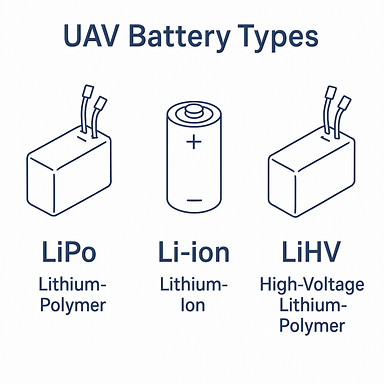
Bateriile LiPo sunt cea mai utilizată sursă de energie pentru dronele de consum, sistemele FPV (First Person View) și platformele multirotor profesionale. Popularitatea lor se datorează mai multor avantaje cheie:
● Curent instantaneu de ieşire ridicat: Bateriile LiPo pot furniza cantități mari de curent rapid, făcându-le ideale pentru aplicații cu tracțiune ridicată.
● Ușor și compact: Construcția lor sub formă de pungă permite factori de formă flexibili și greutate minimă.
● Forme și dimensiuni personalizabile: Producătorii pot adapta acumulatorii LiPo pentru a se potrivi anumitor designuri de drone.
Totuși, bateriile LiPo necesită o manipulare atentă. Acestea sunt predispuse la umflare, deteriorare prin perforare și dezechilibru de tensiune. Încărcarea sau descărcarea incorectă pot duce la riscuri de incendiu sau la reducerea duratei de viață. Inspectarea periodică și depozitarea corespunzătoare sunt esențiale.
1.2 Baterii de tip litiu-ion (Li-ion)
Bateriile Li-ion, în special celulele cilindrice precum 18650 și 21700, oferă:
● O densitate energetică mai mare decât cea a bateriilor LiPo, permițând timpuri de zbor mai lungi.
● O durată de viață mai lungă în ceea ce privește numărul de cicluri, depășind adesea 500 de cicluri de încărcare-descărcare.
● O stabilitate termică superioară, reducând riscul de suprâncălzire.
Aceste caracteristici fac ca bateriile Li-ion să fie ideale pentru drona cu aripi fixe cu autonomie îndelungată și pentru platformele hibride VTOL. Totuși, ratele mai scăzute de descărcare le limitează utilizarea în sistemele multirotor de înaltă performanță, care necesită impulsuri rapide de putere.
1.3 Baterii de polimer de litiu de înaltă tensiune (LiHV)
Bateriile LiHV sunt o variantă a bateriilor LiPo, care pot fi încărcate până la 4,35 V pe celulă, în locul tensiunii standard de 4,2 V. Acest lucru duce la:
● O ușoară creștere a capacității de energie, ceea ce se traduce în durate mai lungi de zbor.
● O îmbunătățire a raportului putere/greutate, avantajoasă pentru misiuni care necesită o rază de acțiune extinsă.
Bateriile LiHV necesită încărcătoare compatibile și o gestionare precisă a tensiunii pentru a evita supraincarcarea. Ele sunt cele mai potrivite pentru utilizatorii care doresc creșteri incrementale ale performanței, fără a trece la alte tehnologii de baterii.
1.4 Tehnologii emergente de baterii
Progresele recente din cercetarea bateriilor au introdus alternative promițătoare:
● Baterii de stare solidă: Acestea folosesc electrolit solid în loc de electrolit lichid, oferind o densitate energetică superioară, o siguranță îmbunătățită și o durată de viață mai lungă.
● Electrozi îmbunătățiți cu grafen: Grafenul îmbunătățește conductivitatea și gestionarea termică, permițând o încărcare mai rapidă și o performanță superioară sub sarcină.
● Chimii hibride: Unele designuri experimentale combină tehnologii cu litiu-sulf sau litiu-aer pentru a depăși limitele actuale ale densității energetice.
Deși aceste tehnologii nu sunt încă generalizate din cauza provocărilor legate de cost și scalabilitate, ele reprezintă viitorul sistemelor de propulsie pentru drona.
2. Parametri electrici cheie de înțeles
Selectarea bateriei potrivite necesită o înțelegere solidă a mai multor specificații electrice care influențează direct performanța dronei.
2.1 Tensiune (numărul de celule în serie)
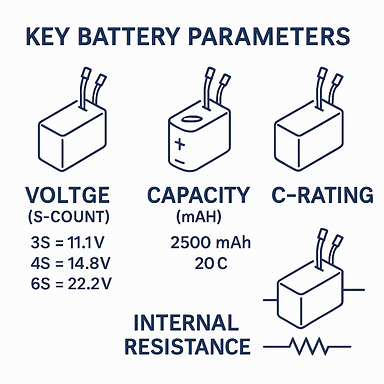
Tensiunea determină viteza motorului și eficiența generală a sistemului. O singură celulă LiPo are o tensiune nominală de 3,7 V. Configurările obișnuite includ:
● 3S (3 celule în serie) = 11,1 V
● 4S = 14,8 V
● 6S = 22,2 V
Tensiunea mai ridicată reduce consumul de curent pentru aceeași putere de ieșire, îmbunătățind eficiența și reducând generarea de căldură. Totuși, motoarele dronului și controlerele electronice de viteză (ESC) trebuie să fie concepute pentru tensiunea aleasă.
2.2 Capacitate (mAh)
Capacitatea bateriei, măsurată în miliamperi-oră (mAh), determină durata de zbor a unei drone. De exemplu, o baterie de 5000 mAh oferă teoretic un curent de 5 amperi timp de o oră. Totuși, durata reală de zbor depinde de sarcina utilă, profilul de zbor și condițiile mediului.
O capacitate mai mare crește autonomia, dar adaugă și greutate. Bateriile prea mari pot reduce eficiența și pot suprasolicita sistemul de propulsie. Capacitatea optimă echilibrează durata de zbor cu greutatea totală la decolare.
2.3 Rată de descărcare (clasificare C)
Clasificarea C indică viteza cu care o baterie poate livra în siguranță curentul. O baterie de 5000 mAh cu clasificare 20C poate furniza:
[ 5 \text{Ah} \times 20 = 100 \text{A} ]
Dronele de înaltă performanță, cum ar fi cele quadricoptere pentru curse sau platformele cu capacitate ridicată de ridicare, necesită rate C ridicate pentru a evita scăderea tensiunii și pentru a menține răspunsul rapid. Bateriile cu rate C scăzute pot supraîncălzi sau pot ceda sub sarcină.
2.4 Rezistența internă (IR)
Rezistența internă influențează eficiența cu care o baterie furnizează energie. O rezistență internă mai mică conduce la:
● Generare redusă de căldură
● Tensiune mai stabilă sub sarcină
● Eficiență generală mai ridicată
Rezistența internă crește odată cu vârsta și utilizarea, fapt ce o face un indicator cheie al stării de sănătate a bateriei. Monitorizarea rezistenței interne ajută la anticiparea degradării performanței și la planificarea înlocuirilor.
3. Potrivirea caracteristicilor bateriei cu tipurile de drone
Diferitele concepții de drone au cerințe de putere specifice. Potrivirea bateriei cu platforma asigură performanță optimă și siguranță.
3.1 Platforme multirotor
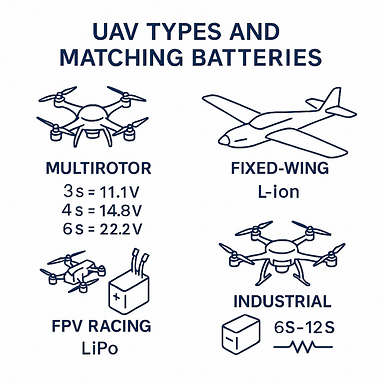
Multirotorii, inclusiv quadcopterii și hexacopterii, necesită:
● Capacitate ridicată de descărcare
● Tensiune medie (în mod tipic 4S–6S)
● Construcție ușoară
Bateriile LiPo sunt ideale datorită randamentului ridicat de curent și formelor lor flexibile.
3.2 Drone cu aripi fixe
Aeronavele cu aripi fixe beneficiază de:
● Densitate energetică ridicată
● Cerințe reduse de descărcare
Bateriile Li-ion sunt foarte potrivite pentru misiuni de lungă durată, oferind timp de zbor extins cu un greutate minimă.
3.3 Drone pentru curse FPV
Drone FPV necesită:
● Rate C extrem de ridicate
● Greutate redusă
● Tensiune ridicată (4S–6S)
Bateriile LiPo sunt singura opțiune viabilă, oferind puterea de vârf necesară pentru manevre agresive.
3.4 Drone industriale de ridicare grea
Aceste platforme necesită:
● Tensiune ridicată (6S–12S)
● Capacități mari (10.000–30.000 mAh)
● Performanță termică robustă
Se recomandă acumulatori LiPo de grad industrial cu carcase întărite și sisteme inteligente de management al bateriei (BMS).
4. Factori din lumea reală care afectează performanța bateriei
Specificațiile de laborator nu reflectă adesea performanța în condiții reale. Mai mulți factori externi influențează în mod semnificativ comportamentul bateriei.
4.1 Temperatura
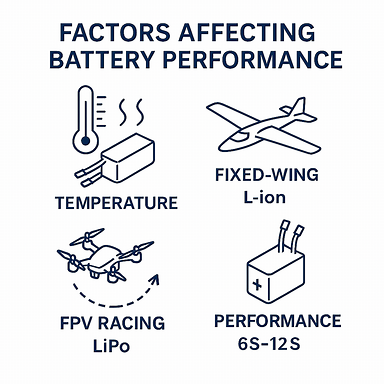
Temperaturile scăzute reduc:
● Stabilitatea tensiunii
● Capacitatea de descărcare
● Durata zborului
Temperaturile ridicate accelerează degradarea chimică și măresc riscul de incendiu. Încălzitoare pentru baterii sau izolație termică pot fi necesare în medii extreme.
4.2 Greutatea sarcinii utile
Încărcăturile mai grele măresc consumul de curent, reducând durata de zbor. Alegerea bateriei trebuie să țină cont de greutatea maximă la decolare (MTOW) a dronelor și de durata misiunii.
4.3 Profilul de zbor
Stationarea în aer (hovering) consumă mai multă energie decât zborul înainte. Misiunile de cartografiere sunt mai eficiente decât cele de inspecție, care implică opriri frecvente. Înțelegerea profilului misiunii vă ajută să optimizați alegerea bateriei.
4.4 Îmbătrânirea bateriei
Durata tipică de viață în cicluri:
● LiPo: 150–300 de cicluri
● Li-ion: 400–600 de cicluri
Durata de viață în cicluri influențează costurile operaționale și planificarea întreținerii. Testarea și înregistrarea regulată ajută la monitorizarea stării bateriei.
5. Reguli de siguranță pentru bateriile de drona
Siguranța bateriilor este esențială pentru protejarea echipamentului și asigurarea fiabilității zborului. Practicile cheie includ:
● Utilizați încărcătoare certificate, cu setări corespunzătoare de tensiune și curent
● Evitați supraîncărcarea și descărcarea excesivă
● Depozitați bateriile la 3,8 V pe celulă, într-un loc răcoros și uscat
● Inspectați periodic pentru umflare, perforări sau deteriorări
● Utilizați containere de depozitare rezistente la foc în timpul transportului și încărcării
⚠️ Important: Bateriile pentru drona nu sunt impermeabile. Expunerea la umiditate poate provoca coroziune, scurtcircuituri sau pierderea termică necontrolată (thermal runaway). Protejați întotdeauna bateriile de ploaie, umiditate și condens.
6. Cadru practic de comparare a bateriilor
La evaluarea opțiunilor de baterii, luați în considerare următorii parametri:
● Densitatea energetică (Wh/kg): Determină cantitatea de energie stocată pe unitate de masă.
● Curentul continuu maxim de ieșire: Asigură faptul că bateria poate satisface cerințele de putere fără a se supraîncălzi.
● Durata de viață prevăzută în cicluri: Influentează costul și fiabilitatea pe termen lung.
● Performanța termică: Determină cât de bine gestionează bateria căldura în timpul funcționării.
● Raportul greutate-volum: Influentează echilibrul și aerodinamica dronelor.
● Compatibilitatea cu motoarele și reglatorii electronici de viteză (ESC): Previne neconformitățile electrice.
● Costul pe oră de zbor: Ajută la evaluarea eficienței economice.
Această abordare structurată sprijină luarea deciziilor obiective și reproductibile.
7. Tendințe viitoare în tehnologia bateriilor pentru drone
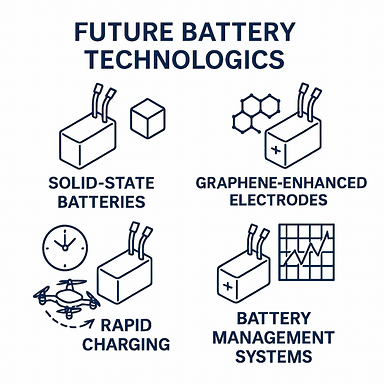
Previziunile industriale sugerează progrese semnificative în anii următori:
● Electroliți în stare solidă: Mai siguri, mai stabili și capabili de o densitate energetică superioară.
● Electrozi îmbunătățiți cu grafen: Încărcare mai rapidă, conductivitate superioară și gestionare termică îmbunătățită.
● Sisteme de încărcare rapidă: Încărcare completă în 10–15 minute, permițând operațiuni cu frecvență ridicată.
● Arhitecturi cu tensiune mai mare
● BMS mai inteligent, cu telemetrie în timp real
Aceste inovații vor îmbunătăți semnificativ autonomia, siguranța și eficiența operațională.
8. Concluzie
Selectarea celei mai potrivite baterii pentru un dron necesită echilibrarea specificațiilor electrice, a cerințelor misiunii, a protocoalelor de siguranță și a costurilor pe termen lung. Indiferent dacă se operează un dron de hobby, o platformă aeriană profesională sau un UAV industrial, înțelegerea chimiei bateriei, a tensiunii, a capacității, a caracteristicilor de descărcare și a influențelor mediului este esențială pentru obținerea unei performanțe și fiabilități optime.
O baterie bine aleasă nu este doar un component — este un activ strategic care determină succesul fiecărei misiuni cu dron.