
 EN
Introduction
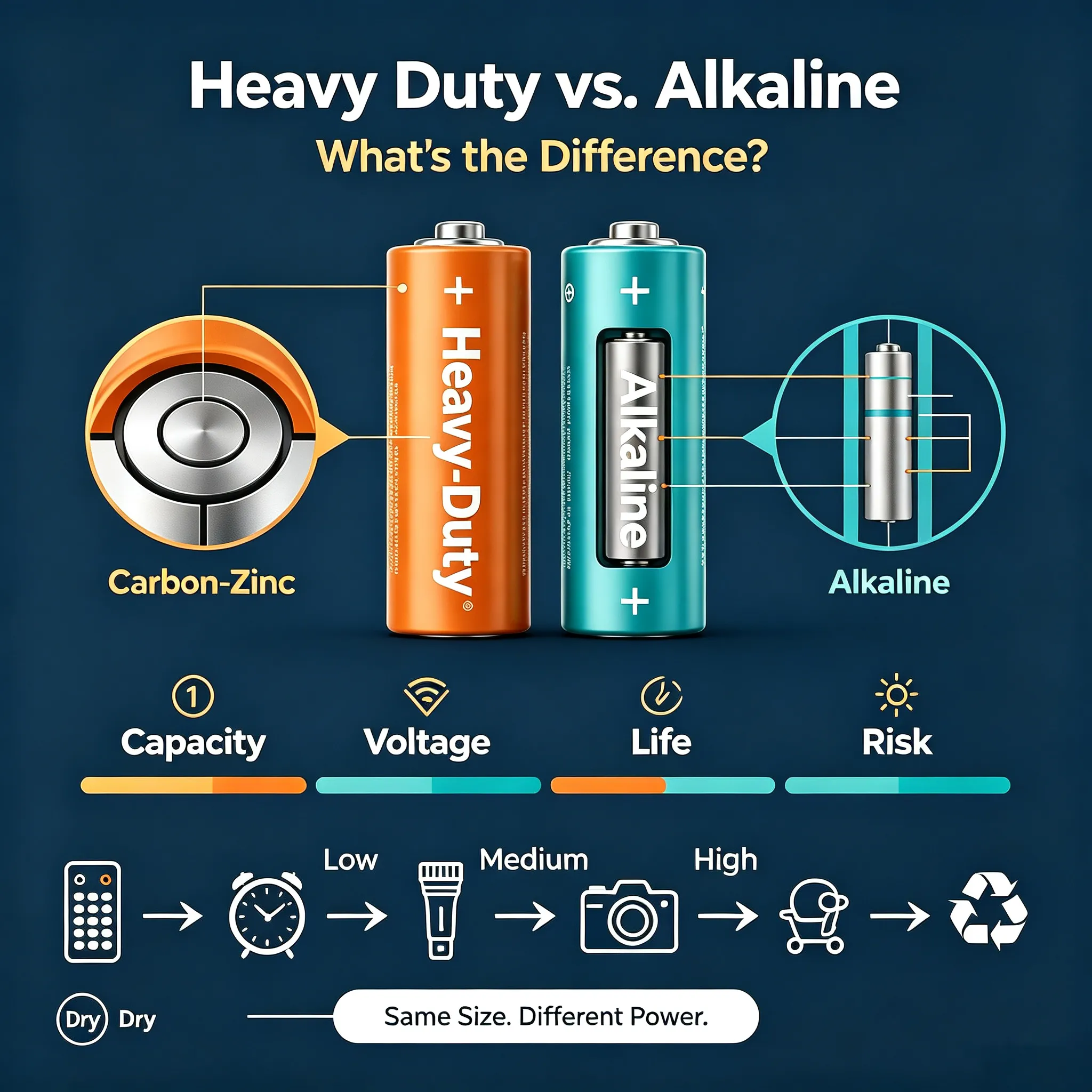
Batteries are so deeply woven into everyday life that most people rarely stop to consider how different types actually work. Whether powering a remote control, a flashlight, or a child’s toy, batteries quietly determine how smoothly our devices function. Among the many types available, heavy-duty and alkaline batteries are the two most commonly seen on store shelves. They look nearly identical, share the same standard sizes, and often sit side by side in the same aisle. Yet beneath their similar appearance lies a significant difference in chemistry, performance, and long-term reliability. Understanding these differences helps consumers make smarter choices, avoid device damage, and reduce unnecessary waste.
1. What Heavy-Duty Batteries Really Are
Heavy-duty batteries are built on older carbon-zinc chemistry, a design that dates back many decades. Their internal structure is simple: a zinc can acts as the anode, a carbon rod serves as the cathode, and the electrolyte is typically ammonium chloride or zinc chloride. This straightforward construction makes heavy-duty batteries inexpensive to produce, which is why they are often the cheapest option available in stores.
However, their simplicity comes with limitations. Heavy-duty batteries have relatively low energy density, meaning they cannot store or deliver as much power as modern alkaline batteries. Their voltage drops quickly once they begin discharging, especially when powering devices that require steady current. They also have a shorter shelf life and are more prone to leakage because the zinc casing corrodes over time. These characteristics make heavy-duty batteries suitable only for devices that consume very little power, such as basic remote controls or wall clocks. When used in high-drain devices, they deplete rapidly and may leak due to internal pressure buildup.
2. The Modern Standard: Alkaline Batteries
Alkaline batteries represent a more advanced and efficient chemistry. Instead of relying on acidic electrolytes, they use potassium hydroxide, an alkaline substance that enables more effective reactions between the zinc anode and manganese dioxide cathode. The zinc is often in powdered form, increasing surface area and improving energy output. A steel casing provides structural stability and reduces leakage risk.
This chemistry gives alkaline batteries several advantages. They have higher energy density, meaning they last longer under both light and heavy loads. Their voltage remains more stable throughout discharge, which is crucial for devices that require consistent power. They also have a significantly longer shelf life—often five to ten years—and are less likely to leak when stored properly. These qualities make alkaline batteries the preferred choice for modern electronics such as digital cameras, LED flashlights, wireless peripherals, and motorized toys.
3. The Core Differences Between Heavy-Duty and Alkaline Batteries
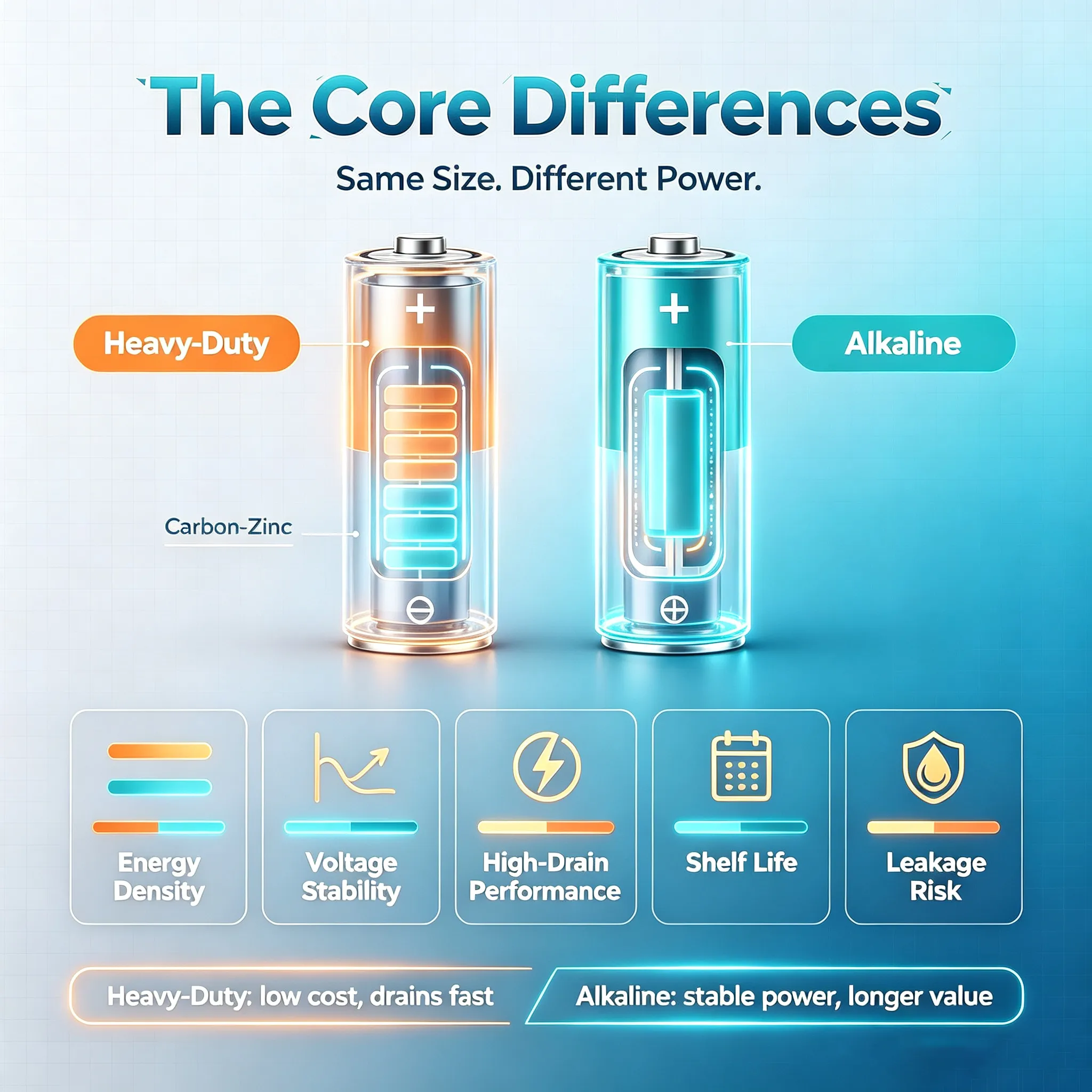
Although heavy-duty and alkaline batteries share identical shapes and sizes, their internal chemistry leads to dramatically different performance characteristics. The most noticeable difference is energy density. Heavy-duty batteries drain quickly, especially under load, while alkaline batteries can last several times longer in the same device. Voltage stability is another key distinction. Heavy-duty batteries experience a steep drop in voltage almost immediately after use begins, whereas alkaline batteries maintain a more consistent output.
High-drain performance is where the gap becomes most obvious. Devices such as digital cameras or motorized toys demand bursts of current that heavy-duty batteries simply cannot sustain. Alkaline batteries, with their lower internal resistance and more efficient chemical reactions, handle these demands far better. Shelf life also differs significantly. Heavy-duty batteries typically last two to three years in storage, while alkaline batteries can remain usable for up to a decade.
Leakage risk is another practical concern. Heavy-duty batteries are more prone to leakage because their zinc casing corrodes faster. Alkaline batteries, protected by steel casings and more stable chemistry, leak less frequently. Finally, cost plays a role. Heavy-duty batteries are cheaper upfront, but because they drain faster, they often end up costing more per hour of actual use.
4. Matching Battery Type to Device Requirements
Choosing the right battery depends largely on the device’s power needs. Low-drain devices such as remote controls or clocks can operate reasonably well on heavy-duty batteries, though alkaline batteries still provide longer life. Medium-drain devices like LED flashlights or portable radios benefit noticeably from alkaline batteries because they maintain voltage more effectively.
High-drain devices are where alkaline batteries become essential. Digital cameras, handheld gaming devices, and motorized toys require stable, high-current output that heavy-duty batteries cannot provide. Using heavy-duty batteries in these devices often results in rapid depletion, poor performance, and increased leakage risk. For any device that you rely on regularly or that contains expensive components, alkaline batteries are the safer and more practical choice.
5. Environmental and Safety Considerations
Battery leakage is a common issue, especially with older or depleted heavy-duty batteries. The acidic electrolyte can corrode metal contacts inside devices, sometimes causing irreversible damage. Alkaline batteries also leak occasionally, but their chemistry and casing make it less likely. Regardless of type, batteries should be stored in a cool, dry place and removed from devices that will not be used for long periods.
Disposal is another important consideration. Although modern batteries no longer contain mercury, they still include metals and chemicals that should not enter landfills. Many cities offer recycling programs for household batteries, and participating in these programs helps reduce environmental impact. Proper storage and timely replacement also reduce leakage risk and extend the lifespan of the devices they power.
6. Understanding Marketing Labels
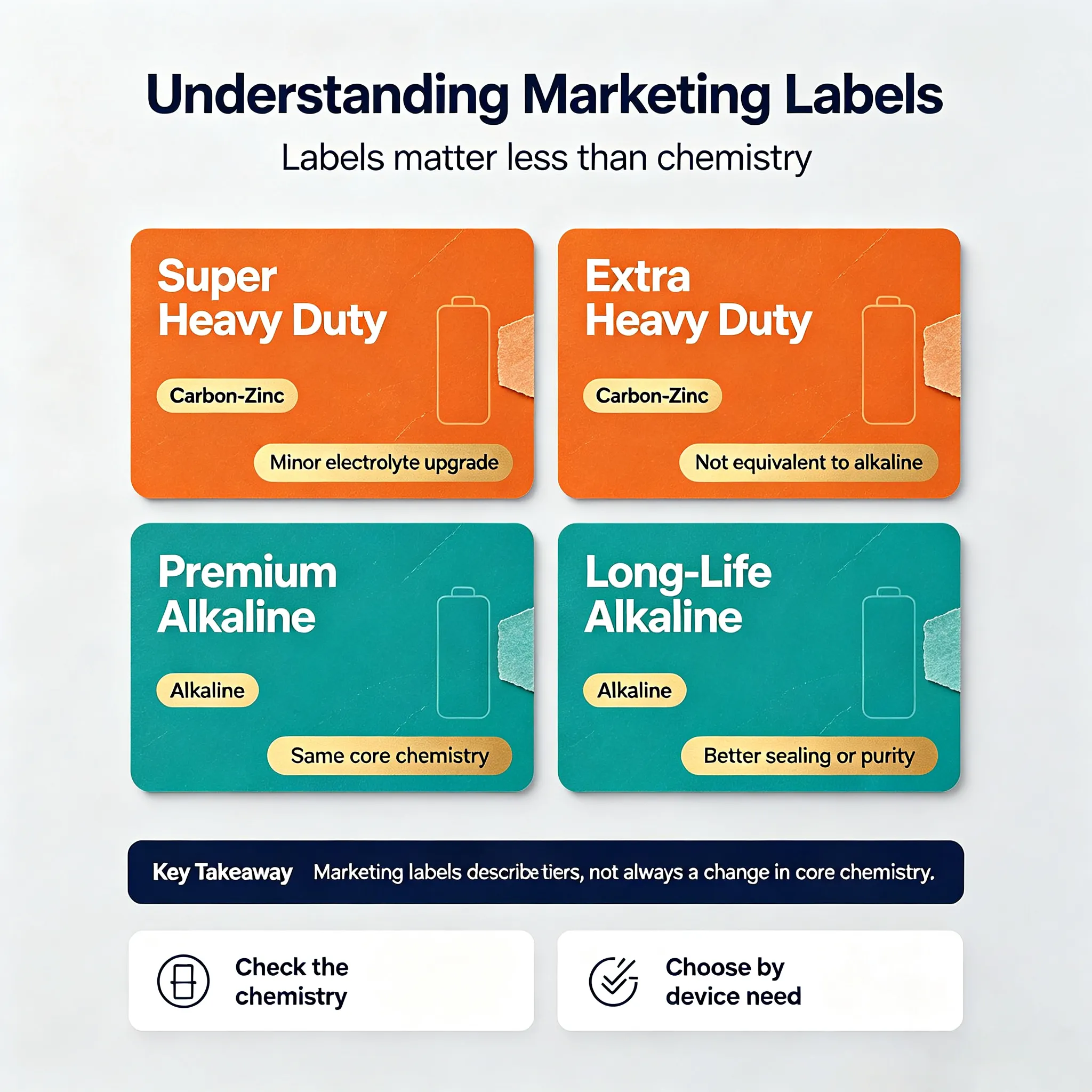
Battery packaging often includes terms that can confuse consumers. These labels may look meaningful, but many are simply marketing language rather than indicators of actual performance improvements. For example:
- “Super Heavy Duty” — still carbon-zinc chemistry, only minor electrolyte improvements
- “Extra Heavy Duty” — not equivalent to alkaline performance
- “Premium Alkaline” — slightly optimized materials, but same core chemistry
- “Long-Life Alkaline” — usually refers to improved sealing or higher-purity manganese dioxide
These labels help differentiate product tiers but do not change the fundamental differences between heavy-duty and alkaline batteries.
7. Cost Versus Value
Heavy-duty batteries appear cheaper at first glance, but their short lifespan often makes them less economical. Consider a toy car that drains a heavy-duty battery in half an hour but runs for three hours on an alkaline battery. Even if the heavy-duty battery costs half as much, you still spend far more to achieve the same runtime. For most devices, alkaline batteries provide better long-term value because they last longer, perform more reliably, and reduce the risk of leakage.
8. When Heavy-Duty Batteries Still Make Sense
Despite their limitations, heavy-duty batteries are not obsolete. They remain useful in situations where power demands are extremely low or where cost is the primary concern. They make sense when:
- The device is low-drain and inexpensive
- The battery will be replaced frequently
- The device is used only occasionally
- Cost matters more than performance
- The device is disposable or short-term
In these cases, the lower upfront cost can outweigh the performance drawbacks.
9. When Alkaline Batteries Are the Smarter Choice
Alkaline batteries are the better option for most modern electronics. Their stable voltage, higher capacity, longer shelf life, and lower leakage risk make them ideal for devices that require reliable performance. If a device is expensive, used frequently, or sensitive to voltage fluctuations, alkaline batteries are the only sensible choice. They protect the device, reduce maintenance, and deliver consistent power over time.
Conclusion
Heavy-duty and alkaline batteries may look identical from the outside, but their internal chemistry sets them apart. Heavy-duty batteries are inexpensive and suitable for simple, low-drain devices, while alkaline batteries deliver superior performance, stability, and longevity. For most everyday applications, alkaline batteries offer better value and reliability. Understanding these differences helps consumers make informed decisions, avoid leakage damage, and ensure that their devices operate at their best.
Table of Contents
- Introduction
- 1. What Heavy-Duty Batteries Really Are
- 2. The Modern Standard: Alkaline Batteries
- 3. The Core Differences Between Heavy-Duty and Alkaline Batteries
- 4. Matching Battery Type to Device Requirements
- 5. Environmental and Safety Considerations
- 6. Understanding Marketing Labels
- 7. Cost Versus Value
- 8. When Heavy-Duty Batteries Still Make Sense
- 9. When Alkaline Batteries Are the Smarter Choice
- Conclusion