
 EN
EN
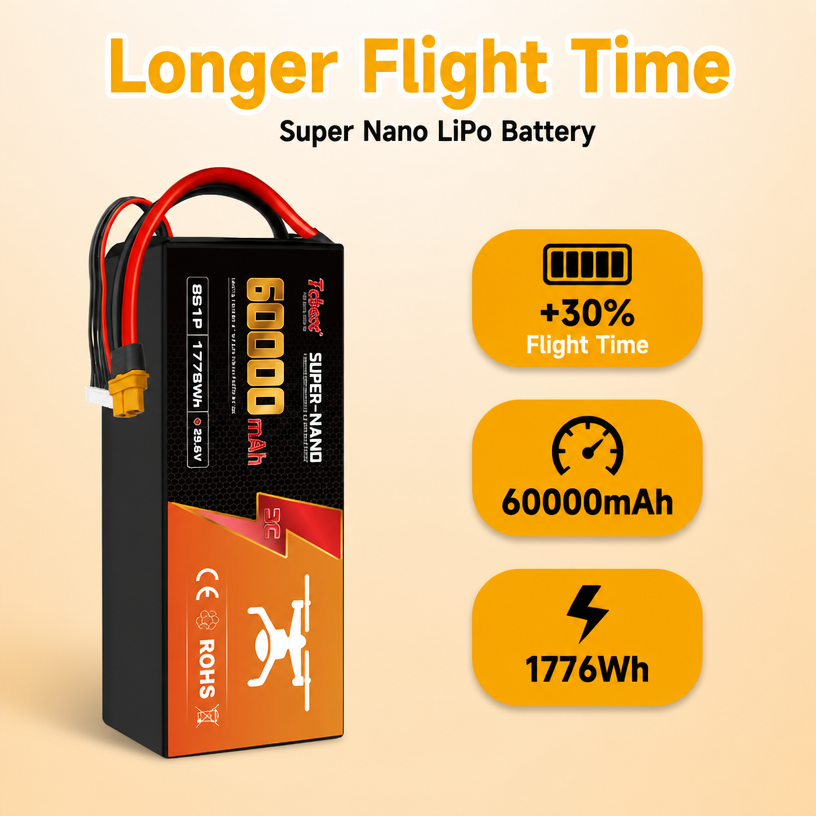
Drone battery life directly affects flight time, operating efficiency, and overall user experience. Whether you use a drone for photography, inspection, agriculture, mapping, FPV flying, or recreation, improving battery performance can help you fly longer and reduce unnecessary battery wear.
The best way to extend drone battery life is to combine proper battery care, lower drone weight, efficient components, favorable flying conditions, and smooth flying habits.
Take Proper Care of the Battery
Most modern drones use LiPo or Li-ion batteries. These batteries offer high energy density but are sensitive to charging methods, temperature, and storage conditions.
Always use the manufacturer-recommended charger or a compatible charger with the correct voltage and charging current. Avoid unsupported fast charging because excessive charging current can increase heat and shorten battery lifespan.
If the battery will not be used for an extended period, avoid storing it fully charged. Many lithium batteries are best stored at around 40–60% charge, although you should always follow the manufacturer's instructions.
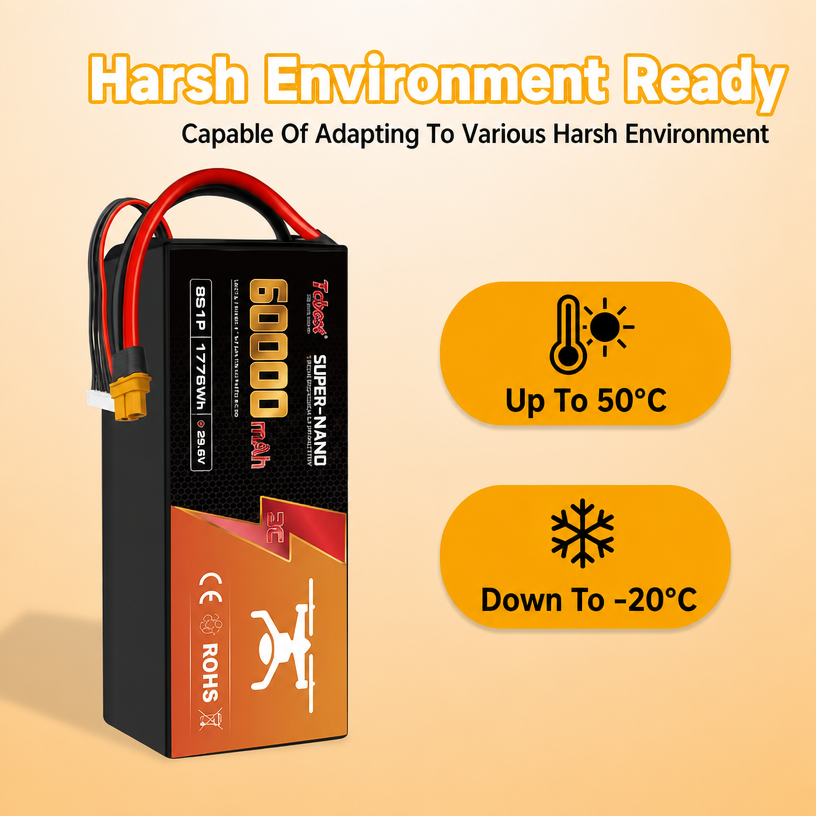
Temperature is also important. A moderate storage temperature of approximately 15–25°C is generally suitable. Avoid leaving drone batteries in hot vehicles, direct sunlight, or other high-temperature environments.
You should also avoid frequently draining the battery completely. Landing with some remaining capacity can reduce battery stress and provide an additional safety margin.
Reduce the Drone's Weight
Weight has a major impact on power consumption.
A heavier drone requires more motor power to stay in the air, which means the battery discharges faster. Remove accessories, mounts, or payloads that are not required for the flight.
For custom-built drones, lightweight frames and components can also improve efficiency, provided they do not reduce structural strength or safety.
The goal is simple: carry only what is necessary.
Improve Drone Efficiency
Battery capacity is only part of the flight-time equation. The efficiency of the drone itself is equally important.
Efficient motors and properly matched propellers can reduce power consumption. Motors, propellers, bearings, and other components should also be kept clean and in good condition.
Damaged propellers, dirty motors, loose connections, or excessive vibration can make the aircraft work harder and waste energy.
On custom drones, good-quality wiring and connectors can also help reduce electrical losses.
Aerodynamics may also matter, especially for racing and long-range drones. Large accessories or poorly positioned components can create additional drag and increase power consumption.
Fly Smoothly
Flying style can significantly affect battery consumption.
Rapid acceleration, sharp turns, repeated climbing, and aggressive maneuvering require higher motor output. Smooth acceleration and steady cruising generally use less energy.
If maximum speed is not necessary, fly at a moderate speed. This is especially helpful for photography, mapping, and inspection missions where endurance is more important than aggressive performance.
Avoid unnecessary hovering as well. A hovering drone still consumes considerable power because the motors must continuously generate enough thrust to keep the aircraft airborne.
Avoid Strong Winds
Wind can shorten flight time considerably.
When flying against a headwind, the motors must work harder to maintain speed and position. Strong gusts also force the flight controller to make constant adjustments.
Whenever possible, fly in calmer conditions.
You should also consider wind direction when planning your route. Flying a long distance with a tailwind may seem easy, but returning against the wind can consume much more battery power.
Always keep enough battery reserve for the return flight.
Reduce Unnecessary Power Consumption
Some drone systems consume power in addition to the motors, including lights, cameras, sensors, communication equipment, and other accessories.
The propulsion system usually uses most of the battery, so switching off one small feature will not dramatically increase flight time. However, on specialized drones, eliminating unnecessary electrical loads may still help improve efficiency.
Only disable functions that are not required for safe operation.
Does a Larger Battery Increase Flight Time?
A higher-capacity battery can provide longer flight time, but only if the drone can safely handle the additional size and weight.
More capacity usually means more weight. The heavier battery forces the motors to consume more power, so a 30% increase in battery capacity does not necessarily produce 30% more flight time.
Battery compatibility is also critical. The battery must match the drone's:
- Voltage
- Current requirements
- Cell configuration
- Physical size
- Weight
- Connector
For commercial drones, using batteries approved by the manufacturer is normally the safest option.
Carry Spare Batteries for More Total Flight Time
If you simply need more flying time during a working session, carrying spare batteries is often more practical than installing a much larger battery.
You can land, replace the discharged battery, and continue flying without permanently increasing the drone's weight.
This is why professional drone operators often carry several compatible battery packs for photography, surveying, inspection, and other applications.
How Long Does a Drone Battery Last Per Flight?
Flight time varies greatly depending on the drone.
Many consumer and camera drones commonly achieve around 20–30 minutes per battery, while some modern models may fly longer.
FPV racing drones and small toy drones often have much shorter flight times because they prioritize power, speed, or lightweight construction.
Actual flight time depends on:
- Battery capacity
- Drone weight
- Payload
- Wind
- Temperature
- Motor efficiency
- Flying speed
- Battery condition
Real-world flight time may also be shorter than the manufacturer's advertised figure because test results are often measured under ideal conditions.
How to Extend Drone Battery Lifespan
If you want the battery itself to last for more charging cycles, avoid unnecessary stress.
Do not regularly discharge it completely, avoid prolonged storage at 100% charge, and keep it away from excessive heat.
After a demanding flight, allow the battery to cool before charging if required by the manufacturer's instructions.
Regularly inspect the battery for swelling, physical damage, unusual heat, charging problems, or significantly reduced flight time. Stop using batteries that show serious abnormalities.
Conclusion
The best way to extend drone battery life is not simply to install the largest battery available.
Better results usually come from combining proper battery care, lower aircraft weight, efficient components, regular maintenance, smooth flying, and favorable weather conditions.
A larger battery may increase flight time, but additional weight can reduce the benefit. For significantly more total flying time, carrying compatible spare batteries is often the simplest and most practical solution.
By improving both battery management and overall drone efficiency, you can achieve longer flights while also helping your batteries maintain good performance for more charge cycles.
Learn how to extend drone battery life with proper charging, storage, weight reduction, efficient components, and smarter flying habits. This guide explains how temperature, wind, payload, battery capacity, and maintenance affect flight time, while offering practical tips to improve performance, extend battery lifespan, and achieve longer, safer drone flights.
Table of Contents
- Take Proper Care of the Battery
- Reduce the Drone's Weight
- Improve Drone Efficiency
- Fly Smoothly
- Avoid Strong Winds
- Reduce Unnecessary Power Consumption
- Does a Larger Battery Increase Flight Time?
- Carry Spare Batteries for More Total Flight Time
- How Long Does a Drone Battery Last Per Flight?
- How to Extend Drone Battery Lifespan
- Conclusion