
 EN
EN
NiMH batteries are still widely used in everyday devices, from cameras and flashlights to toys and small household electronics. Even though lithium batteries dominate the market today, NiMH cells remain a reliable and affordable option. But like any rechargeable battery, their performance can decline over time. The good news is that NiMH batteries can last much longer if you follow a few simple habits. This guide explains, in a friendly and practical way, how to extend the life of your NiMH batteries without needing technical knowledge or complicated tools.
1. Why NiMH Batteries Lose Performance Over Time
NiMH batteries don’t suddenly fail; instead, they slowly lose capacity through normal use. Understanding the main reasons behind this decline helps you avoid behaviors that shorten their lifespan.
First, NiMH batteries gradually develop higher internal resistance. As resistance increases, the battery becomes less efficient at delivering power, especially in devices that draw a lot of current. This leads to shorter runtime and more heat. Heat itself is another major factor. High temperature accelerates chemical aging inside the battery, and even a few overheated charging sessions can permanently reduce capacity. NiMH batteries also dislike being fully drained. Deep discharge stresses the weakest cell in a multi-cell pack and can cause irreversible damage. Finally, NiMH batteries naturally self-discharge over time, and this rate increases as they age. All these factors contribute to gradual performance loss, but the speed of decline depends heavily on how the batteries are used and stored.
2. Common Habits That Shorten NiMH Battery Life
Many people unintentionally shorten the life of their NiMH batteries through everyday habits. One of the biggest issues is using cheap chargers. Low-quality chargers often continue charging even after the battery is full, which leads to overheating and long-term damage. Fast charging is another problem. While it’s convenient, fast charging generates heat, and heat is the fastest way to age a NiMH battery. Letting batteries drain completely is also harmful. Some people believe batteries should be fully emptied before charging, but that idea comes from older NiCd technology. NiMH batteries don’t need full discharge, and deep draining actually hurts them.
Another common mistake is mixing old and new batteries in devices that require multiple cells. The older battery drains faster, forcing the newer one to work harder, which shortens the life of both. Finally, storing batteries in hot environments—like a car, near a window, or inside a device that warms up—can dramatically reduce their lifespan. Avoiding these habits alone can significantly extend battery life.
3. Use a Smart Charger for Better Battery Health
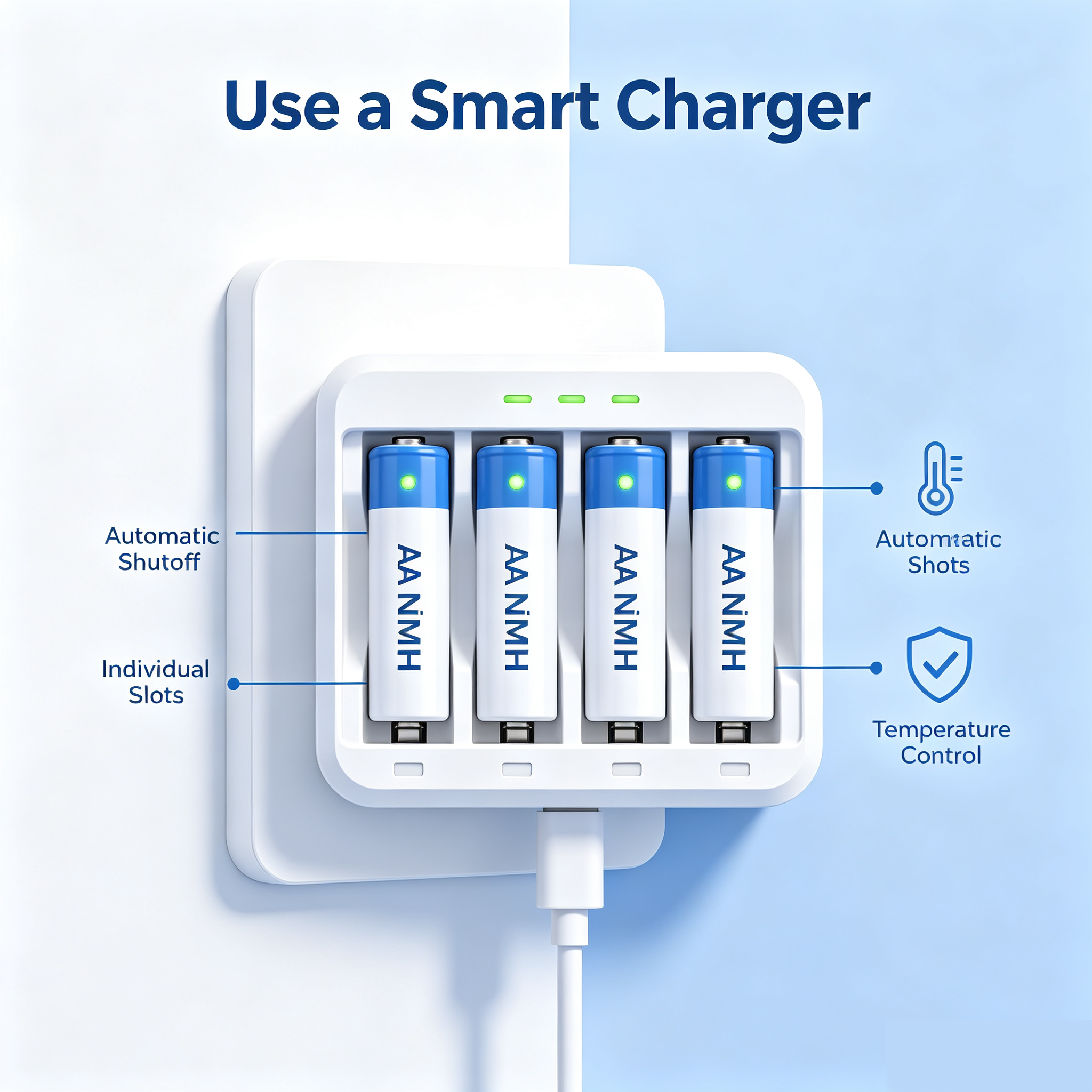
If you want your NiMH batteries to last longer, investing in a smart charger is one of the best decisions you can make. A smart charger monitors the battery during charging and stops automatically when the battery reaches full capacity. This prevents overcharging, overheating, and unnecessary stress on the battery. Smart chargers also charge each battery individually, which keeps them balanced and ensures that one weak battery doesn’t affect the others.
When choosing a charger, look for features like negative Delta-V detection, temperature monitoring, independent charging slots, slow or medium charging modes, and automatic shutoff. These features help protect your batteries and extend their usable life. Slow charging is especially beneficial because it generates less heat. If you’re not in a rush, slow charging is the healthiest option for NiMH batteries.
4. Charge Your Batteries at the Right Time
How you charge your batteries matters just as much as what charger you use. One important habit is letting batteries cool down before charging. If your batteries feel warm after use, give them time to return to room temperature. Charging warm batteries increases internal pressure and accelerates aging.
Another helpful habit is avoiding full discharge. Recharge your batteries when you notice performance dropping instead of waiting until the device shuts off completely. NiMH batteries don’t benefit from being drained to zero. Also, remove batteries from the charger once they’re full. Leaving them in the charger exposes them to trickle charge, which can cause overheating if the trickle current is too high. These small habits can make a big difference in battery longevity.
5. Keep Battery Sets Together for Better Performance
If your device uses more than one battery, treat those batteries as a matched set. When batteries are used together, they age together. Mixing an old battery with a new one creates imbalance. The older battery drains faster, causing the newer one to work harder and reducing overall performance. This imbalance can also lead to early shutdowns and stress on the entire set.
To avoid these issues, label your batteries with the date you bought them, store sets together, and replace the entire set when one battery fails. Keeping batteries organized is a simple habit that prevents many common problems.
6. Store NiMH Batteries Properly
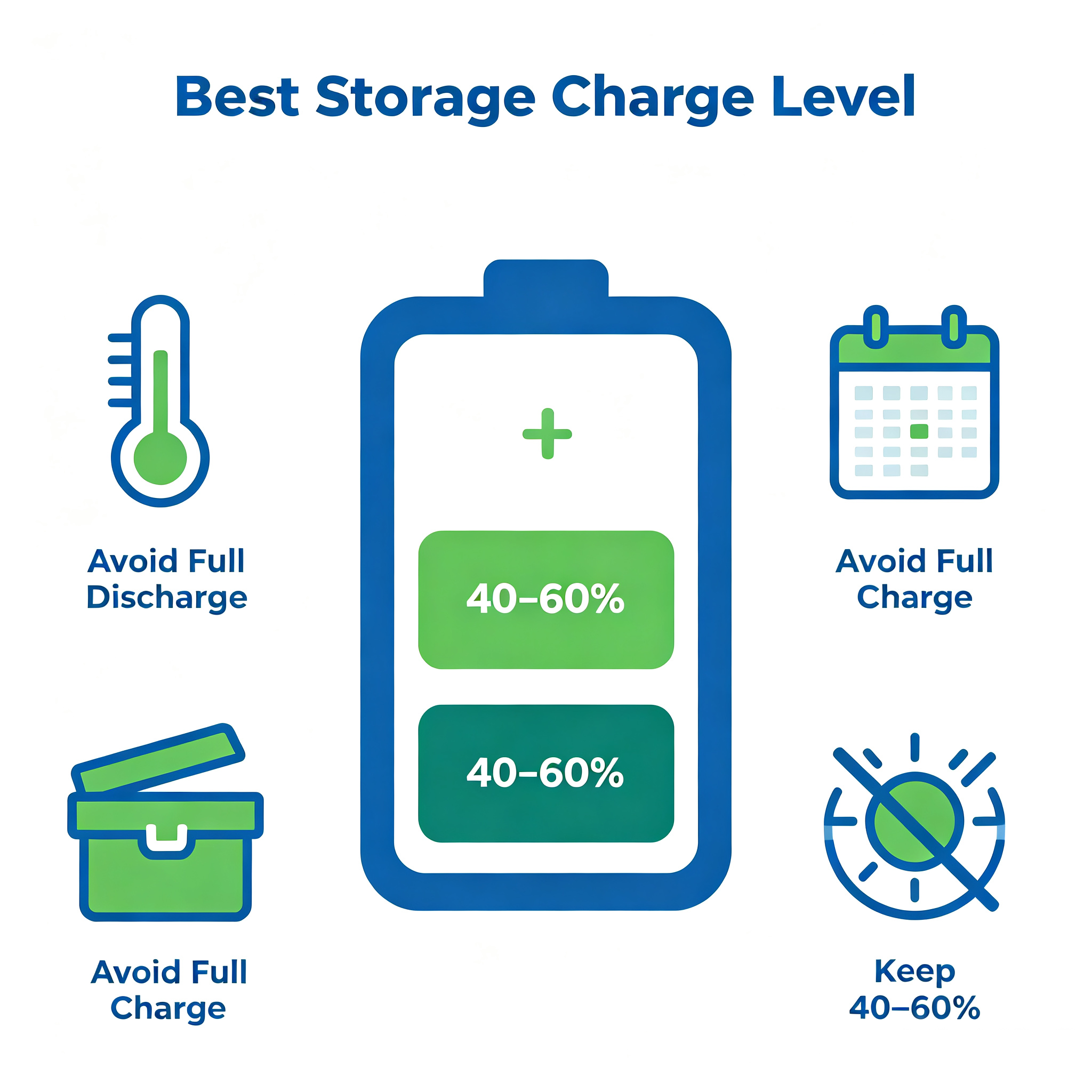
Storage plays a major role in how long NiMH batteries last. The ideal storage level for NiMH batteries is around 40–60% charge. Storing them fully charged or fully empty puts extra stress on the chemistry and accelerates aging. Temperature is also important. Store batteries in a cool, dry place away from sunlight. The ideal temperature range is 15–25°C. Heat is harmful even when the battery isn’t being used.
If you plan to store batteries for several months, give them a small recharge every three to six months to prevent deep discharge. Proper storage habits help maintain battery health and reduce capacity loss over time.
7. Clean Battery Contacts to Improve Efficiency
Dirty or oxidized battery contacts increase resistance, which makes the battery work harder and reduces performance. Cleaning the contacts with a dry cloth or cotton swab every now and then helps maintain good electrical connection. It’s a small step, but it contributes to better efficiency and longer battery life.
8. Use Refresh Mode Occasionally
Some smart chargers include a refresh or recondition mode. This mode slowly discharges and recharges the battery to help rebalance the internal chemistry. You don’t need to use refresh mode often—once every few months is usually enough. It can help recover a bit of lost capacity, especially if the battery hasn’t been used for a while or seems to be performing below its usual level.
9. Avoid Long-Term Trickle Charging
NiMH batteries don’t handle long-term trickle charging well. If your charger applies trickle charge, remove the batteries once they’re full. Leaving them in the charger for days can cause overheating and shorten their lifespan. Trickle charging is fine for short periods, but long exposure is harmful.
10. Pay Attention to Battery Temperature During Use
Some devices heat up batteries quickly, especially high-drain gadgets like flashlights, RC toys, and camera flashes. If your battery feels hot during use, stop using the device and let the battery cool down. Avoid charging it until it returns to room temperature. Temperature control is one of the easiest ways to extend battery life.
11. What to Do When Your Batteries Don’t Last Long
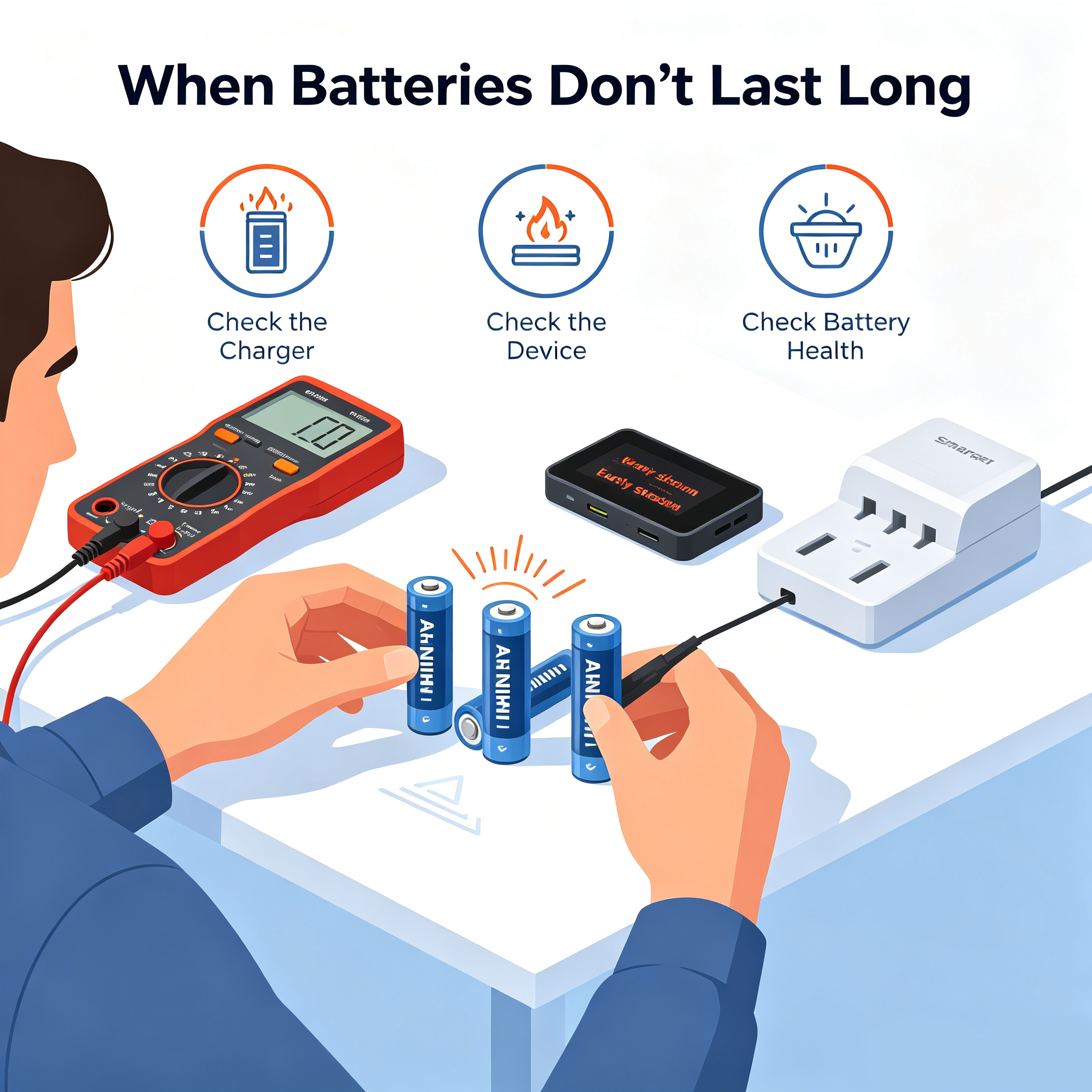
If your NiMH batteries suddenly start performing poorly, there are a few things you can check. If the batteries get hot while charging, the charger may be overcharging them, the charging current may be too high, or the battery itself may be damaged. Trying a different charger or replacing the battery often solves the problem. If the batteries lose charge quickly during storage, they may have been stored in a hot environment, stored fully empty, or simply reached old age. Storing them properly and recharging them periodically can help.
If your device shuts off early, the cause is often a weak battery in a multi-cell set, dirty contacts, or damage from deep discharge. Replacing the entire set and cleaning the contacts usually restores normal performance. These troubleshooting steps help you identify whether the issue is with the battery, the charger, or the device.
12. Simple Habits That Extend NiMH Battery Life
Here’s a quick summary of daily habits that help NiMH batteries last longer: use a smart charger, charge slowly when possible, avoid heat, don’t drain batteries completely, keep battery sets matched, store batteries at partial charge, clean contacts occasionally, let batteries cool before charging, avoid cheap chargers, and use refresh mode once in a while. These habits are easy to follow and can significantly extend the lifespan of your NiMH batteries.
Final Thoughts
NiMH batteries are reliable and affordable, but they need proper care to last. Most of the tips in this guide are simple habits that anyone can follow. By keeping your batteries cool, charging them properly, storing them correctly, and avoiding deep discharge, you can dramatically extend their lifespan. With the right care, NiMH batteries can deliver consistent performance for years, making them a great choice for everyday electronics.
NiMH batteries last longer with smart charging, avoiding heat, preventing deep discharge, storing partially charged, keeping matched sets, cleaning contacts, slow charging, cooling before recharge, avoiding cheap chargers, periodic refresh cycles, proper storage, and monitoring temperature during use.
Table of Contents
- 1. Why NiMH Batteries Lose Performance Over Time
- 2. Common Habits That Shorten NiMH Battery Life
- 3. Use a Smart Charger for Better Battery Health
- 4. Charge Your Batteries at the Right Time
- 5. Keep Battery Sets Together for Better Performance
- 6. Store NiMH Batteries Properly
- 7. Clean Battery Contacts to Improve Efficiency
- 8. Use Refresh Mode Occasionally
- 9. Avoid Long-Term Trickle Charging
- 10. Pay Attention to Battery Temperature During Use
- 11. What to Do When Your Batteries Don’t Last Long
- 12. Simple Habits That Extend NiMH Battery Life