
 EN
1. Introduction
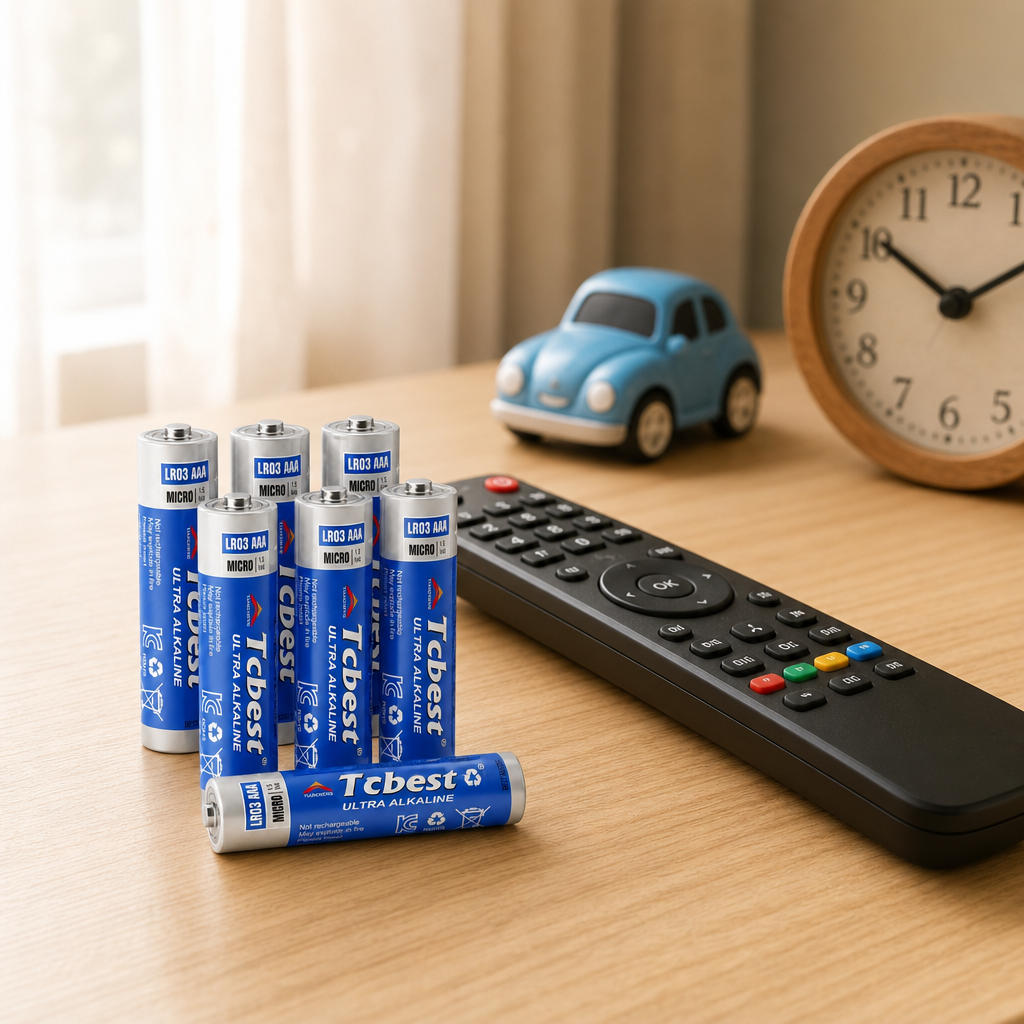
Alkaline batteries are everywhere—quietly powering remote controls, flashlights, clocks, toys, and countless small devices we rely on without thinking. They’re inexpensive, easy to find, and generally dependable. But even though they seem simple, they can cause problems when stored carelessly. As your original document puts it, “If they are stored carelessly, they may leak, corrode, short-circuit, damage nearby objects, or become dangerous to children and pets.”
Safe storage isn’t complicated, but it does require a bit of awareness. This article walks through how alkaline batteries behave, how to store them properly, what to avoid, and how to handle used or damaged batteries. The goal is to give you a practical, human-friendly guide you can use at home, at work, or in a warehouse.
2. How Alkaline Batteries Behave and Why Storage Matters
Alkaline batteries are single-use electrochemical cells built around zinc, manganese dioxide, and an alkaline electrolyte. They’re sealed, but not immune to damage. When exposed to heat, moisture, physical pressure, or long periods inside unused devices, they can develop internal pressure. That pressure sometimes forces electrolyte out through tiny seals.
The leaked material usually appears as a white or gray powder. It’s mildly caustic and can irritate skin or corrode metal. That’s why batteries should be treated as chemical products rather than harmless household objects.
Another subtle issue is parasitic drain. Some devices continue drawing tiny amounts of current even when switched off. If a battery stays inside long enough, it can become deeply discharged and more prone to leakage. Removing batteries from devices that won’t be used for months is a simple way to prevent this.
3. Choosing a Safe Storage Location
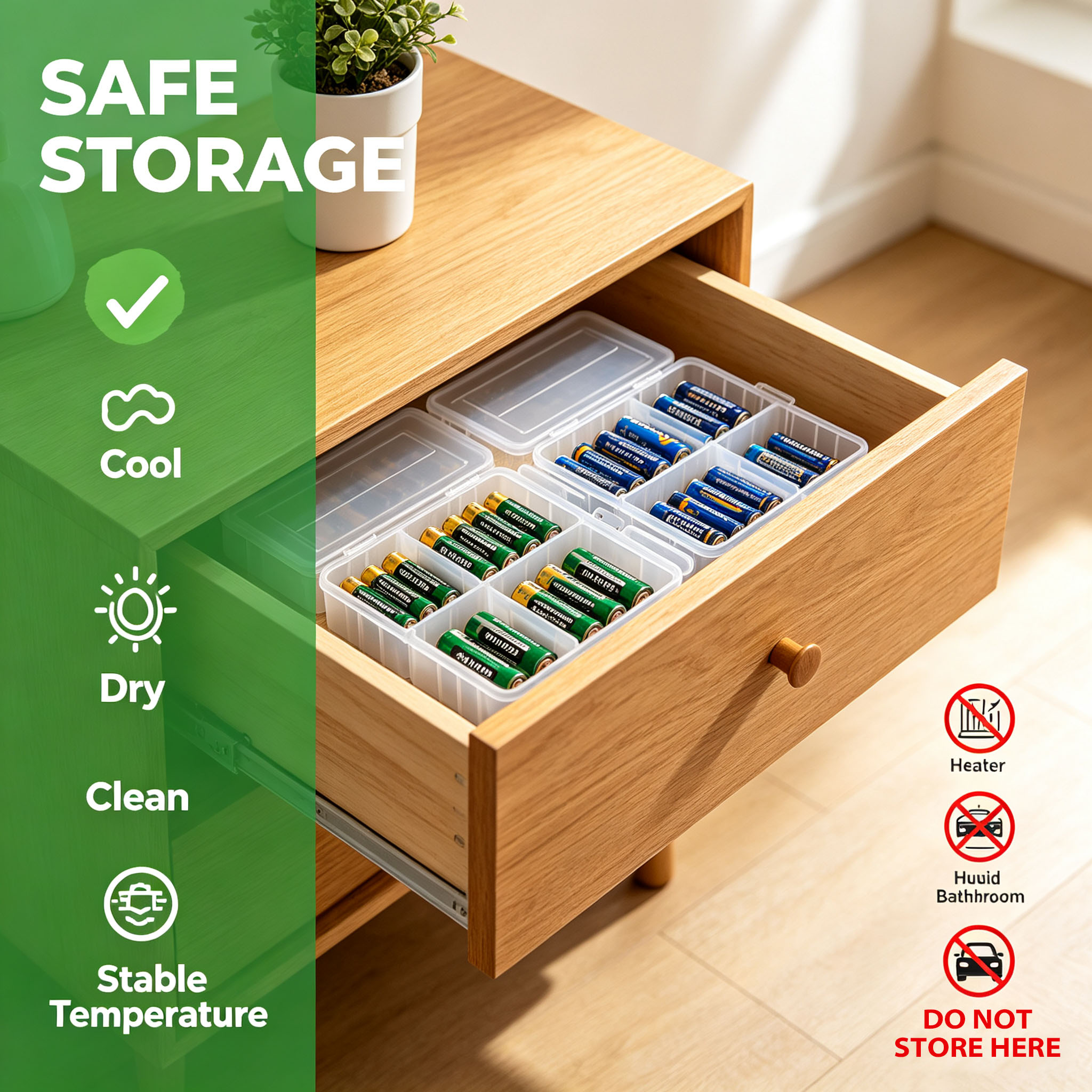
The ideal storage environment is surprisingly simple: cool, dry, clean, and stable. Normal indoor room temperature works well. A cabinet, drawer, or storage box is usually enough, as long as it’s away from heat and moisture.
Temperature
Heat accelerates chemical reactions inside batteries. Storing them near heaters, ovens, or hot water pipes is risky. Cars, attics, and greenhouses can reach extreme temperatures, especially in summer, making them unsuitable for battery storage.
Cold isn’t great either. While brief exposure won’t destroy a battery, repeated temperature swings can cause condensation. Moisture around terminals encourages corrosion. A stable indoor environment is better than any location that fluctuates between hot and cold.
Humidity
Bathrooms, laundry rooms, and damp basements are poor choices. Moisture can weaken packaging and corrode terminals. Batteries should never be sealed inside a damp container, because trapped moisture stays in contact with them.
Safety
Small batteries can be swallowed, and even larger ones can be dangerous if children play with them. A high cabinet with a closed door is safer than an open shelf.
4. Packaging and Containers: Why They Matter
Original packaging is designed to keep batteries organized and protected. It prevents terminals from touching metal objects and helps you identify battery types and expiration dates.
Avoiding Metal Contact
Loose batteries should never be stored with coins, keys, screws, or tools. If the positive and negative terminals are bridged by a conductive object, the battery can discharge rapidly. This may generate heat or, in rare cases, cause rupture.
Choosing the Right Container
If original packaging is gone, a plastic organizer is ideal. Non-metal containers reduce the risk of accidental short circuits. Organizers with individual compartments are especially helpful for AA and AAA batteries.
Cardboard boxes can work temporarily, but only if they’re dry and intact. Metal toolboxes should be avoided unless each battery is individually insulated.
Avoid Overcrowding
Packing batteries tightly can press terminals together or deform casings. Give them space.
5. Separating Batteries Properly
Not all batteries should be stored together. Mixing different types or conditions can cause confusion and increase risk.
New vs. Used
Used batteries may already be leaking. Storing them with new ones can contaminate the entire batch. Keep them in separate containers.
Different Chemistries
Alkaline batteries should not be mixed with zinc-carbon, lithium, nickel-metal hydride, or button cells. Each chemistry behaves differently. Mixing them in a device can cause uneven discharge, overheating, or leakage.
Labeling
Simple labels like “new,” “partially used,” and “used—dispose or recycle” help maintain order. Warehouses should follow first-in, first-out rotation to ensure older stock is used first.
Special Case: 9-Volt Batteries
Because both terminals sit close together, 9-volt batteries can short-circuit easily. Covering terminals with electrical tape is a safe practice.

6. Inspecting Batteries Before Storage
Before placing a battery into storage, give it a quick inspection. A safe battery should have:
- A clean, dry exterior
- No swelling or deformation
- No cracks or dents
- No rust or moisture
- No powdery residue
- No torn wrapper exposing metal
If a battery shows any of these signs, isolate it immediately. Do not store it with good batteries.
Handling Leaked Batteries
Avoid touching leaked material with bare hands. If contact occurs, wash thoroughly with water. If it gets into your eyes, rinse immediately and seek medical attention.
Cleaning Devices
If a device contains a leaking battery, wear gloves and follow the manufacturer’s cleaning instructions. Corrosion can damage metal contacts and circuit boards.
Unsafe Testing Methods
Never test batteries by heating them, striking them, opening them, or placing them in water. Non-rechargeable alkaline batteries must not be recharged—doing so can cause overheating or leakage.
7. Storing Batteries Inside Devices
Sometimes the safest place for a battery is inside the device designed to use it—but only when the device is actively in use. Leaving batteries inside unused equipment for months is risky.
Why It’s a Problem
Devices like flashlights, toys, and seasonal decorations may sit unused for long periods. During that time, batteries can slowly discharge and eventually leak.
What To Do
Before storing equipment long-term, remove the batteries unless the manufacturer specifically requires them. Inspect both the batteries and the device’s compartment for signs of corrosion.
Replacing Batteries
When installing new batteries, replace all of them at once. Mixing new and old batteries forces them to operate at different charge levels, increasing the chance of leakage.
Backup Power Devices
Some devices use batteries as backup power even when plugged into AC. Smoke alarms and safety equipment require special care—consult the manual before removing batteries.
8. Handling and Disposing of Used Batteries
Used alkaline batteries should be collected in a dry, non-metal container with a lid. Keep them away from heat, flames, children, and pets.
Disposal Rules
Regulations vary widely. In many regions, alkaline batteries can be placed in household trash, though recycling is encouraged. Some cities require recycling, and many retailers accept used batteries voluntarily.
Avoid Curbside Recycling
Batteries should not be placed in curbside recycling bins unless the program explicitly accepts them. They can damage sorting equipment.
Terminal Protection
Cover exposed terminals—especially on 9-volt batteries—with non-conductive tape before disposal.
What Not To Do
Never burn, crush, puncture, or dismantle batteries. Lithium-ion and rechargeable batteries require different disposal procedures.
9. Common Mistakes People Make
Despite good intentions, many people store batteries in ways that increase risk. Here are some frequent mistakes:
- Keeping batteries in a kitchen drawer with loose metal objects
- Refrigerating batteries in hopes of extending their life
- Leaving batteries inside rarely used devices
- Mixing different brands or ages in the same device
- Storing batteries in hot vehicles
- Assuming “dead” batteries are harmless
Each of these mistakes can lead to leakage, corrosion, or short circuits. Fortunately, they’re easy to avoid once you know what to look out for.
10. Conclusion
Safe alkaline battery storage doesn’t require specialized equipment or complicated procedures. It simply requires awareness: keep batteries cool, dry, organized, and away from metal objects; store them in original packaging or non-metal containers; separate new and used batteries; remove batteries from unused devices; inspect them regularly; and follow local disposal rules.
By treating batteries as chemical products rather than ordinary household items, you can significantly reduce the risks of leakage, corrosion, short circuits, and accidental ingestion.
Safe alkaline battery storage requires cool, dry conditions, separation of new and used cells, non‑metal containers, regular inspection, removal from unused devices, and proper disposal to prevent leakage, corrosion, short circuits, and safety hazards.
Table of Contents
- 1. Introduction
- 2. How Alkaline Batteries Behave and Why Storage Matters
- 3. Choosing a Safe Storage Location
- 4. Packaging and Containers: Why They Matter
- 5. Separating Batteries Properly
- 6. Inspecting Batteries Before Storage
- 7. Storing Batteries Inside Devices
- 8. Handling and Disposing of Used Batteries
- 9. Common Mistakes People Make
- 10. Conclusion