
 EN
1. Introduction
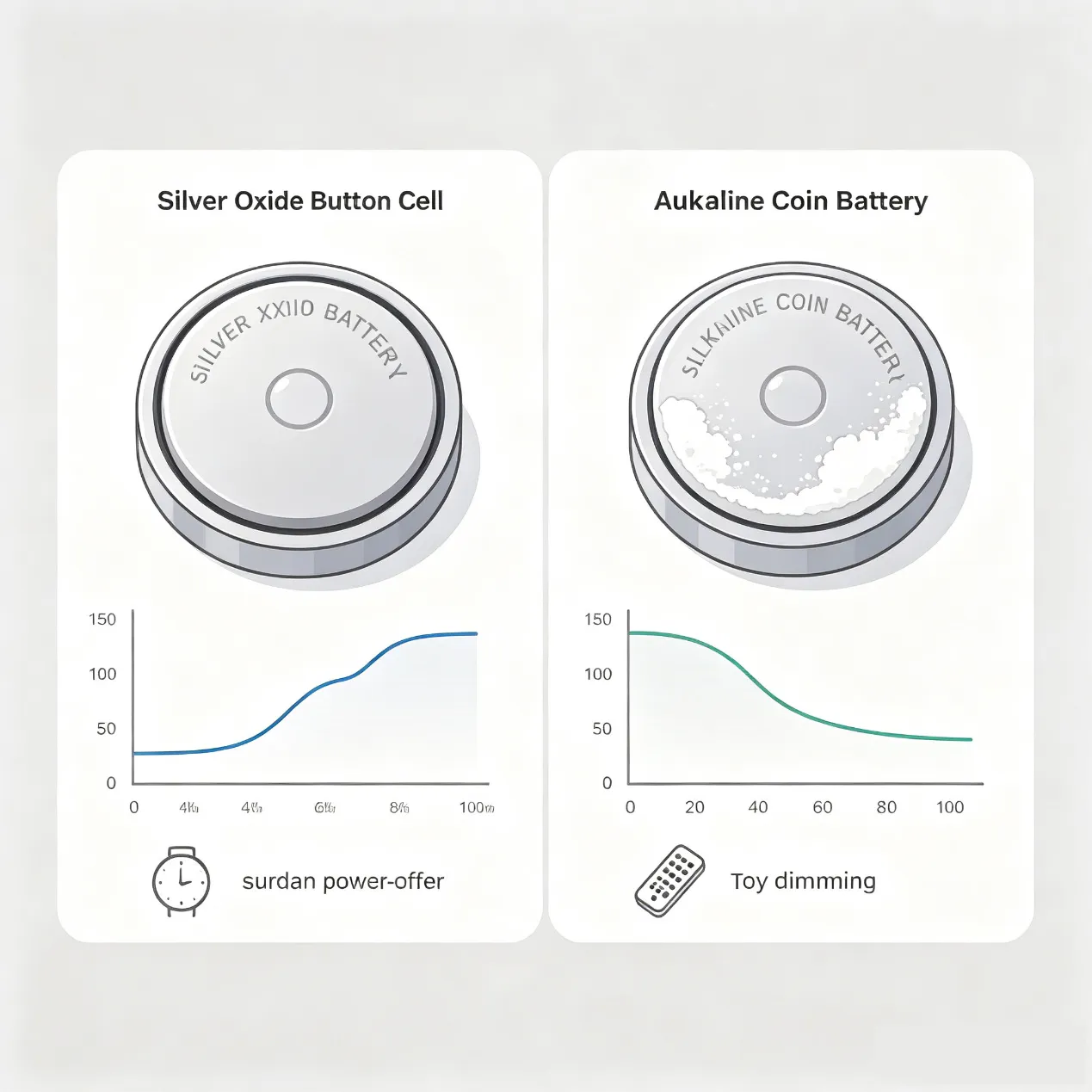
Small batteries may look simple, but anyone who has used them long enough knows they don’t all “die” the same way. Some keep working perfectly until the very last moment, then stop without warning. Others fade slowly, giving you hints that their energy is slipping away. Silver oxide button cells and alkaline coin cells fall into these two very different personalities. Although they share similar shapes and sizes, their behavior at the end of their life is shaped by the chemistry inside them.
This article takes a practical, human-level look at what actually happens when each type runs out of power, and why their final moments feel so different in real-world use.
2. The Chemistry Behind Their Behavior
2.1 Silver Oxide: A Clean, Predictable Reaction
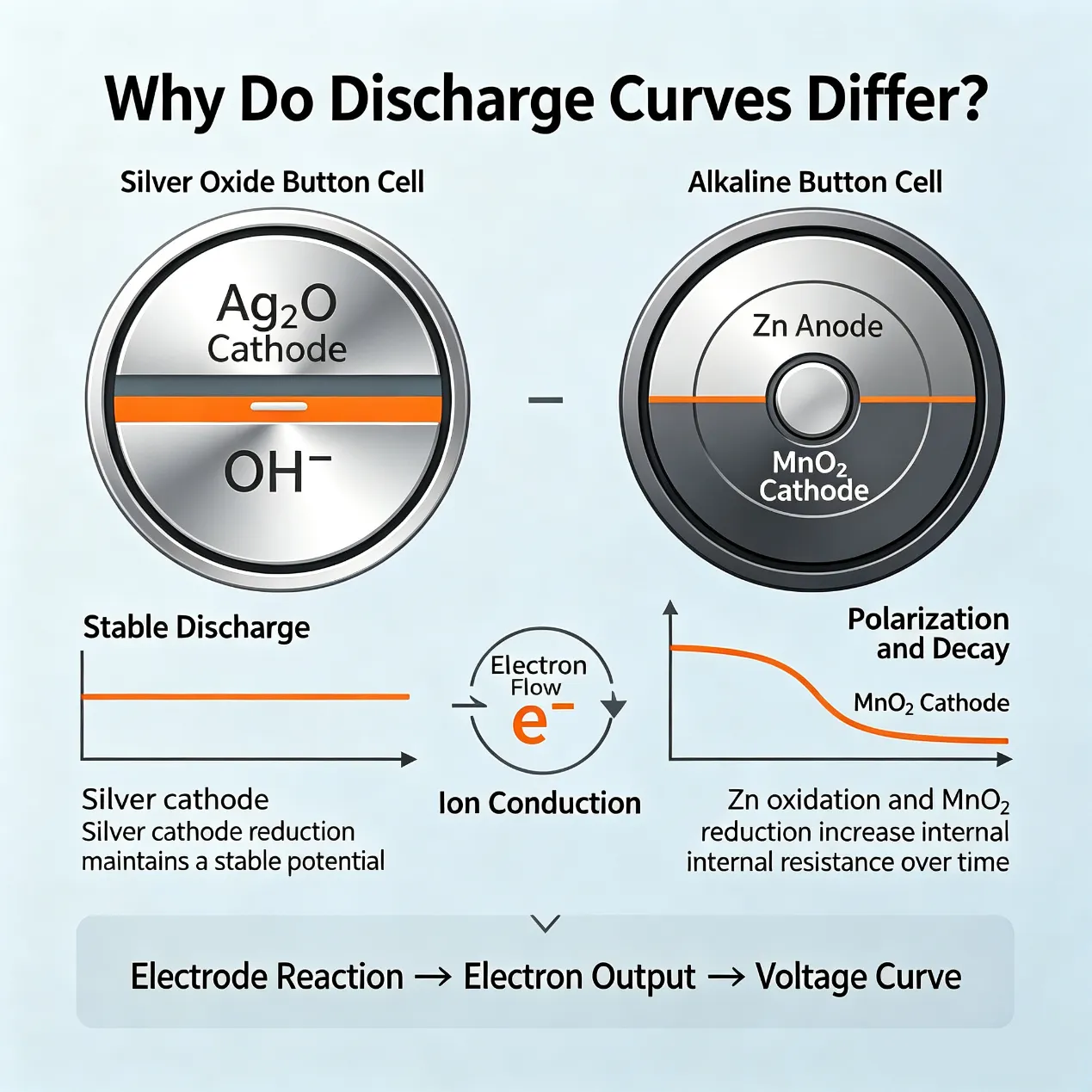
Silver oxide button cells rely on silver oxide and zinc, with an alkaline electrolyte. Their chemical reaction is tidy and stable. As the battery discharges, silver oxide becomes metallic silver, and zinc becomes zinc oxide. No gas, no swelling, no drama. This stability is the foundation of their predictable behavior.
2.2 Alkaline Coin Cells: A More Complicated System
Alkaline coin cells use manganese dioxide and zinc. Their chemistry is more complex, and under certain conditions—especially near the end of their life—it can generate tiny amounts of hydrogen gas. Even a small amount of gas matters inside a sealed metal can, and this is one of the reasons alkaline coin cells behave differently when they are nearly empty.
3. How Voltage Drops Near the End
3.1 Silver Oxide: Stable Until the Final Moment
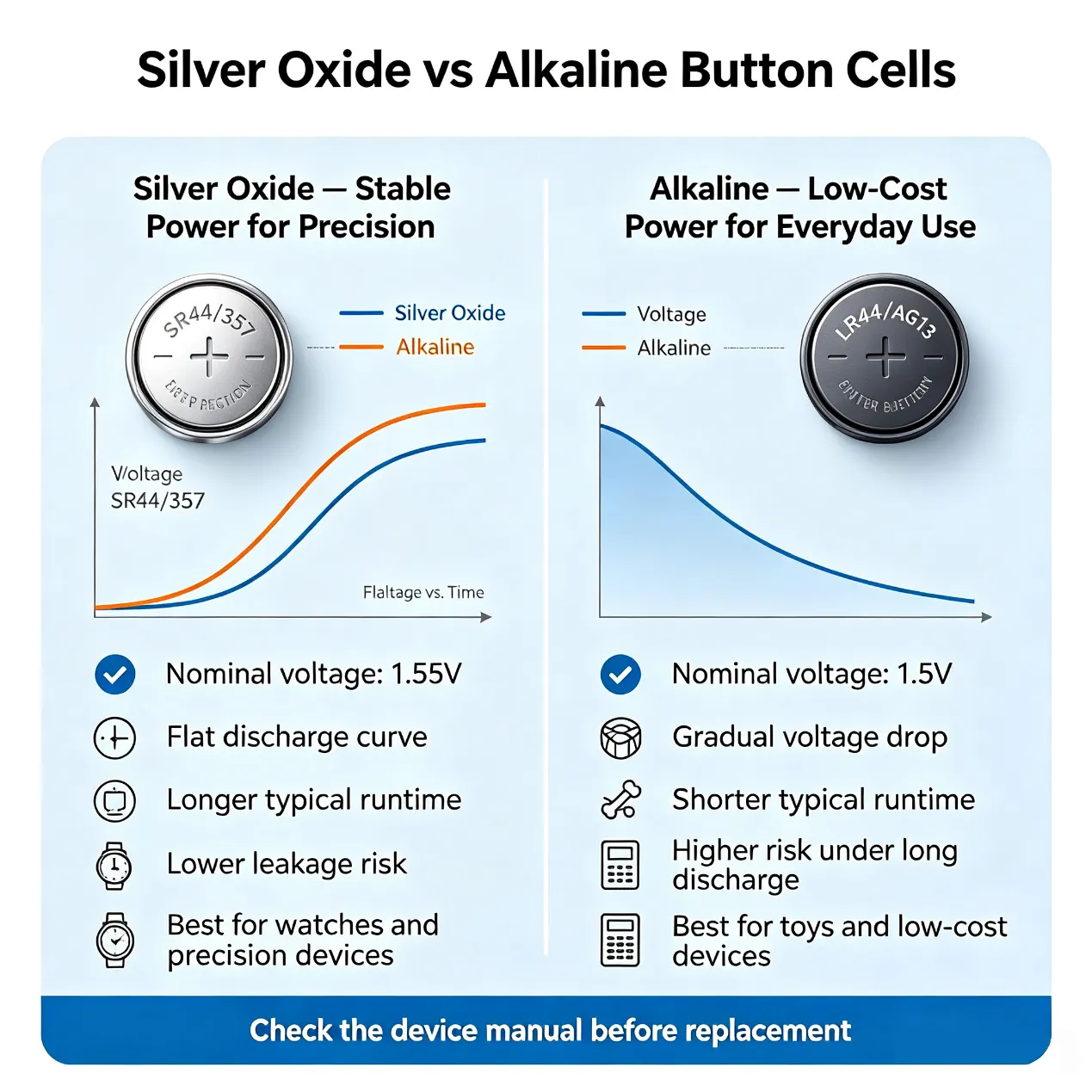
Silver oxide cells are famous for their flat discharge curve. They stay around 1.55 volts almost the entire time they are used. Your device works normally, with no dimming or slowing down. Then, suddenly, the voltage drops sharply. If your watch stops overnight without any warning, it was probably running on a silver oxide cell.
3.2 Alkaline Coin Cells: A Slow, Noticeable Decline
Alkaline coin cells behave more like a flashlight with tired batteries. Their voltage gradually declines. You may notice:
- Dimmer displays
- Slower response
- Occasional resets
- Weak sound or reduced brightness
This slow fade can be helpful if you want early warning, but it can also cause inconsistent performance in devices that expect stable voltage.
4. Internal Changes at End-of-Life
4.1 Silver Oxide: Stable Reaction Products
As silver oxide cells reach depletion, most of the active materials have already converted into stable compounds. There is no gas buildup, no swelling, and no pressure spikes. The battery simply reaches a point where it can no longer maintain voltage, but physically it remains almost unchanged.
4.2 Alkaline Coin Cells: Pressure and Chemical Stress
In alkaline coin cells, the manganese dioxide reaction can produce trace hydrogen gas. This increases internal pressure and pushes against the seals. If the battery is left inside a device after it is fully drained, the electrolyte may begin to seep out. This is why old alkaline coin cells sometimes leave white crusty residue on battery contacts.
5. Leakage Behavior
5.1 Silver Oxide: Rare Leakage
Because silver oxide cells do not generate gas and their chemistry stays stable, leakage is uncommon. Even when completely dead, they usually remain clean and intact.
5.2 Alkaline Coin Cells: Higher Leakage Risk
Alkaline coin cells are more prone to leakage, especially when:
- Fully drained
- Left inside a device for months
- Exposed to heat
The leaked electrolyte is corrosive and can damage springs, contacts, and circuit boards. Many people have opened a remote control only to find white powder everywhere—that’s alkaline residue.
6. Device Behavior When Each Type Runs Out
6.1 Silver Oxide Cells
Devices typically show:
- No early warning
- Sudden shutdown
- Stable performance until the last moment
- Minimal corrosion risk
This makes silver oxide ideal for watches and precision instruments.
6.2 Alkaline Coin Cells
Devices may show:
- Gradual weakening
- Flickering displays
- Slower response
- Occasional resets
- Higher risk of leakage
This behavior is acceptable for toys, small lights, and low-drain gadgets.
7. Physical Changes in the Battery
7.1 Silver Oxide
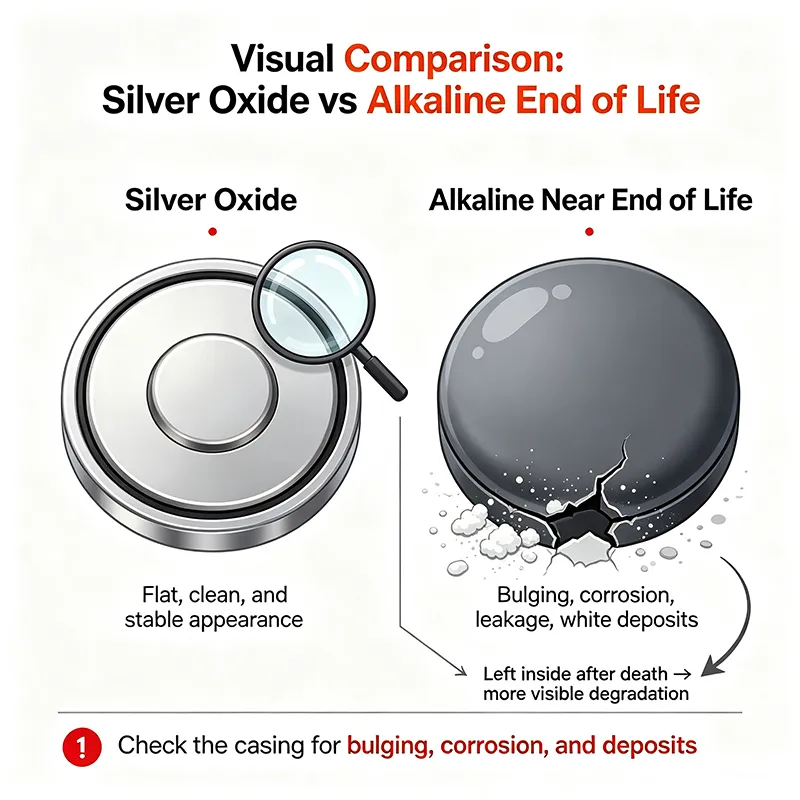
The casing usually stays flat and clean. No bulging, no crust, no discoloration beyond normal aging.
7.2 Alkaline Coin Cells
Near the end of life, alkaline cells may:
- Bulge slightly
- Show corrosion
- Leak electrolyte
- Leave white or chalky deposits
These symptoms are more common if the battery is left in the device long after it dies.
8. Environmental Considerations
Silver oxide cells contain silver, which is valuable and recyclable. They should not be thrown in regular trash.
Alkaline coin cells contain zinc and manganese compounds. They are less valuable but still better recycled than discarded.
9. Practical Advice for Users
9.1 Choose Based on Performance Needs
If you want stable performance, silver oxide is the better choice. If you want lower cost, alkaline coin cells are cheaper but come with trade-offs.
9.2 Remove Dead Alkaline Cells Promptly
Alkaline coin cells should not be left inside devices after they die. Silver oxide cells are safer to leave temporarily, but timely replacement is still recommended.
9.3 Predictability vs. Price
Silver oxide offers predictable end-of-life behavior. Alkaline offers affordability but less stability.
10. Conclusion
Silver oxide button cells and alkaline coin cells may look similar, but their behavior at the end of their life is shaped by very different chemistries. Silver oxide cells maintain stable voltage and die suddenly, usually without leaking. Alkaline coin cells fade gradually and are more likely to leak if left in place after depletion.
Knowing these differences helps you choose the right battery for your device and avoid unpleasant surprises—like a corroded battery compartment or a watch that stops without warning.
Table of Contents
- 1. Introduction
- 2. The Chemistry Behind Their Behavior
- 2.1 Silver Oxide: A Clean, Predictable Reaction
- 2.2 Alkaline Coin Cells: A More Complicated System
- 3. How Voltage Drops Near the End
- 4. Internal Changes at End-of-Life
- 5. Leakage Behavior
- 6. Device Behavior When Each Type Runs Out
- 7. Physical Changes in the Battery
- 8. Environmental Considerations
- 9. Practical Advice for Users
- 10. Conclusion