
 EN
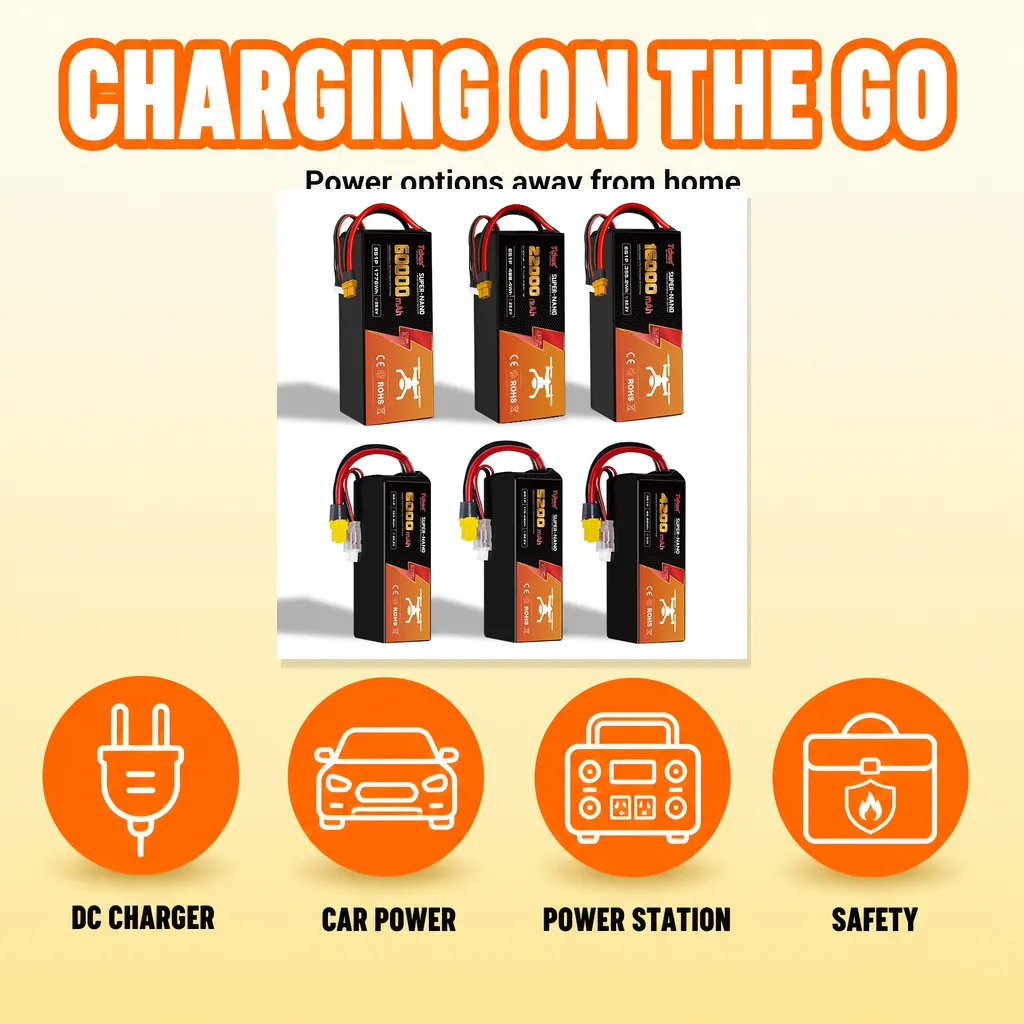
1. Plan Around Charge Time, Not Battery Count
Most pilots count batteries. The better habit is to count minutes.
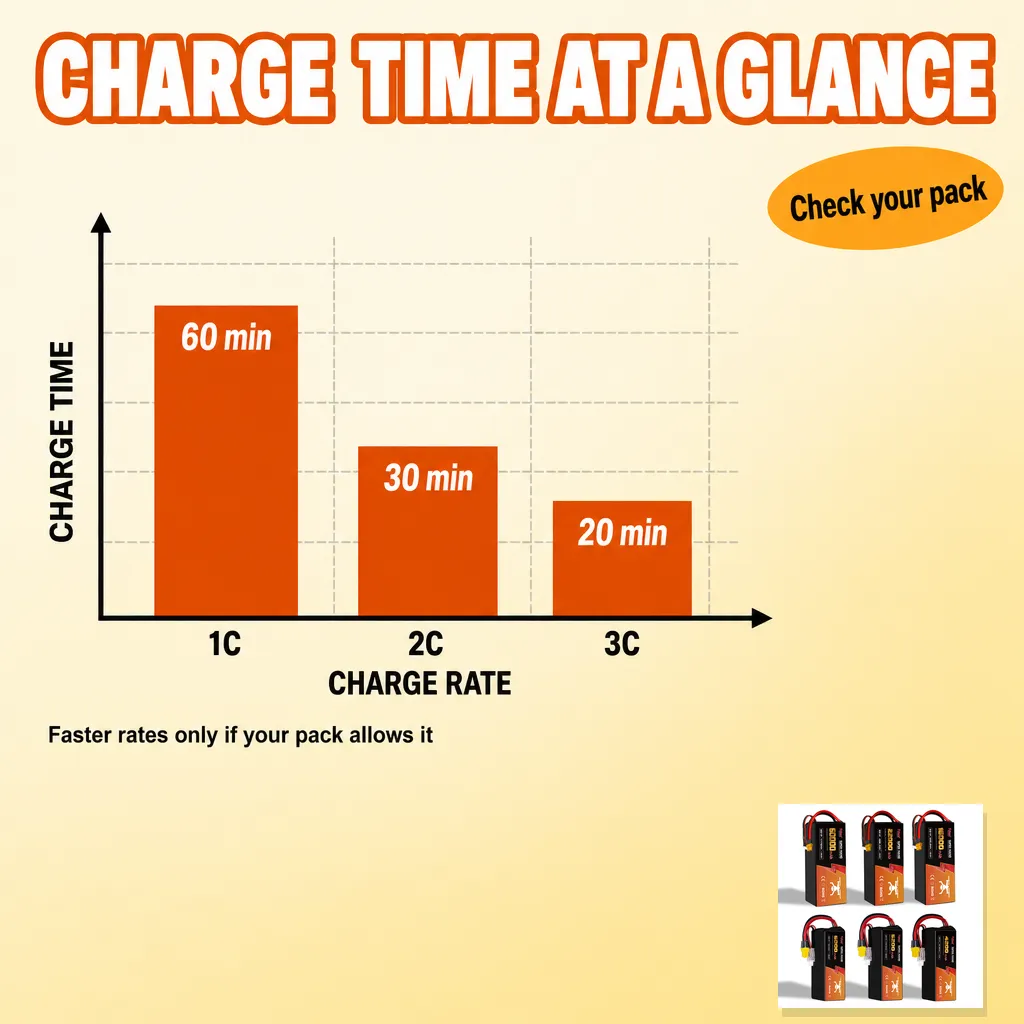
A lithium pack charged at 1C takes roughly an hour to fill, and the last stretch of a balance charge can stretch that further, especially on an older pack. That number sets your whole day. Six packs and one charger still means one pack per hour, no matter how many spares are in the case.
So think in three groups instead:
- What is flying right now
- What is cooling down and waiting for a charger
- What is charged and ready for the next flight
Keeping those three moving is what keeps you in the air. If a pack needs an hour and your flights run fifteen minutes, the arithmetic tells you how many packs and how many charger outputs you actually need.
2. Match the Charge Rate to the Pack
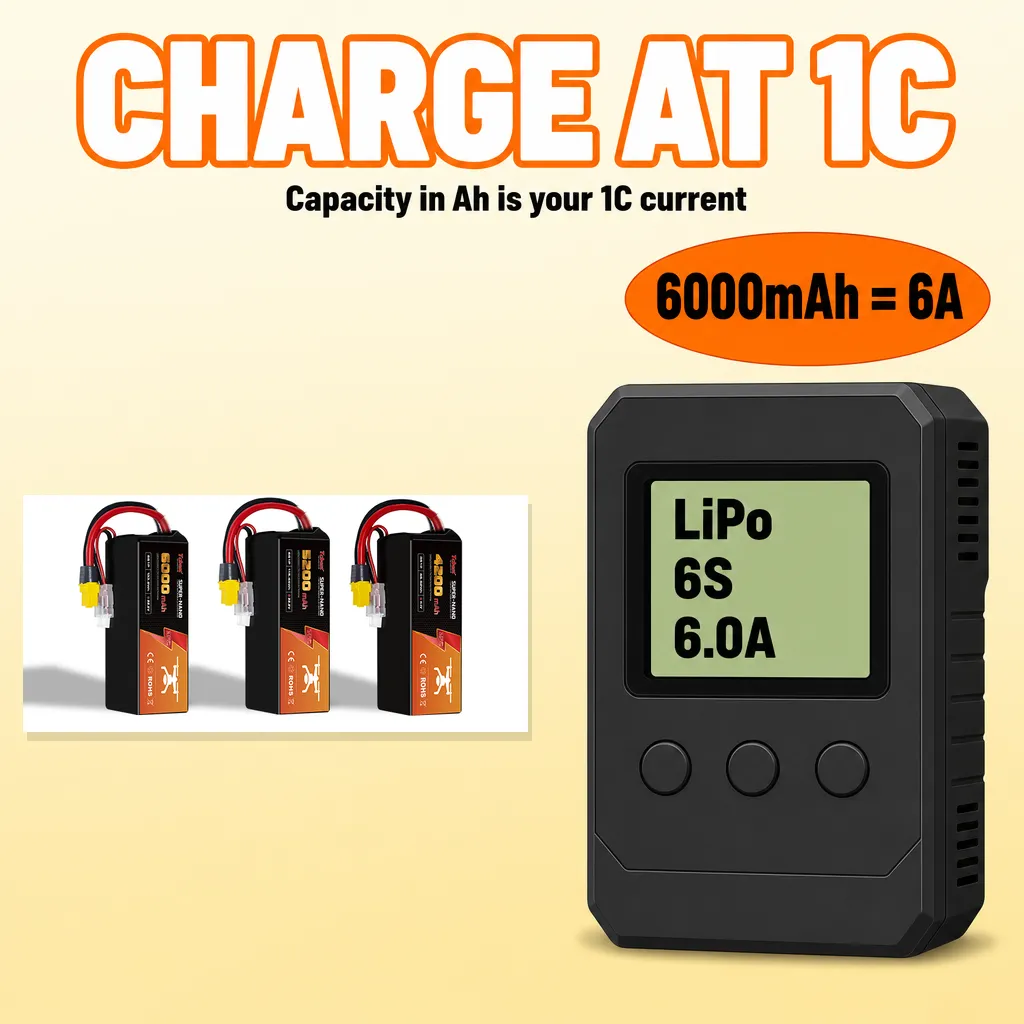
The 1C rate is easy to work out: capacity in amp-hours is your charging current. A 5000mAh pack charges at 5A, a 3300mAh pack at 3.3A, and so on.
Many modern packs accept 2C or higher, and in the field that speed is tempting. Whether it is a good idea depends on what the label says and how much pack life you are willing to trade. Higher currents mean more heat, and more heat means a shorter useful life. For a day out, a steady 1C charge is usually the best trade: predictable, gentle, and easy on whatever power supply you are running from.
One rule that matters more than the rate: never charge a pack straight off the drone. Let it come down to ambient temperature first. A hot pack takes a charge badly, and the cells do not enjoy it.
3. Always Balance Charge
It is tempting to cut corners when you are in a hurry, and the main leads are right there. Resist it.
Balance charging is what keeps the individual cells level with each other. Skip it repeatedly and the pack drifts out of balance, which eats capacity and eventually ends with one cell dragging the others down. A proper balance charge through the balance lead takes longer, but it is the difference between a pack that lasts several seasons and one that swells in a few months.
Smart batteries handle this internally, so there is nothing to configure. Standard LiPo packs need you to connect the balance lead every single time — in the field as much as at home.
4. Get a Charger That Runs on DC
This is the piece of gear that makes field charging possible. Plenty of hobby chargers accept DC input somewhere between 9V and 30V, which means they can run from a car battery, a portable power station, or a large field pack. Chargers with only an AC plug are useless the moment you leave the driveway.
Two extras are worth having:
- A parallel charging board, so one charger can top up several packs at once (same cell count, and pack voltages within about 0.1V per cell before you connect them)
- A spare set of leads with the right connectors for your packs, plus a fuse or two
5. Your Car Is Already a Power Source
For most pilots, the simplest field charging setup is the vehicle they arrived in.
Alligator clips on the car battery give you the most current and the least voltage drop. A 12V socket is more convenient but usually limited to around 10–15A, which is fine for smaller packs and slow for large ones. Either way, run the engine while you charge — pulling a few hundred watt-hours out of a parked car can leave you with a dead starter battery and a long wait.
Watch the leads too. Thin cables get warm and drop voltage, and a charger that keeps restarting is usually telling you the supply cannot keep up.
6. Portable Power Stations for Longer Days
If you are flying all day, far from the car, a portable power station earns its place in the truck. Modern units in the 500Wh to 1000Wh range offer both AC outlets and DC output, and they will happily run a hobby charger.
The math is simple enough to do before you buy. A 6S 5000mAh pack holds roughly 111Wh (22.2V × 5Ah), so filling a few packs from storage charge works out to a few hundred watt-hours once you account for inverter and charging losses. Size the station for the number of packs you realistically fly in a day, then add margin — charging a station from a wall overnight is cheaper than running a generator all afternoon.
7. Keep Field Charging Safe
Away from home there is no smoke alarm and no fire blanket on the wall, so the safety basics matter more, not less.
- Charge on a fire-resistant surface, and use a LiPo-safe bag when you can
- Never leave packs charging unattended, especially inside a vehicle or tent
- Keep packs out of direct sun — a hot car interior is no place to charge
- Skip charging in wet or damp conditions, and keep the charger off the ground if it might rain
- Retire any pack that is swollen, punctured, or has been in a crash instead of trying to top it up
How Much Power Do You Actually Need?
A rough estimate takes about a minute. Multiply the pack voltage by its capacity to get watt-hours, multiply by the number of packs you plan to refill, then add 20–30% for charging and conversion losses.
Four 6S 5000mAh packs come to roughly 444Wh of usable energy, so plan on a source that can deliver around 550–600Wh to be comfortable. That is easily within reach of a mid-size power station, and well within what a car can supply with the engine running. The mistake is buying gear first and doing this arithmetic later.
Mistakes That Cost You Batteries in the Field
- Charging a pack while it is still warm from flying
- Charging through the main leads and ignoring the balance lead
- Leaving packs fully charged in a hot car for weeks
- Draining the car battery with the engine off
- Running three packs at once from a supply that can only feed one
- Using thin, worn leads and blaming the charger for voltage errors
Final Thoughts
Charging on the go comes down to knowing three things before you leave: how fast your packs charge, what your power source can actually deliver, and how to do it without taking risks. Get those right and a day in the field stops being limited by the nearest wall socket.
Bring enough packs to keep flying, plan for an hour per pack, and treat the charging setup as part of your pre-flight routine. Batteries that are charged, balanced, and cool will reward you with far more flying time than any amount of rushing.
Related Articles
How to Choose Drone Batteries
Learn how voltage, capacity, discharge rating, and cell quality decide which pack belongs on your drone.
How to Check the Health of Drone Batteries
Spot wear early by checking physical condition, voltage, capacity, internal resistance, and battery warnings.
Drone Battery Storage Safety Tips
How storage charge, temperature, and regular inspection keep your packs in good shape.
Table of Contents
- 1. Plan Around Charge Time, Not Battery Count
- 2. Match the Charge Rate to the Pack
- 3. Always Balance Charge
- 4. Get a Charger That Runs on DC
- 5. Your Car Is Already a Power Source
- 6. Portable Power Stations for Longer Days
- 7. Keep Field Charging Safe
- How Much Power Do You Actually Need?
- Mistakes That Cost You Batteries in the Field
- Final Thoughts
- Related Articles