
 EN
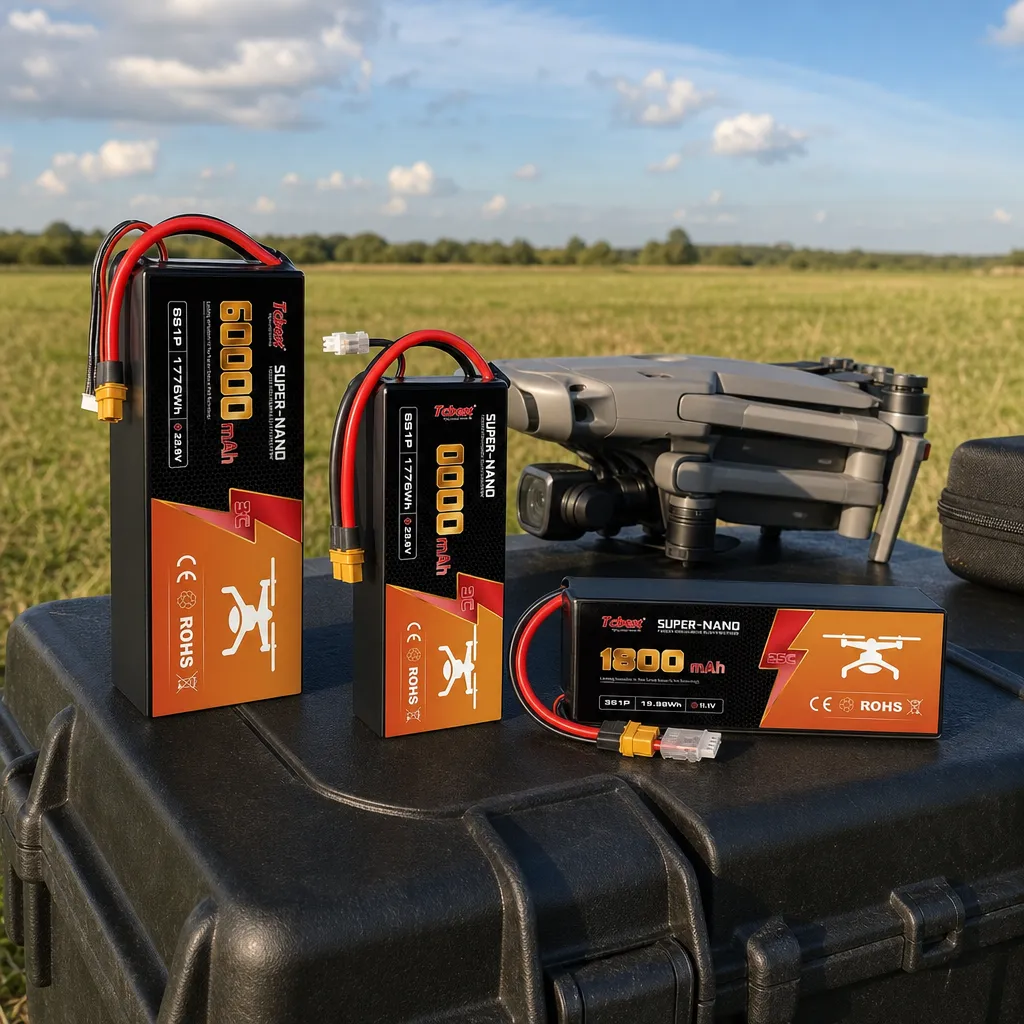
If you regularly ship drone batteries by air, the process probably feels familiar: book the shipment, prepare the cartons, and send the tracking number to your customer. Then comes the message nobody wants to receive: the cargo has been held at the airport of departure, with no clear explanation beyond “pending document review.”
This has become increasingly common in 2026, and it is not happening by chance. Tighter international regulations, expanded state-of-charge limits, and documentation errors have made drone batteries one of the more challenging categories of air cargo.
The good news is that most delays are preventable. The key is understanding what has changed, which rules apply to your shipment, and where problems are most likely to occur.
Why Are Drone Battery Air Shipments Frequently Delayed in 2026?
UN3480 or UN3481: Getting the Classification Right
The first major decision is how the batteries should be classified. Many shippers get this wrong without realizing it.
Drone batteries normally fall under one of two UN numbers:
- UN3480: Lithium-ion batteries shipped on their own, packed separately and not contained in or packed with a drone.
- UN3481: Lithium-ion batteries packed with equipment or contained in equipment.
This distinction matters because the shipping requirements are different.
Standalone drone batteries classified as UN3480 are considered higher-risk cargo. They are prohibited on passenger aircraft and may only be transported on cargo aircraft. The outer packaging must also display a Cargo Aircraft Only (CAO) label.
If standalone batteries are incorrectly declared as UN3481, the paperwork may pass an initial review, but the shipment can still be rejected during the airline’s dangerous-goods acceptance inspection. On the other hand, classifying batteries installed in equipment as UN3480 may create unnecessary restrictions and increase transportation costs.
The watt-hour marking on the battery casing is another important checkpoint. Under the 67th edition of the IATA Dangerous Goods Regulations, batteries manufactured after December 31, 2025, must display their watt-hour rating. Batteries without the required Wh marking may be refused for transport.
Missing or Inconsistent Documents
In practice, many drone battery shipments are delayed not because of an actual safety incident, but because the paperwork is incomplete or does not match the cargo.
In 2026, customs authorities and airline dangerous-goods teams are reviewing battery shipments more carefully. Describing the goods simply as “lithium batteries” is no longer enough. Reviewers may expect to see the UN number, watt-hour rating, state-of-charge declaration, and UN38.3 test information, all of which must match the batteries inside the cartons.
If even one detail is missing or inconsistent, the shipment may be placed on hold.
Common problems include:
- An outdated UN38.3 test summary or a generic template that does not identify the actual battery model.
- An SDS or MSDS covering only the battery cells rather than the finished drone battery pack.
- A commercial invoice that describes the products only as “drone accessories” without identifying the lithium battery classification.
Any one of these issues can lead to additional questions, inspection, or rejection by customs or the airline.
Documents to Prepare Before Booking Air Freight
A Model-Specific UN38.3 Test Summary
The UN38.3 test summary is one of the most important documents for shipping drone batteries. Without valid UN38.3 information, airlines will generally not accept the shipment.
The document confirms that the cell or battery design has passed the required tests under the UN Manual of Tests and Criteria. These tests cover altitude simulation, thermal testing, vibration, shock, external short circuit, impact or crush, overcharge, and forced discharge.
One detail is often overlooked: the test summary must match the exact battery model being shipped.
If a manufacturer changes the cells used inside a battery pack while continuing to rely on a report for the previous cell design, the original test documentation may no longer apply. This situation, sometimes referred to as cell substitution, is more common than many buyers realize.
The test summary should remain valid, refer to the correct edition of the UN Manual of Tests and Criteria, and be traceable to the battery model in the shipment.
A physical copy does not necessarily need to travel with every shipment. The document may be provided electronically, through a link, or by QR code, as long as it can be supplied promptly when requested. What matters is that you can produce a valid report matching the batteries inside the cartons.
An SDS for the Finished Drone Battery Pack
The Safety Data Sheet, or SDS—formerly commonly called an MSDS—describes the battery’s chemical composition, handling precautions, hazards, and emergency-response measures.
A common mistake is using the cell manufacturer’s SDS for a finished drone battery pack.
A battery pack is not the same as a bare cell. It may include a battery management system, protective casing, connectors, wiring, and, in some cases, an integrated charging circuit. The SDS should accurately describe the finished battery pack being shipped, rather than only the cells inside it.
If the document identifies a bare cell while the shipment contains fully assembled drone battery packs, airline or customs reviewers may treat the information as inconsistent and place the cargo on hold.
Language requirements should also be checked in advance. An English SDS may be accepted in many markets, while certain destination countries or local authorities may request a version in the local language.
Matching Invoices, Packing Lists, and Carton Labels
This is where documents and physical cargo come together—and where small mistakes can quickly become expensive delays.
The commercial invoice should accurately describe the drone batteries and include the correct UN number, watt-hour rating, and proper shipping name where required. The packing list should match the actual number of cartons and units. All outer-packaging labels, including the Class 9 hazard label, lithium battery mark, and CAO label where applicable, must correspond with the shipping documents.
Even a minor mismatch may cause the shipment to be held or rejected. For example:
- The invoice states UN3480, but the carton is marked UN3481.
- The packing list shows three cartons, while four cartons arrive at the airport.
- The watt-hour rating on the invoice does not match the rating printed on the battery.
A standard air-shipping document package for drone batteries will usually include:
- Shipper’s Declaration for Dangerous Goods
- Commercial invoice
- Packing list
- UN38.3 test summary
- SDS
The information across all documents must be consistent.
Air-Freight Restrictions to Watch in 2026
The Expanded 30% State-of-Charge Rule
One of the most important operational changes in 2026 is the wider application of the 30% state-of-charge limit.
Previously, the 30% SOC restriction mainly applied to standalone lithium-ion batteries shipped under UN3480. From January 1, 2026, the requirement also extends to lithium-ion batteries packed with equipment under Packing Instruction 966. This affects many orders in which drone batteries are shipped in the same package as drones, accessories, or spare parts.
Under the rule, batteries must be prepared for shipment at no more than 30% of their rated capacity. For batteries rated at 2.7 Wh or less, the reduced state of charge may be treated as a recommendation. For batteries above 2.7 Wh, it is mandatory.
This change has a significant effect on drone batteries because they are usually well above the 2.7 Wh threshold. Larger models, including batteries rated at or above 100 Wh, must be managed especially carefully.
If batteries arrive at the airport at 80% charge—a common factory shipping level—the cargo may be rejected. Airlines may verify compliance, and undeclared batteries with a high state of charge can be removed from the shipment.
In practice, businesses need a documented process for reducing the battery charge before packing. It is not enough to assume that the factory has already handled it. The SOC should be checked, recorded, and declared correctly in the transportation documents.
Understanding the Limits for UN3480 Shipments
Standalone drone batteries classified as UN3480 are subject to strict air-transport restrictions. They are prohibited on passenger aircraft and may only be carried on cargo aircraft. The outer packaging must display a clearly visible CAO label.
This can limit routing options. If the destination is mainly served by passenger flights, the cargo may need to wait for a freighter service or move through a hub that accepts Cargo Aircraft Only shipments. That can increase both transit time and cost. During peak shipping seasons, limited freighter capacity may lead to longer delays than expected.
Packaging requirements are also stricter. The batteries must be placed in strong, rigid outer packaging that meets the applicable performance standards. For large or heavy drone batteries, ordinary corrugated cartons may not be sufficient.
Each battery must be protected against short circuits, movement, and physical damage. Terminals should be insulated, and suitable cushioning should prevent the batteries from shifting inside the carton.
Standalone UN3480 batteries are treated as higher-risk cargo and are subject to strict state-of-charge controls. Unless special approval has been granted by the appropriate authorities and airline, the 30% SOC limit should be treated as mandatory.
How to Reduce Delays and Keep Shipments Moving
Pack Batteries to Prevent Short Circuits and Movement
Packaging is not only about preventing cosmetic damage. Its main purpose is to stop conditions that could lead to a short circuit, overheating, or damage during transportation.
A shipment is likely to be rejected if batteries can slide around inside the carton, come into contact with conductive materials, or have exposed terminals.
The basic precautions are straightforward:
- Cover the terminals with insulating caps or tape.
- Separate individual batteries so they cannot touch one another.
- Use foam inserts or other cushioning materials to hold each battery securely.
- Choose outer packaging suitable for the total weight and battery size.
Large-capacity drone batteries should be packed in strong, rigid outer cartons. The required labels must be placed clearly on the outside, including the Class 9 hazard label and the lithium battery mark with the correct UN number. UN3480 shipments must also carry the CAO label.
Certain packaging details can trigger additional inspection. A carton labeled as containing lithium batteries but weighing far less than expected may appear suspicious. Handwritten labels, partially covered markings, or contradictory information can also lead to manual inspection.
Clean, professional packaging with clear and consistent labels is much more likely to pass the acceptance process smoothly.
Build Compliance into the Entire Shipping Process
The most effective way to reduce delays is to treat compliance as part of production and order management, rather than as a last-minute checklist before dispatch.
Shipping teams need to understand more than which documents to attach. They should know how to check that the UN38.3 test summary matches the battery model, confirm that the state of charge is within the permitted limit, and verify that the invoice, packing list, and labels all contain the same information.
Dangerous-goods documentation should only be prepared and signed by properly trained personnel.
Buyer education is equally important. Distributors, retailers, and end users need to understand what they are receiving and what responsibilities may apply at the destination.
For example, if customers do not know that batteries were intentionally discharged to 30% for air-transport safety, they may complain that the products arrived “nearly empty.” If they are unfamiliar with the accompanying documents, they may also struggle to respond to customs questions at the destination.
A practical solution is to include a one-page shipment information sheet with every order. It can briefly explain the dangerous-goods classification, state of charge, supporting documents, and the appropriate contact person for compliance questions. This reduces unnecessary back-and-forth and shows buyers that the supplier understands international battery-shipping requirements.
Communication between production, documentation, and logistics teams is just as important. The employee responsible for reducing batteries to 30% charge should share the results with the person preparing the dangerous-goods declaration. The packing team applying the labels should confirm carton quantities with the employee preparing the packing list.
Standardizing these handovers can significantly reduce the number of mistakes that lead to rejected or delayed shipments.
Final Thoughts
Shipping drone batteries by air in 2026 is still entirely manageable, but there is very little room for shortcuts.
Regulations continue to tighten, particularly around state of charge and dangerous-goods classification. Documentation requirements are becoming more detailed, and airlines and customs authorities are paying closer attention to whether the paperwork matches the physical cargo.
The shippers that move batteries consistently and experience fewer delays are not necessarily the largest or best connected. They are usually the ones with stronger compliance procedures.
They make sure the UN38.3 documentation matches the battery being shipped. They reduce the state of charge to 30% and keep a record of it. They ensure that the invoice, packing list, and labels are consistent. They secure every battery against movement and short circuits. They also explain the shipping requirements to their customers before the goods arrive.
None of these steps is particularly impressive on its own. Yet together, they are what keep drone battery shipments moving in an increasingly strict regulatory environment. If you need any suggestion, Tcbest Battery is a good choice.