
 EN
EN
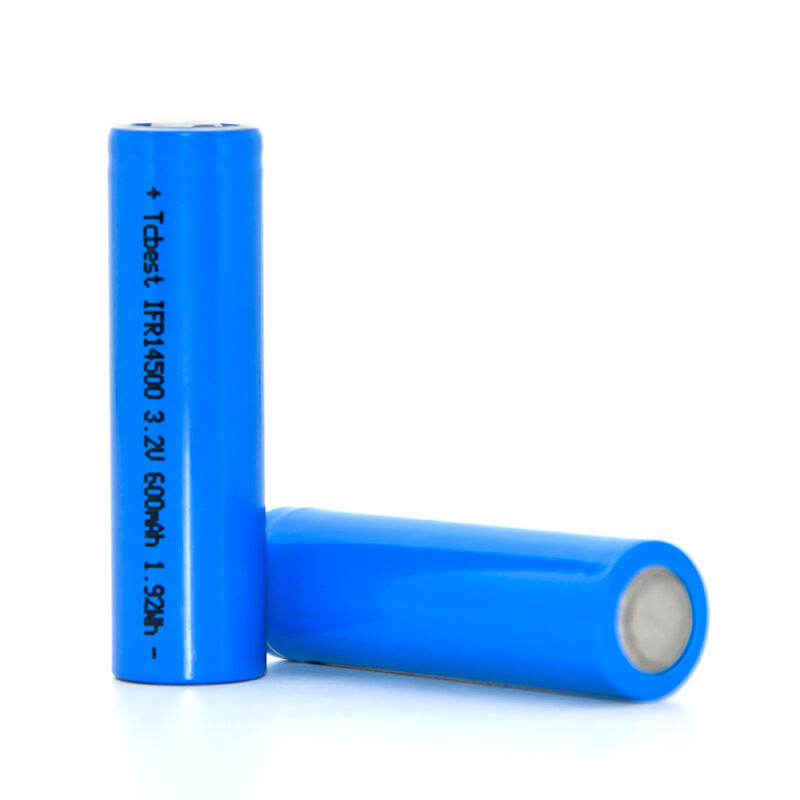
The global battery industry is experiencing unprecedented transformation as demand for energy storage solutions continues to surge across automotive, industrial, and consumer electronics sectors. Among various battery form factors, the large-cylindrical battery has emerged as a dominant force in electric vehicle manufacturing and grid-scale energy storage applications. Understanding the cost trends associated with large-cylindrical battery production has become critical for manufacturers, investors, and technology developers seeking to navigate this rapidly evolving market landscape.
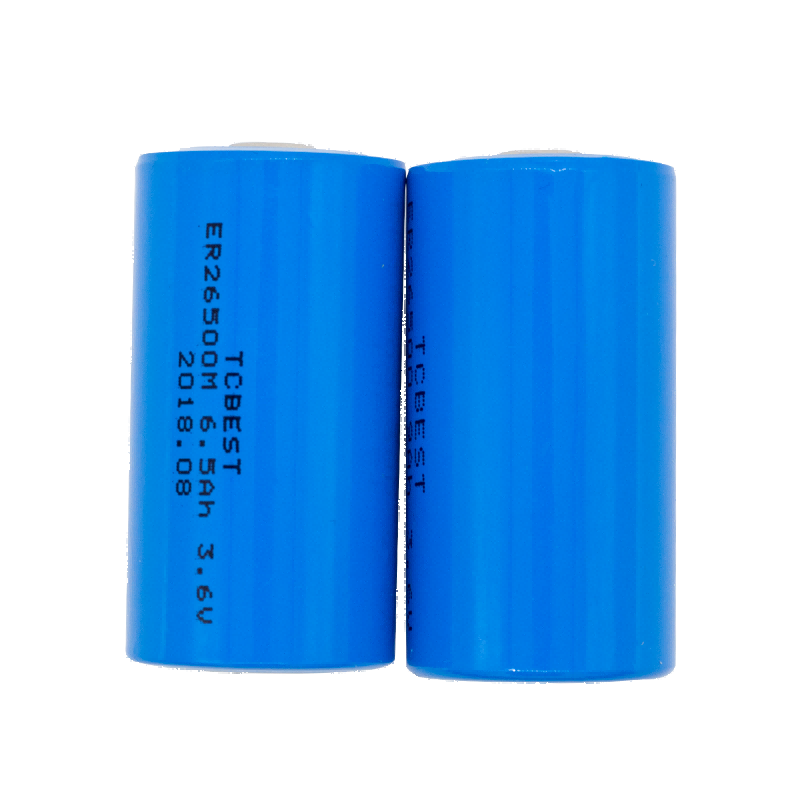
Manufacturing costs for large-cylindrical battery systems have demonstrated significant volatility over the past decade, influenced by raw material prices, technological advancements, and production scale economies. Industry analysts project that large-cylindrical battery production costs will continue declining through 2030, driven primarily by improved manufacturing processes, enhanced energy density capabilities, and strategic supply chain optimization initiatives. These cost reductions are essential for achieving widespread adoption of electric vehicles and stationary energy storage systems across global markets.
Raw Material Cost Dynamics
Lithium Price Fluctuations
Lithium carbonate and lithium hydroxide prices have experienced dramatic fluctuations, directly impacting large-cylindrical battery production economics. Market data indicates that lithium prices surged from approximately $8,000 per ton in 2020 to over $70,000 per ton in early 2022, before declining to more sustainable levels around $25,000 per ton by 2023. These price volatilities significantly affect manufacturing cost structures for large-cylindrical battery producers, necessitating strategic hedging mechanisms and long-term supply agreements to maintain competitive pricing strategies.
Mining companies are investing heavily in lithium extraction capacity expansion, with new projects in Australia, Chile, and Argentina expected to stabilize supply chains. The development of direct lithium extraction technologies and recycling capabilities will further influence raw material costs for large-cylindrical battery manufacturing. Industry experts predict that lithium prices will stabilize between $15,000-20,000 per ton over the medium term, providing more predictable cost foundations for battery manufacturers.
Nickel and Cobalt Market Pressures
Nickel and cobalt represent critical components in high-energy-density large-cylindrical battery chemistries, with their pricing trends significantly impacting overall production costs. Nickel prices have shown correlation with stainless steel demand and geopolitical tensions, particularly regarding Indonesian export policies and Russian supply disruptions. The transition toward nickel-rich cathode materials in large-cylindrical battery designs has intensified demand pressures, creating supply-demand imbalances that influence manufacturing economics.
Cobalt pricing remains subject to ethical sourcing requirements and concentrated supply from Democratic Republic of Congo mining operations. Battery manufacturers are actively reducing cobalt content in large-cylindrical battery chemistries, implementing NCM (Nickel Cobalt Manganese) and NCA (Nickel Cobalt Aluminum) formulations with lower cobalt percentages. These chemistry modifications help mitigate cost volatility while maintaining performance specifications required for automotive and energy storage applications.
Manufacturing Scale Economics
Gigafactory Production Efficiency
Large-scale manufacturing facilities, commonly referred to as gigafactories, have revolutionized large-cylindrical battery production economics through economies of scale implementation. These facilities typically achieve cost reductions of 15-20% compared to traditional manufacturing approaches, primarily through automated production lines, optimized material handling systems, and integrated supply chain management. Leading manufacturers have demonstrated that gigafactory operations can produce large-cylindrical battery cells at costs below $100 per kWh, approaching critical threshold levels for mass market adoption.
Automated assembly processes within gigafactories have reduced labor costs while improving quality consistency and production throughput rates. Advanced robotics systems handle material placement, welding operations, and quality inspection processes with precision levels unattainable through manual assembly methods. These technological improvements directly translate to lower per-unit costs for large-cylindrical battery production, enabling competitive pricing strategies across various market segments.
Technology Integration Benefits
Integration of advanced manufacturing technologies, including artificial intelligence monitoring systems, predictive maintenance protocols, and real-time quality control mechanisms, has reduced waste and improved yield rates in large-cylindrical battery production. These technological implementations have demonstrated cost savings of 8-12% through reduced material waste, minimized rework requirements, and optimized production scheduling algorithms. Machine learning applications enable continuous process optimization, identifying efficiency improvement opportunities that traditional manufacturing approaches cannot achieve.
Digital twin technologies allow manufacturers to simulate and optimize large-cylindrical battery production processes before implementing physical changes, reducing development costs and accelerating time-to-market for new product variants. These simulation capabilities enable rapid prototyping of different cell designs, chemistry formulations, and manufacturing parameters without costly physical trials. The integration of Industry 4.0 principles into large-cylindrical battery manufacturing has created sustainable competitive advantages for early adopters.
Energy Density Improvements
Silicon Anode Advancements
Silicon anode technology represents a transformative development in large-cylindrical battery design, offering potential energy density improvements of 20-40% compared to traditional graphite anodes. These enhancements enable manufacturers to deliver equivalent energy storage capacity using fewer materials, directly reducing production costs per unit of stored energy. Silicon anode integration requires sophisticated manufacturing techniques and protective coating technologies, but the resulting cost per kWh improvements justify the additional processing complexity.
Commercial implementation of silicon anodes in large-cylindrical battery production has progressed rapidly, with several manufacturers achieving pilot-scale production capabilities. The technology addresses volume expansion challenges through nanostructured silicon particles and polymer binder systems that accommodate dimensional changes during charge-discharge cycles. These innovations extend cycle life while maintaining the cost advantages associated with increased energy density in large-cylindrical battery applications.
Advanced Cathode Materials
Next-generation cathode materials, including lithium iron phosphate (LFP) and high-nickel NCM formulations, are reshaping cost structures for large-cylindrical battery production. LFP chemistries offer cost advantages through abundant raw material availability and simplified manufacturing processes, while high-nickel formulations provide superior energy density characteristics. Manufacturers are optimizing cathode material selection based on specific application requirements and cost-performance trade-offs.
Cathode material innovations include single-crystal particles, protective surface coatings, and dopant additions that improve thermal stability and cycle life performance. These improvements reduce warranty costs and extend useful life for large-cylindrical battery systems, improving total cost of ownership calculations for end users. Advanced cathode technologies enable manufacturers to offer differentiated products while maintaining competitive production cost structures.
Supply Chain Optimization
Vertical Integration Strategies
Leading large-cylindrical battery manufacturers are implementing vertical integration strategies to control costs and ensure supply chain reliability. These approaches include backward integration into raw material processing, component manufacturing, and recycling operations. Vertical integration enables manufacturers to capture value across the entire production chain while reducing dependency on external suppliers for critical materials and components.
Strategic partnerships between battery manufacturers and mining companies have created secured supply agreements that provide price stability and volume guarantees for large-cylindrical battery production. These relationships enable long-term cost planning and reduce market volatility exposure for both parties. Joint venture structures allow risk sharing while maintaining operational flexibility for changing market conditions.
Regional Manufacturing Networks
Development of regional manufacturing networks has reduced transportation costs and improved supply chain responsiveness for large-cylindrical battery production. Local sourcing strategies minimize logistics expenses while supporting regional economic development and reducing carbon footprint associated with international shipping. These networks enable just-in-time manufacturing approaches that reduce inventory carrying costs and improve cash flow management.
Regional manufacturing capabilities also provide supply chain resilience against geopolitical disruptions and trade policy changes that could affect international large-cylindrical battery trade. Distributed manufacturing networks enable manufacturers to serve local markets more effectively while maintaining cost competitiveness through optimized supply chain configurations. These strategic approaches have become increasingly important in the context of supply chain security considerations.
Technology Innovation Impact
Solid-State Battery Development
Solid-state battery technologies represent the next frontier in large-cylindrical battery innovation, offering potential cost reductions through simplified manufacturing processes and improved safety characteristics. These technologies eliminate liquid electrolytes, reducing fire risk and enabling higher energy density packaging configurations. While still in development phases, solid-state approaches could significantly reduce production costs through simplified thermal management requirements and enhanced design flexibility.
Research and development investments in solid-state large-cylindrical battery technologies have accelerated, with several manufacturers targeting commercial production by 2027-2030. The transition to solid-state designs requires new manufacturing equipment and process development, representing significant capital investments but offering long-term cost advantages. Early adopters of solid-state technology may achieve competitive advantages through differentiated product offerings and improved manufacturing economics.
Recycling Technology Integration
Advanced recycling technologies are creating closed-loop manufacturing systems that reduce raw material costs for large-cylindrical battery production. These systems recover valuable materials including lithium, nickel, cobalt, and rare earth elements from end-of-life batteries, creating secondary supply sources that reduce dependency on mining operations. Recycling integration can reduce raw material costs by 30-50% while supporting sustainability objectives and regulatory compliance requirements.
Direct recycling processes preserve cathode material structure, enabling reuse in new large-cylindrical battery production with minimal processing requirements. These approaches offer superior economics compared to traditional hydrometallurgical recycling methods that require complete material breakdown and reconstruction. Investment in recycling infrastructure has become a strategic priority for large-cylindrical battery manufacturers seeking sustainable cost advantages.
Market Demand Influences
Electric Vehicle Adoption Rates
Electric vehicle market growth directly influences large-cylindrical battery production volumes and associated cost structures. Accelerating EV adoption rates create economies of scale opportunities that reduce per-unit manufacturing costs through higher production volumes. Government incentive programs, emission regulations, and consumer preference shifts are driving sustained demand growth that supports investment in manufacturing capacity expansion and process optimization initiatives.
Automotive manufacturer commitments to electrification have created predictable demand forecasts that enable large-cylindrical battery producers to plan capacity investments and secure long-term supply agreements. These demand guarantees provide financial justification for gigafactory construction and advanced manufacturing technology implementation. Sustained volume growth creates learning curve benefits that continuously reduce production costs through operational experience and process refinement.
Energy Storage Market Expansion
Grid-scale energy storage deployment is creating additional demand for large-cylindrical battery systems, further supporting economies of scale in manufacturing operations. Utility-scale storage projects require significant battery volumes that justify dedicated production lines and specialized manufacturing processes. The energy storage market provides demand diversification that reduces dependence on automotive applications while creating opportunities for cost optimization through production volume increases.
Renewable energy integration requirements drive consistent demand for large-cylindrical battery storage systems, creating predictable market opportunities that support manufacturing investment decisions. These applications often have different performance requirements compared to automotive uses, enabling manufacturers to optimize designs and production processes for specific market segments. Market diversification strategies reduce revenue volatility while maximizing utilization of manufacturing assets.
FAQ
What factors most significantly influence large-cylindrical battery production costs
Raw material prices, particularly lithium, nickel, and cobalt, represent the most significant cost drivers for large-cylindrical battery production, typically accounting for 60-70% of total manufacturing expenses. Manufacturing scale, technology improvements, and supply chain optimization also substantially impact cost structures. Market demand levels influence economies of scale realization and capacity utilization rates that affect per-unit costs.
How do manufacturing volumes affect large-cylindrical battery pricing
Higher manufacturing volumes create economies of scale that reduce fixed cost allocation per unit and enable more efficient production processes. Gigafactory operations demonstrate cost reductions of 15-20% compared to smaller facilities through automation implementation and optimized material handling. Volume increases also improve supplier negotiation leverage and enable investment in advanced manufacturing technologies that further reduce costs.
What role does recycling play in large-cylindrical battery cost trends
Battery recycling creates secondary raw material sources that can reduce material costs by 30-50% compared to virgin mining sources. Closed-loop recycling systems enable manufacturers to recover valuable materials and reuse them in new battery production, reducing dependency on volatile commodity markets. Advanced recycling technologies are becoming integral to sustainable cost management strategies for large-cylindrical battery manufacturers.
How will solid-state technology affect future production costs
Solid-state technology promises to reduce manufacturing costs through simplified production processes, elimination of liquid electrolyte handling requirements, and improved energy density that reduces material usage per unit of stored energy. While requiring initial capital investments in new manufacturing equipment, solid-state approaches offer long-term cost advantages through enhanced safety characteristics and design flexibility that enable optimized manufacturing processes.