
 EN
EN
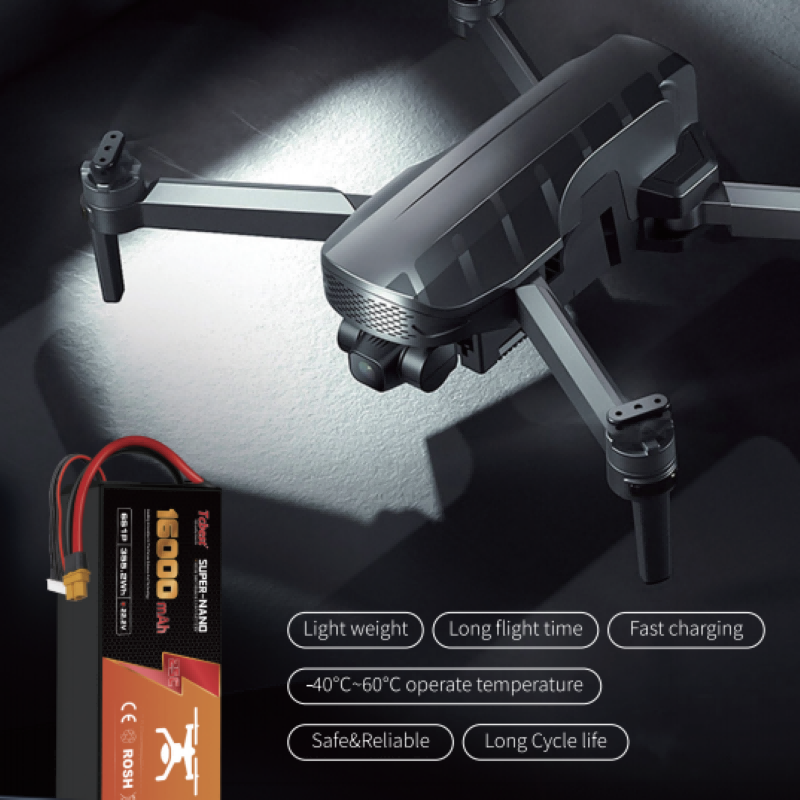
Long-Endurance Drone Batteries: Unlocking the Core Power for Efficient Flight
Flight time is one of the most critical indicators of drone performance – whether for aerial photography, surveying, agriculture, inspection, logistics, or recreational flying. A longer-lasting drone battery not only allows the drone to stay airborne longer but also improves task efficiency, reduces the number of return trips, enhances safety, and enables the drone to undertake more complex tasks. For professional pilots, extended battery life means higher operational efficiency, more stable data acquisition, and more reliable flight performance. With the continuous advancement of battery technology, understanding "which drone battery has the longest endurance" has become particularly important.
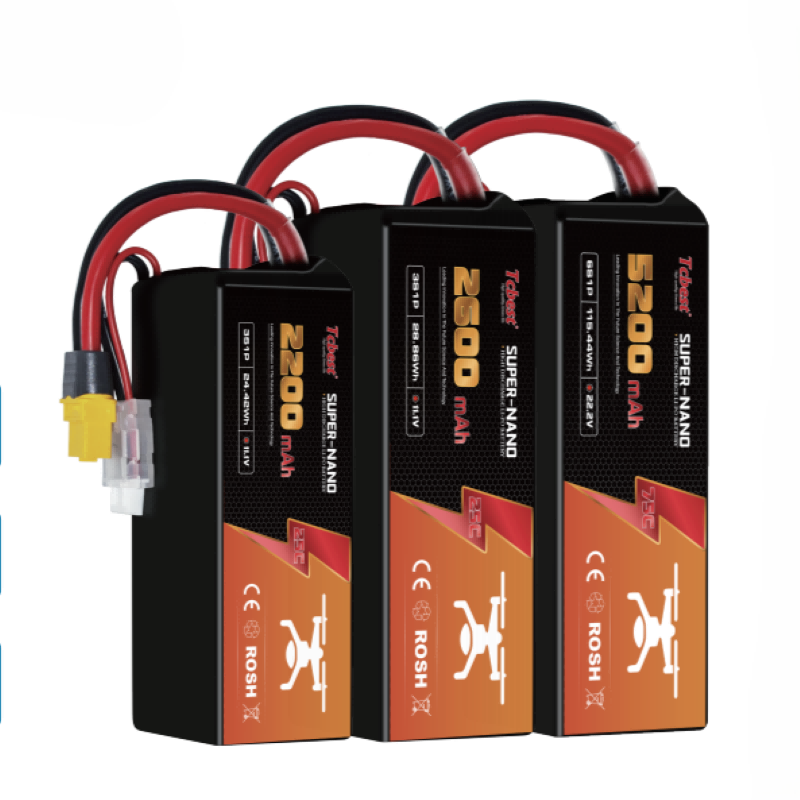
I. Drone Batteries: The Core Support for Flight Power
A drone battery is a rechargeable energy system that powers the drone's motors, flight control system, sensors, and all onboard electronic equipment. It must possess high energy density, stable voltage output, and safe discharge capabilities to ensure stable flight. Currently, most mainstream drone batteries are lithium-based, mainly including three types: Lithium polymer batteries (LiPo) feature high discharge rate (C-rating), light weight, and strong power supply capabilities, making them the mainstream choice for racing drones, FPV systems, and high-performance multi-rotor drones; Lithium-ion batteries (Li-ion) have higher energy density and are suitable for long-endurance drones, fixed-wing drones, and long-distance missions; Lithium iron phosphate batteries (LiFePO4) are more stable, safer, and have a longer cycle life, but their energy density is lower, and they are mostly used in industrial-grade or special drones.
A battery consists of multiple "cells." The nominal voltage of a single lithium-ion cell is 3.6–3.7V, and that of a lithium polymer cell is 3.7V. Drone batteries are usually connected in series (S) or parallel (P) combinations, such as 3S, 4S, 6S, or 12S, to meet power requirements. A high-quality drone battery needs to achieve a balance in voltage stability, discharge capacity, weight-to-capacity ratio, thermal stability, and cycle life. These factors collectively determine how long a drone can fly and whether its flight performance is stable.
II. Types of Drone Batteries with the Longest Flight Time
The longest-lasting drone batteries are typically high-capacity, high-energy-density lithium-ion battery packs designed for long-duration missions. The core characteristic of these batteries is their emphasis on "energy storage capacity" rather than "instantaneous discharge capacity," allowing drones to achieve continuous flight times of 1–3 hours. Currently, the battery types with the longest flight times mainly include: high-energy-density 18650/21700 lithium-ion battery packs, with energy densities reaching 300–350 Wh/kg, commonly used in long-endurance mapping drones, fixed-wing or VTOL (vertical take-off and landing) drones; hybrid Li-ion/LiPo module batteries, which strike a balance between weight and discharge performance; and next-generation ultra-high-capacity lithium-ion battery systems (paired with efficient power systems), which can achieve record-breaking multi-hour flight times. It should be noted that while LiPo batteries are powerful, they are primarily used for high current output and are not the optimal choice for the longest flight time. In summary, the longest-lasting drone batteries are high-energy-density lithium-ion batteries.
III. The "Dual Lifespan" of Drone Batteries: Single Flight Time and Cycle Durability
The "lifespan" of a drone battery can be divided into two parts: single flight time (how long it can fly on a single charge) and cycle life (how many times it can be charged and discharged). The typical single flight times are as follows: toy drones 5–10 minutes, consumer-grade aerial photography drones 20–40 minutes, professional mapping drones 45–60 minutes, fixed-wing endurance drones 90–180 minutes, and hybrid systems (gas-electric hybrid) can reach 2–5 hours or more. In terms of cycle life, LiPo lithium polymer batteries have approximately 150–300 cycles, Li-ion lithium-ion batteries 300–500 cycles, and LiFePO4 lithium iron phosphate batteries over 1000 cycles. Cycle life is also significantly affected by factors such as charging method, storage voltage, and temperature.
IV. Drone Models with the Longest Flight Time
Currently, the drones with the longest flight times on the market are mostly fixed-wing drones and VTOL vertical take-off and landing long-endurance drones, mainly used in professional fields such as aerial surveying, patrolling, and agriculture. The typical maximum flight times are as follows: professional fixed-wing drones 120–180 minutes, VTOL long-endurance drones 90–150 minutes, and hybrid drones 4–6 hours or more. In the consumer market (such as foldable aerial photography drones), the maximum flight time is generally 40–50 minutes, a performance achieved primarily through high-energy-density Li-ion batteries and lightweight airframes.
V. Key Factors Affecting Drone Flight Time
A drone's flight time is not solely determined by battery capacity, but rather by the combined effect of multiple factors. There are six main influencing factors:
1.Battery capacity (mAh/Wh): The larger the capacity, the longer the theoretical flight time, but the weight will also increase;
2.Drone weight (including payload): The heavier the aircraft, the higher the motor power requirement, and the faster the power consumption;
3.Motor efficiency and propeller matching: An efficient power system can significantly improve endurance;
4.Environmental conditions (wind, temperature): Low temperatures can cause voltage drops, and strong winds increase motor load;
5.Flight mode and airspeed: High-speed flight or frequent maneuvers will significantly shorten flight time;
6. Aircraft structure (multirotor vs. fixed-wing): Multirotors rely entirely on motors for lift, while fixed-wing aircraft can glide, thus having longer endurance.
VI. Method for Calculating Drone Flight Time
Estimating flight time helps pilots plan missions, determine if the battery is sufficient, and assess flight efficiency. This can be achieved through a four-step calculation method: First, check the battery capacity (mAh); second, convert it to ampere-hours (Ah), for example, 6000 mAh = 6 Ah; third, determine the average current consumption of the drone during flight (A); fourth, use the formula "Flight time (minutes) = (Battery capacity Ah ÷ Current A) × 60 × Efficiency coefficient" to calculate, where the efficiency coefficient is usually around 0.85. For example, if the battery is 6000 mAh (6 Ah) and the flight current is 18 A, substituting into the formula gives (6 ÷ 18) × 60 × 0.85 ≈ 17 minutes. VII. Drone Application Scenarios Requiring Long-Lasting Batteries
The following six industries heavily rely on long-endurance drones to ensure mission continuity and data integrity:
1.Surveying and topographic modeling: Large-scale aerial survey tasks require continuous flight for extended periods;
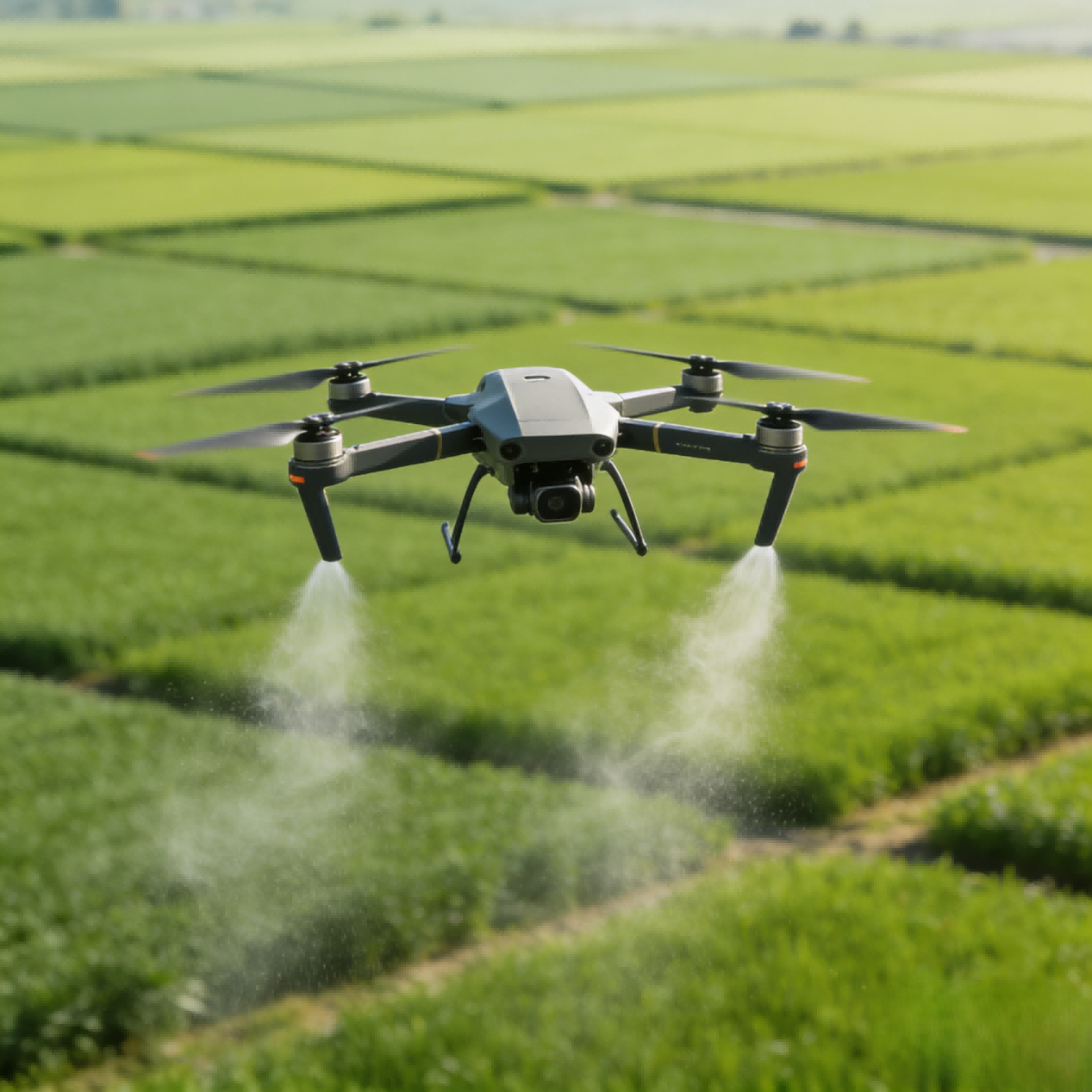
2.Agricultural plant protection and field monitoring: Monitoring hundreds of acres of land requires long-endurance drones to reduce battery changes;
3.Search and rescue (SAR) missions: Long-endurance drones can perform thermal imaging searches for longer durations;
4.Infrastructure inspection: Continuous monitoring of power lines, pipelines, railways, bridges, etc., is required;
5.Environmental and wildlife monitoring: Scientific research often requires large-scale, long-term data collection;
6. Logistics and drone delivery: Long-distance transportation requires efficient energy systems or hybrid systems.
Conclusion
Currently, the longest-lasting drone batteries are high-energy-density lithium-ion battery systems, designed for long flight times and professional tasks. Consumer drones typically fly for a maximum of 20–40 minutes, while professional fixed-wing drones, VTOL aircraft, and hybrid systems can achieve flight times of 90 minutes to several hours or more. Drone battery performance is influenced not only by the chemical system but also by capacity, weight, power system efficiency, flight environment, and flight strategy. Understanding the factors affecting endurance and methods for calculating flight time will help pilots choose more suitable battery systems and significantly improve flight performance. As battery technology continues to advance, drones will undertake more long-distance, high-efficiency tasks, and long-lasting batteries are key to driving this development.
Description
Long-endurance drone batteries—especially high-energy-density lithium-ion packs—significantly extend flight time, improve efficiency, and support demanding missions like surveying, agriculture, inspection, and logistics. Understanding battery types, lifespan, flight-time factors, and calculation methods helps pilots choose the right power system and achieve longer, safer, and more reliable drone performance.