
 EN
EN
Drone technology has developed rapidly over the past decade, evolving from simple toy aircraft to tools widely used in professional scenarios such as aerial photography, precision agricultural monitoring, surveying, logistics, search and rescue, and energy inspection. For all drones, the battery is always one of the most critical components—it directly determines flight time, reliability, payload capacity, and overall operating costs.
With the development of modern society, the demand for longer drone flight times is constantly increasing, making drone battery technology innovation a focus of society. The goal is clear: to extend flight time, improve battery life, and enhance safety without changing other conditions.
This article will systematically introduce the types of drone batteries, the definition of "longest flight time," the lifespan performance of current mainstream drone batteries, which drones have the longest battery life, the core factors affecting flight time, and practical content such as how to calculate drone flight time.
What is a Drone Battery?
A drone battery is a rechargeable power source that provides electrical power to a drone, supplying power to all devices such as motors, control systems, sensors, and image transmission systems. Unlike aircraft that use internal combustion engines, most modern drones are entirely battery-powered, making battery energy density, weight, and stability crucial to flight performance.
Currently, drones primarily use two battery chemistry systems:
1. Lithium Polymer Battery (LiPo)
LiPo batteries are very common in consumer and many professional drones due to their high energy-to-weight ratio and high discharge capacity. These batteries use a flexible pouch design, allowing them to be manufactured in various sizes and shapes, thus adapting to a wide range of aircraft models. However, LiPo batteries have a relatively low cycle life, typically around 300–500 charge-discharge cycles, and are sensitive to over-discharge and over-charge during use and storage, requiring careful maintenance.
2. Lithium-ion Battery (Li-ion)
Li-ion batteries are increasingly popular in industrial and long-endurance drones due to their higher energy density and longer cycle life. They can store more energy per unit weight, enabling drones to fly longer, and can achieve 500–1000+ cycles or more. While Li-ion batteries have a slightly lower maximum discharge capacity than LiPo batteries, they are suitable for drones requiring continuous steady-state power, such as those used for aerial photography, surveying, and inspection.
What is the longest-lasting drone battery?
When discussing the "longest-lasting" drone battery, it actually encompasses two core dimensions:
1. Longest flight time per charge
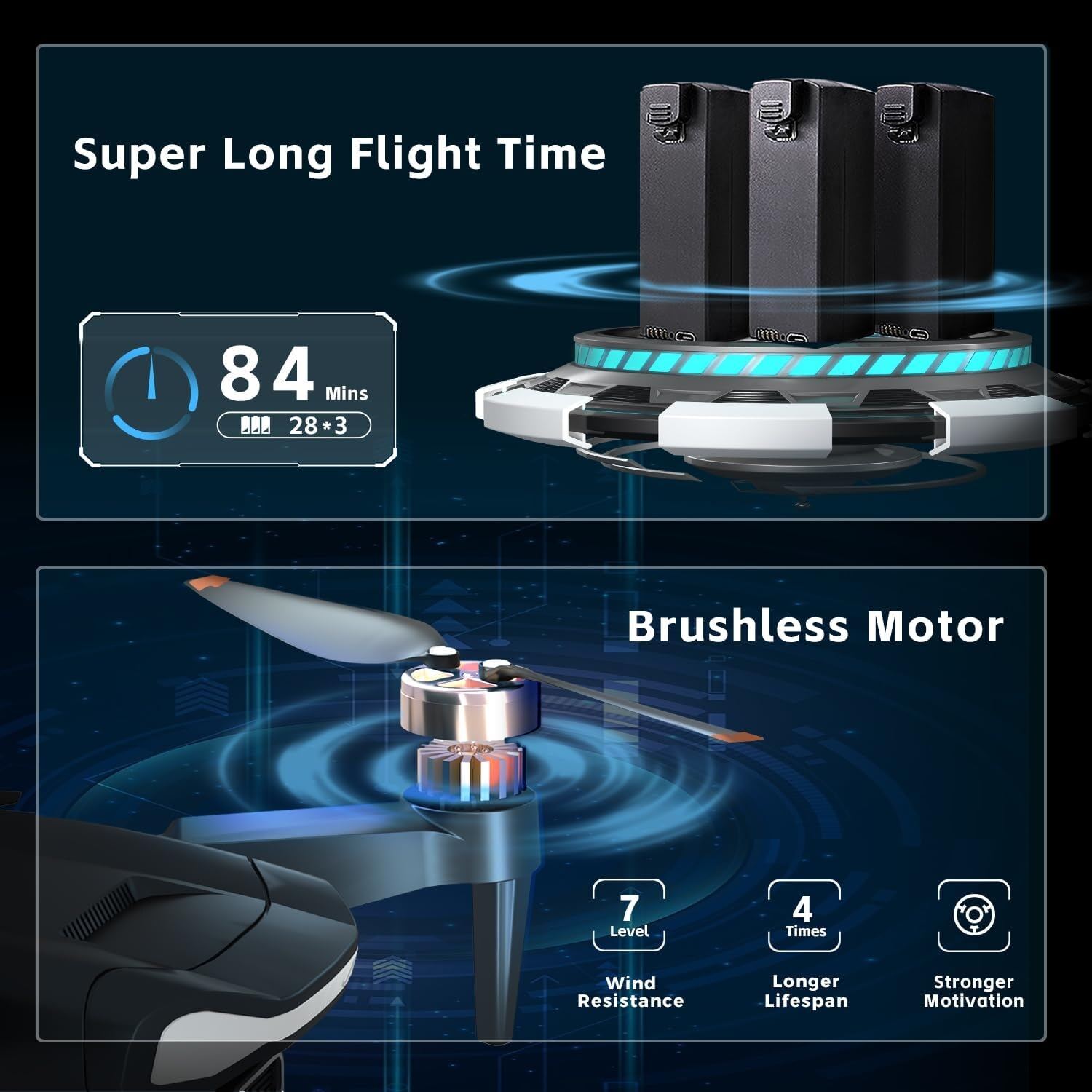
This refers to the maximum time the battery can support a drone's flight after a single charge. For typical consumer drones, 30–50 minutes is excellent, while some industrial drones can exceed 60 minutes or even longer under ideal conditions.
Zhuoxun Intelligent Technology
2. Longest overall battery lifespan
This refers to the number of charge-discharge cycles the battery can complete. A higher cycle count indicates a longer battery lifespan and lower overall cost. Advanced Li-ion batteries and some new semi-solid-state battery technologies perform better in this metric.
ViBMS Battery
To achieve longer flight times, battery manufacturers are constantly introducing cell designs with higher energy density and better thermal stability, as well as more intelligent battery management systems (BMS). This extends flight time, improves safety, and reduces the need for frequent battery replacements.
How long can a drone battery fly?
Drone battery life is typically measured from two perspectives:
1. Flight Time
The flight time of ordinary consumer drones is mostly between 20–30 minutes, while high-end models such as professional aerial photography drones can exceed 40–50 minutes. Some optimized industrial drones can even reach over 60 minutes.
Zhuoxun Intelligent Technology
2. Charge/Discharge Cycle Count
The overall lifespan of a battery is usually expressed in terms of cycle count: LiPo batteries experience a significant capacity decrease after 300–500 cycles, while Li-ion batteries can maintain 500–1000 cycles or even higher. Proper use and storage (avoiding overcharging, over-discharging, extreme temperatures, and prolonged storage at full charge) can extend battery life.
Factors Affecting Drone Flight Time
Even with excellent battery performance, a drone's actual flight performance is influenced by several factors:
1. Battery Capacity
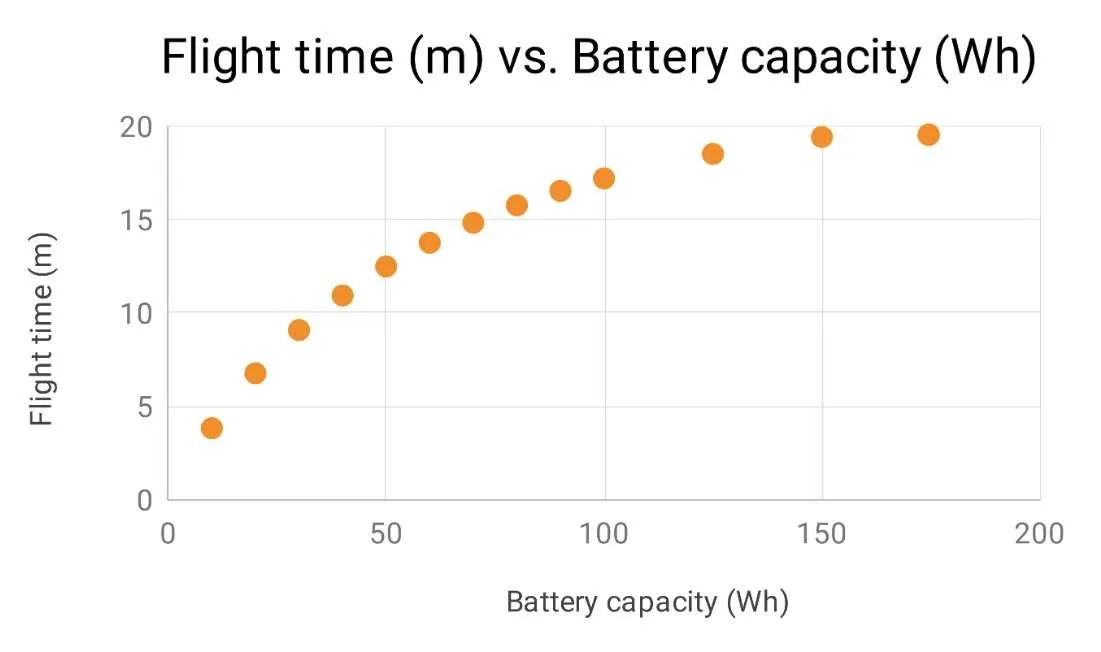
Higher battery energy, measured in Wh (watt-hours) or mAh (milliampere-hours), theoretically results in longer flight time. However, increased capacity usually comes with increased weight, requiring a trade-off.
2. Drone Weight and Payload
Aircraft weight and additional payloads such as cameras or sensors increase power consumption and shorten flight time.
3. Flight Environment
Environmental factors such as wind speed, temperature, and air density affect flight efficiency; both high and low temperatures reduce battery efficiency.
4. Flight Mode
Smooth cruising consumes less power than sharp turns or high-speed acceleration/deceleration.
5. Propulsion System Efficiency
The efficiency of the motors, propellers, and the overall propulsion system determines the conversion of electrical energy into flight propulsion.
How to Calculate Drone Flight Time?
A simplified method for estimating drone flight time is:
Flight Time (minutes) = [ Battery Energy (Wh) / Average Power Consumption (W) ] × 60
Flight Time (minutes) = [ Average Power Consumption (W) / Battery Energy (Wh) ]× 60
However, in actual use, multiple factors such as wind resistance and actual power requirements must be considered. Therefore, this calculation is only a rough reference, and actual flight time is often slightly lower than the theoretical value.
Which applications require long flight endurance the most?
Different drone applications have vastly different requirements for flight endurance:
1. Large-area mapping and monitoring
Agriculture, mining, forestry, and other fields require coverage of large areas, and long flight endurance can significantly improve efficiency.
2. Search and rescue and emergency response
In search and rescue missions, drones need to search continuously for extended periods, and flight endurance directly affects rescue efficiency.
3. Environmental and meteorological monitoring
Environmental monitoring requires long-term cruise sampling or observation at multiple points, making long flight endurance crucial.
4. Infrastructure Inspection
For tasks such as inspecting power lines and pipelines, continuous flight capability reduces interruptions.
5. Logistics and Delivery
In scenarios where drones are used to deliver goods, flight endurance directly determines the reach and service range.
Conclusion
Advances in drone battery technology are one of the core driving forces behind the expansion of drone applications. From traditional LiPo batteries to high-energy-density Li-ion batteries, and then to semi-solid-state battery systems with even greater potential in the future, batteries are constantly pushing the limits of flight endurance and lifespan.
Understanding different battery types, how to measure flight time and cycle life, and the key factors affecting flight time will help you select the most suitable battery and drone platform for different tasks. In the future, with continuous optimization of battery chemistry, materials technology, and battery management systems, the flight time and overall reliability of drones will continue to improve, bringing more efficient intelligent aerial solutions to more industries.