
 EN
EN
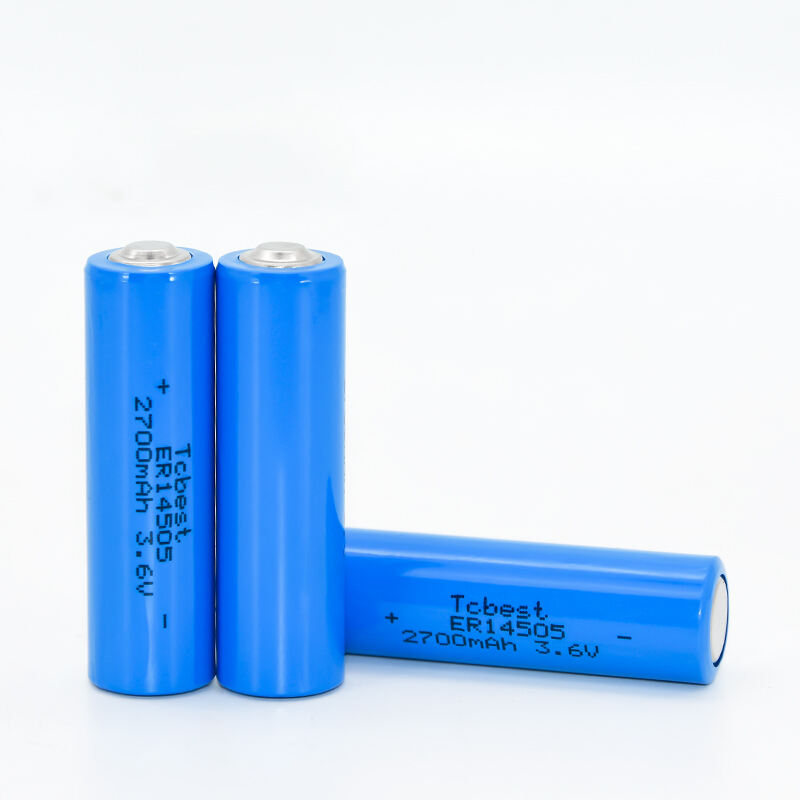
Remote monitoring devices are deployed in some of the most demanding environments imaginable — deep underground pipelines, isolated weather stations, offshore platforms, smart utility meters, and industrial sensors that may operate for years without human intervention. For engineers and product designers responsible for powering these systems, the choice of battery technology is not a minor decision. The lithium thionyl chloride battery has emerged as the dominant power source in this space, and understanding why requires a close look at the unique performance demands that remote monitoring places on any energy storage solution.
The core reason the lithium thionyl chloride battery has become so deeply embedded in remote monitoring applications is a combination of characteristics that no other commercially viable battery chemistry can fully replicate. High energy density, extremely low self-discharge, a wide operating temperature range, and a stable voltage output over long discharge cycles collectively make the lithium thionyl chloride battery uniquely suited to devices that must operate reliably for five, ten, or even fifteen years between service visits. This article examines the specific technical and operational reasons why this chemistry has become the standard for remote monitoring infrastructure worldwide.
The Energy Density Advantage in Long-Term Deployment
Why Energy Density Matters More in Remote Applications
Remote monitoring devices are often constrained by size and weight. A pipeline leak detector installed in a narrow conduit, a utility meter embedded in a wall cavity, or a seismic sensor buried in soil cannot accommodate a large battery pack. At the same time, these devices must operate continuously or in periodic transmission cycles for extended periods — often measured in years rather than months. This creates a fundamental engineering tension between physical form factor and power longevity.
The lithium thionyl chloride battery addresses this tension directly. With a nominal voltage of 3.6 volts and a gravimetric energy density that can exceed 700 Wh/kg in optimized designs, it delivers significantly more usable energy per unit of mass and volume than alkaline or lithium manganese dioxide alternatives. For a device designer, this means a compact cell can store enough energy to sustain years of operation — a critical advantage when physical access to the device is difficult or costly.
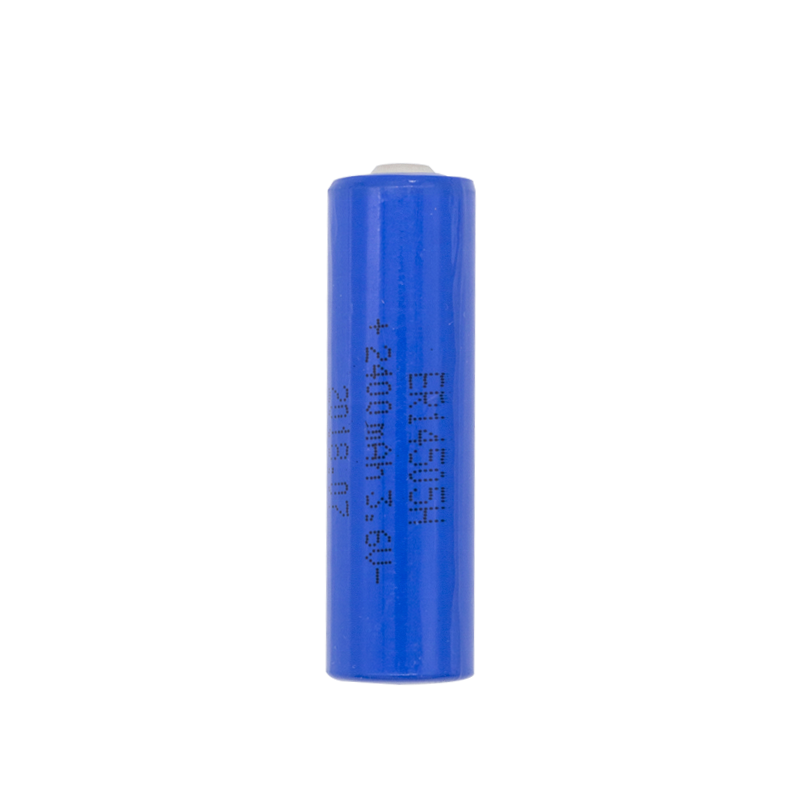
In practical terms, a single AA-sized lithium thionyl chloride battery rated at 2400 mAh can power a low-current remote sensor through transmitting data at regular intervals for a decade or more, depending on the device's duty cycle. This level of energy storage in a standard cell format is simply not achievable with conventional battery chemistries, making the lithium thionyl chloride battery the natural choice for miniaturized, long-life monitoring hardware.
Stable Voltage Throughout the Discharge Curve
Another energy-related advantage that benefits remote monitoring systems specifically is the flat discharge curve characteristic of the lithium thionyl chloride battery. Unlike many other battery types that exhibit a gradual voltage decline as capacity is consumed, this chemistry maintains a relatively stable 3.6V output across the vast majority of its usable life. This behavior has significant practical implications for sensor electronics.
Remote monitoring circuits — particularly wireless transmitters, ADC converters, and low-power microcontrollers — are often sensitive to supply voltage variations. A declining battery voltage can introduce measurement inaccuracies, cause intermittent resets, or trigger premature low-battery warnings. The stable discharge plateau of the lithium thionyl chloride battery means that the device operates in a predictable voltage window for the overwhelming majority of its service life, reducing the need for complex voltage regulation circuitry and improving measurement reliability.
This flat voltage profile also simplifies state-of-charge estimation and end-of-life planning. System designers can more confidently predict when a battery will reach its end of useful life, enabling proactive maintenance scheduling that minimizes unexpected device downtime — a substantial operational benefit in large-scale sensor networks where individual device failures can have cascading consequences.
Extremely Low Self-Discharge Rate Over Extended Periods
The Challenge of Time in Remote Monitoring
One of the most underappreciated challenges in remote monitoring power design is the effect of time itself. Even a device with very low average current consumption will fail prematurely if its battery loses capacity through self-discharge during idle periods. This is a particularly acute problem for devices that spend most of their time in deep sleep states, waking only briefly to take a measurement and transmit data every few minutes or hours.
The lithium thionyl chloride battery exhibits an annual self-discharge rate of approximately 1% or less under normal storage and operating conditions. This is among the lowest self-discharge rates of any commercially available battery chemistry. Over a ten-year deployment, this means the battery retains the vast majority of its initial capacity even accounting for the energy lost to self-discharge alone. For comparison, standard alkaline batteries can self-discharge at several percent per year, meaning a meaningful fraction of their capacity is lost before it ever powers the device.
This exceptionally low self-discharge characteristic is a direct result of the passivation layer that forms on the lithium anode when in contact with the thionyl chloride electrolyte. This thin lithium chloride film acts as a protective barrier that prevents ongoing electrochemical reaction, dramatically slowing capacity loss during storage and low-activity periods. While this passivation layer must be overcome with a short pulse at the start of operation — a known characteristic that device designers account for — its long-term benefit to shelf life and deployment longevity is substantial.
Shelf Life Implications for Supply Chain and Deployment Planning
The low self-discharge rate of the lithium thionyl chloride battery also has important supply chain and logistics implications. Remote monitoring hardware is often manufactured, tested, and then warehoused for months before final installation. In some industries — utilities, oil and gas, environmental monitoring — devices may be stocked as spare parts for years before being deployed as replacements.
A lithium thionyl chloride battery with a rated shelf life of ten years or more can be stored in a pre-installed or warehoused state without meaningful capacity degradation. This eliminates the need to test or replace batteries before deployment, reduces waste from pre-degraded stock, and simplifies inventory management for operations teams responsible for large fleets of remote devices. The economic value of this characteristic, while less visible than raw energy density, is significant in real-world deployment programs.
Wide Operating Temperature Range for Harsh Environments
Temperature Extremes in Real-World Monitoring Deployments
Remote monitoring devices are rarely installed in comfortable, climate-controlled environments. A gas pipeline pressure sensor may be exposed to arctic temperatures of minus 40 degrees Celsius. A solar irradiance monitor on a desert rooftop may experience sustained temperatures above 70 degrees Celsius. A wildlife tracking collar must function through seasonal extremes. Standard battery chemistries degrade sharply at temperature extremes, producing insufficient current at low temperatures or experiencing accelerated degradation at high temperatures.
The lithium thionyl chloride battery is specifically engineered to operate across an extremely wide temperature range, typically from minus 60 to plus 85 degrees Celsius in standard-grade cells, with some specialized variants rated even more broadly. This range far exceeds what is achievable with alkaline, nickel-metal hydride, or standard lithium manganese dioxide cells. At low temperatures, the liquid thionyl chloride electrolyte remains ionically conductive, enabling the cell to deliver current when other battery types would effectively shut down.
For engineers specifying power solutions for devices deployed in extreme environments, this temperature performance is often the deciding factor. A battery that fails at minus 20 degrees Celsius is not a viable solution for an Arctic weather monitoring station regardless of its capacity or cost. The lithium thionyl chloride battery's consistent performance across temperature extremes makes it the only practical choice for a wide range of geographically diverse monitoring installations.
Performance Consistency Without Thermal Management Overhead
Beyond simply surviving temperature extremes, the lithium thionyl chloride battery maintains relatively stable capacity and voltage output across its operating temperature range. While some capacity reduction at very low temperatures is normal for any electrochemical cell, the degradation is far more gradual for this chemistry compared to alternatives. This consistency allows device designers to avoid adding thermal management components — insulation, heating elements, or battery management systems — that would add cost, weight, and complexity to the device.
Simplicity in design is a core value in remote monitoring hardware. Every additional component introduces a potential failure point and adds to device cost. The fact that a lithium thionyl chloride battery can function reliably without auxiliary thermal support across a broad deployment geography is a significant systems-level advantage that contributes directly to device reliability and total cost of ownership.
Compatibility With Low-Power IoT and LPWAN Transmission Profiles
The Pulse Current Demands of Wireless Transmission
Modern remote monitoring devices increasingly rely on low-power wide-area network technologies for data transmission. These communication protocols are characterized by a specific power consumption pattern: extended periods of very low quiescent current draw punctuated by short, high-current transmission pulses. This profile places specific demands on the battery that not all chemistries handle well.
A lithium thionyl chloride battery with a hybrid capacitor design or a bobbin-type cell paired with an external capacitor is well-suited to this pulse current profile. The capacitor stores energy between transmissions and delivers the high-current burst required during the transmission event, while the battery maintains its steady-state charge on the capacitor over time. This architecture exploits the lithium thionyl chloride battery's excellent long-term energy storage characteristics while compensating for its relatively modest instantaneous current capability.
As LPWAN deployments scale into the tens of millions of nodes in smart city, agricultural monitoring, and industrial IoT applications, the combination of a lithium thionyl chloride battery with a pulse-handling capacitor has become a well-established power design pattern. Device manufacturers and system integrators have developed extensive reference designs around this chemistry, further reinforcing its position as the default power solution for connected remote monitoring hardware.
Long Battery Life as a Network Economics Driver
In large-scale sensor networks, the cost of battery replacement is not simply the cost of the battery itself. It includes technician labor, travel to the deployment site, device downtime during servicing, and the logistical overhead of managing replacement programs across hundreds or thousands of nodes. When a lithium thionyl chloride battery can extend a device's service interval from two years to ten years, the operational cost savings are substantial and often dwarf the incremental cost premium of the battery itself.
This economic reality is a key driver of adoption in utility metering, where smart meters are installed in residences and commercial buildings at scale. A utility company deploying millions of meters cannot afford to send technicians to replace batteries every two to three years. The lithium thionyl chloride battery's decade-long service life aligns directly with smart meter lifecycle expectations, making it the only battery technology that makes the business model for large-scale advanced metering infrastructure financially viable.
The same logic applies to industrial asset monitoring, structural health monitoring in bridges and buildings, environmental sensing networks, and remote agricultural sensors. In every case, the lithium thionyl chloride battery's longevity translates directly into lower total cost of ownership and higher return on investment for the monitoring system as a whole.
FAQ
What makes a lithium thionyl chloride battery different from a standard lithium battery?
A lithium thionyl chloride battery uses thionyl chloride as both the cathode active material and the liquid electrolyte solvent, which gives it a much higher energy density and lower self-discharge rate than standard lithium manganese dioxide batteries. Its nominal voltage of 3.6V is also higher than most other primary lithium chemistries, and its operating temperature range is significantly wider, making it the preferred choice for demanding long-life applications rather than consumer electronics.
Is a lithium thionyl chloride battery rechargeable?
No, the lithium thionyl chloride battery is a primary (non-rechargeable) cell. Attempting to recharge it can result in dangerous pressure buildup or cell failure due to the irreversible nature of the electrochemical reactions involved. It is designed for single-use, long-term deployment applications where the goal is to maximize service life rather than enable repeated charge cycles.
What is the passivation effect in a lithium thionyl chloride battery and does it affect performance?
Passivation refers to the formation of a thin lithium chloride film on the lithium anode surface during storage, which is responsible for the battery's very low self-discharge rate. When the battery is first connected to a load after a period of storage, a brief voltage dip may occur as this passivation layer is dissolved by the electrochemical reaction. In most remote monitoring applications, device circuitry is designed to tolerate or compensate for this initial transient, and normal voltage is restored quickly. The trade-off is widely considered acceptable given the enormous shelf life and self-discharge benefits the passivation mechanism provides.
How long can a lithium thionyl chloride battery last in a remote monitoring device?
Service life depends heavily on the device's average current consumption and duty cycle, but in optimized low-power remote monitoring applications, a lithium thionyl chloride battery can last between 10 and 15 years. This assumes a well-designed device that spends most of its time in a low-power sleep state and wakes periodically for measurement and transmission. The combination of high capacity, low self-discharge, and stable voltage output makes decade-long operation achievable in a standard cell format.
Table of Contents
- The Energy Density Advantage in Long-Term Deployment
- Extremely Low Self-Discharge Rate Over Extended Periods
- Wide Operating Temperature Range for Harsh Environments
- Compatibility With Low-Power IoT and LPWAN Transmission Profiles
-
FAQ
- What makes a lithium thionyl chloride battery different from a standard lithium battery?
- Is a lithium thionyl chloride battery rechargeable?
- What is the passivation effect in a lithium thionyl chloride battery and does it affect performance?
- How long can a lithium thionyl chloride battery last in a remote monitoring device?