
 EN
EN
၁။ မိတ်ဆက်ချက်
ခေတ်မှီ ဒရုန်းဘက်ထရီများသည် လစ်သီယမ်အခြေပြု စွမ်းအင်သိုလှောင်မှု၊ အမှုန်အမှုန်ထည့်သွင်းထားသော မိုက်ခရိုကန်ထရိုလာများ၊ အလွှာများစွာပါဝင်သော ကာကွယ်ရေးဆဲလ်များနှင့် အချိန်နှင့်တစ်ပါက် ရှုခ်စ်ဖော်ပေးသည့် အယ်လ်ဂေါရီသမ်များကို ပေါင်းစပ်ထားသော ရှုပ်ထွေးသော လျှပ်စစ်-စိုက်ကူးဘာစနစ်များဖြစ်သည်။ ဤစနစ်များကို လုပ်ဆောင်မှုတည်ငြိမ်မှုကို ထိန်းသိမ်းရန် ဒီဇိုင်းထုတ်ထားသော်လည်း တစ်ခါတစ်ရံတွင် အဖြေမရသော အခြေအနေသို့ ဝင်ရောက်လေ့ရှိပါသည်။ ဤအခြေအနေကို အများအားဖြင့် "ဘရစ်က် (bricked)" သို့မဟုတ် "ဟိုင်ဘာနေတင် (hibernating)" ဟု ဖော်ပြကြသည်။ ထိုအခြေအနေတွင် ဘက်ထရီသည် အားသွင်းခြင်း၊ ဖွင့်ခြင်း သို့မဟုတ် လေယာဉ်နှင့် ဆက်သွယ်ခြင်းကို ငြင်းဆိုလေ့ရှိပါသည်။ ဤအခြေအနေများ၏ အကြောင်းရင်းများကို နားလည်ခြင်းသည် ဘေးကင်းစွာနှင့် ထိရောက်စွာ ပြန်လည်ရယူရန်အတွက် အရေးကြီးပါသည်။ ဤဆောင်းပါးတွင် အဖြေမရသော ဒရုန်းဘက်ထရီများ၏ အကြောင်းရင်းများ၊ ရှုခ်စ်ဖော်ပေးရေး နည်းလမ်းများနှင့် ပြန်လည်ရယူရေး လုပ်ထုံးလုပ်နည်းများကို စုစည်းသော အထုပ်အပေါင်းသော အကောင်းများသော စာသားအနေဖြင့် ဆွေးနွေးပေးထားပါသည်။ ထို့အပ alongside နည်းပုံစံများကို နည်းပုံစံများအတွက် အသုံးပြုနိုင်ရန် စနစ်တကျ ဖော်ပြထားပါသည်။
၂။ ဘက်ထရီပျက်စီးမှုအခြေအနေများနှင့် ၎င်းတို့၏ လက္ခဏာများ
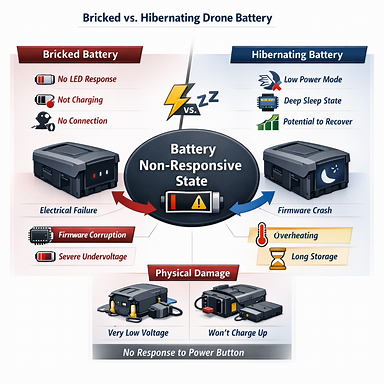
ဘက်ထရီသည် ဖာမ်ဝဲအမှားမှု၊ အလွန်နိမ့်သောဗို့အား သို့မဟုတ် ဟာဒ်ဝဲပျက်စီးမှုကြောင့် ဘက်ထရီစီမန်နံမ်စတ်မ် (BMS) သည် လုပ်ဆောင်ခြင်းကို ရပ်နေသည့် အခြေအနေကို ဘရစ်က်ဘက်ထရီဟု ခေါ်သည်။ ထိုကဲ့သို့သော ဘက်ထရီများသည် အများအားဖြင့် LED အလင်းများ မျှော်လင့်ခြင်းမရှိခြင်း၊ အားသွင်းမှုအား တုံ့ပြန်မှုမရှိခြင်းနှင့် ဒရုန်းနှင့် ဆက်သွယ်မှုမရှိခြင်းတို့ကို ပြသသည်။ ထို့အတူ ဟိုင်ဘန်နေတင်းဘက်ထရီသည် ရှည်လျားစွာ သိုလှောင်ထားခြင်း၊ အနိမ့်သောဗို့အား သို့မဟုတ် အပူချိန်ဆိုင်ရာ ကန့်သတ်ချက်များကြောင့် နိမ့်ကျသော အိပ်စက်မှုအခြေအနေသို့ ရည်ရွယ်ချက်ရှိစွာ ဝင်ရောက်လာသည်။ ထိုဘက်ထရီသည် သေနေသည့် အသုံးအနေဖြင့် ပုံပေါ်သော်လည်း BMS အတိုင်းအတာအထိ ဆဲလ်များ၏ ဗို့အားများ မြင့်တက်လာပါက ပြန်လည်လုပ်ဆောင်နိုင်သည့် စွမ်းရည်ကို ထိန်းသိမ်းထားသည်။ ထိုအခြေအနေနှစ်များသည် ပါဝါခလုတ်များ တုံ့ပြန်မှုမရှိခြင်း၊ အားသွင်းမှုကို ငြင်းဆိုခြင်းနှင့် အလွန်နိမ့်သော အဆုံးသွယ်ဗို့အားတို့ကဲ့သို့သော လက္ခဏာများကို မျှဝေသော်လည်း ၎င်းတို့၏ အခြေခံဖြစ်စဥ်များနှင့် ပြန်လည်လုပ်ဆောင်နိုင်မှု စွမ်းရည်တွင် ကွဲပြားမှုများ ရှိသည်။
၃။ ဘက်ထရီအား တုံ့ပြန်မှုမရှိခြင်း၏ အဓိက အကြောင်းရင်းများ
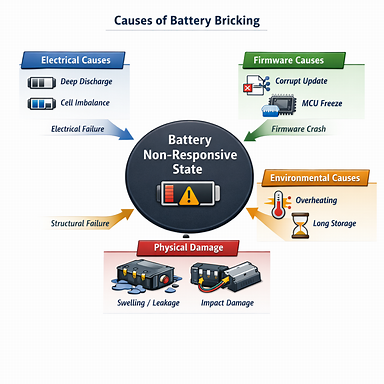
Drone ဘက်ထရီတွေဟာ ရေရှည် သိုလှောင်ခြင်း (သို့) ထပ်တလဲလဲ နက်ရှိုင်းစွာ ဖြုတ်ချခြင်းကြောင့် နက်ရှိုင်းတဲ့ လျှပ်စစ်လျှပ်စစ်လျှပ်စစ်လျှပ်စစ်လျှပ်စစ်လျှပ်စစ်လျှပ်စစ်လျှပ်စစ်လျှပ်စစ်လျှပ်စစ်လျှပ်စစ်လျှပ်စစ်လျှပ်စစ်လျှပ်စစ်လျှပ်စစ် Firmware မတည်ငြိမ်မှု မကြာခဏဆိုသလို အဆက်မပြတ် update လုပ်ခြင်း သို့မဟုတ် ပျက်စီးသွားသော memory register များကြောင့် ဖြစ်ပေါ်လာတတ်ပြီး microcontroller ကို အေးခဲစေပြီး ပုံမှန်အလုပ်လုပ်မှုကို တားဆီးနိုင်ပါတယ်။ ဆဲလ်များအကြားရှိ voltage ကွာခြားချက်ကြီးများက အပူပိုင်းနှင့် ဓာတုဆိုင်ရာ အန္တရာယ်များဖြစ်စေသောကြောင့် ဆဲလ်များ၏ ပြင်းထန်သော မညီမျှမှုသည် ကာကွယ်ရေး ပိတ်ချမှုများကိုလည်း ဖြစ်ပေါ်စေနိုင်သည်။ ထို့အပြင် လျှပ်စစ်လျှပ်စစ်လျှပ်စစ်လျှပ်စစ်လျှပ်စစ်လျှပ်စစ်လျှပ်စစ်လျှပ်စစ်လျှပ်စစ်လျှပ်စစ်လျှပ်စစ်လျှပ်စစ်လျှပ်စစ်လျှပ်စစ်လျှပ်စစ်လျှပ်စစ်လျှပ်စစ်လျှပ်စစ်လျှပ်စစ်လျှပ်စစ်လျှပ်စစ်လျှပ်စစ်လျှပ်စစ်လျှပ်စစ်လျှပ်စစ် အသက်သွင်းမှု လုပ်ငန်းစဉ်တစ်ခုခု မကြိုးစားခင် ဒီအကြောင်းရင်းတွေကို နားလည်ဖို့ အရေးကြီးပါတယ်။
၄။ အသက်ပြန်လည်စေရန် ကြိုးပုံမှီ လုံခြုံရေး စည်းမျဉ်းများ
အလုပ်မလုပ်တော့သော ဘက်ထရီကို ပြန်လည်အသက်သွင်းရန်အတွက် လုံခြုံရေးစည်းမျဉ်းများကို တင်းကြပ်စွာ လိုက်နာရန် လိုအပ်ပါသည်။ လုပ်သက်များသည် ဘက်ထရီကို ဖောင်းပွမှု၊ ပုံပျက်မှု၊ ယိုစိမ့်မှု သို့မဟုတ် ဓာတုဆိုးရွှဲ့မှု ရှိမရှိ စိစိလေးစိစိလေး စစ်ဆေးရမည်ဖြစ်ပါသည်။ ဤလက္ခဏာများသည် ဘက်ထရီအတွင်းရှိ ပျက်စီးမှုကို ညွှန်ပြပြီး ပြန်လည်အသက်သွင်းခြင်းကို အန္တရာယ်များစေပါသည်။ ဤလုပ်ထုံးလုပ်နည်းကို မီးလောင်နိုင်ခြင်းမရှိသော နေရာတွင် လေဝင်လေထွက်ကောင်းသော ပတ်ဝန်းကျင်တွင် ကာကွယ်ရေးလက်အိတ်များနှင့် မျက်လုံးကာကွယ်ရေးပုံစံများဖြင့် ဆောင်ရွက်ရမည်ဖြစ်ပါသည်။ လစ်သီယမ်အတွက် သင့်လျော်သော မီး extinguisher ကို အသုံးပြုနိုင်ရန် အသေးစိတ် ပြင်ဆင်ထားရမည်ဖြစ်ပါသည်။ ဘက်ထရီတွင် ရုပ်ပိုင်းဆိုင်ရာ ပျက်စီးမှုများ တွေ့ရပါက အလုပ်မလုပ်တော့သော ဘက်ထရီကို ပြန်လည်အသက်သွင်းခြင်းကို လုံးဝမပြုလုပ်ရပါ။ ထိုသို့သော ဘက်ထရီများကို အန္တရာယ်ရှိသော ပစ္စည်းများအဖြစ် သတ်မှတ်ထားသည့် လမ်းညွှန်ချက်များအတိုင်း စွန့်ပါသည်။
၅။ ရေးသားစစ်ဆေးရေး အခြေခံကျောင်း
စနစ်တကျ ရှာဖွေရေးခွဲခြမ်းစိတ်ဖြာမှု ချဉ်းကပ်မှုသည် လုံခြုံစေပါက အောင်မြင်စွာ ပြန်လည်လုပ်ဆောင်နိုင်မှုကို မြင့်တင်ပေးပါသည်။ အဆုံးသတ်ဗို့အားကို မူလတန်းမှုတ် (multimeter) ဖြင့် တိုင်းတာရမည်။ ဆဲလ်တစ်လုံးလျှင် ၂.၅ ဗို့ထက်နိမ့်သော တန်ဖိုးများသည် နက်ရှိုင်းသော ဗို့အားနိမ့်ခြင်းကို ဖော်ပြပြီး ဆဲလ်တစ်လုံးလျှင် ၂.၀ ဗို့ထက်နိမ့်သော ဖတ်ရှုမှုများသည် ယေဘုယျအားဖြင့် ပြောင်းလဲမှုမှုန်းမှုများကို ဖော်ပြပါသည်။ အတွင်းပိုင်း ပိုမိုမှုန်းမှုတန်ဖိုးများကို တိုင်းတာခြင်းဖြင့် လျှပ်စီးအိုင်းလ်က် (electrolyte) ၏ ပျက်စီးမှု သို့မဟုတ် အသက်ကြီးမှုကို ဖော်ထုတ်နိုင်ပါသည်။ စမတ်ဘက်ထရီများအတွက် I²C/SMBus ဖော်ထုတ်မှုကို အသုံးပြု၍ ဖာမ်ဝဲအခြေအနေ၊ အမှားအမှန် အမှတ်အသားများနှင့် အသုံးပြုမှု ပိတ်ပေးခြင်းအခြေအနေများကို သိရှိနိုင်ပါသည်။ အပူခါးမှုဖတ်ရှုမှုများကိုလည်း အကဲဖြတ်ရမည်ဖြစ်ပြီး ပုံမှန်မဟုတ်သော စိန်ဆာဖတ်ရှုမှုများသည် ဖွင့်လှစ်ခြင်း သို့မဟုတ် အားသွင်းခြင်းကို အတားအဆီးဖော်ပေးနိုင်ပါသည်။
၆။ ပြန်လည်လုပ်ဆောင်ရေး နည်းလမ်းများ
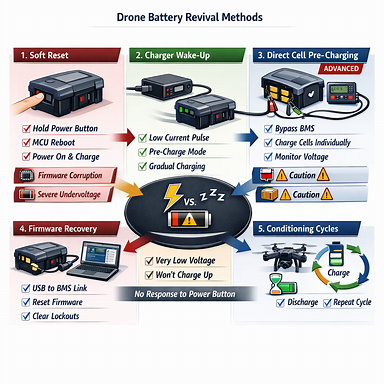
၆.၁ ပါဝါခလုတ်မှ အေးမ်းသော ပြန်လည်စတင်ခြင်း
အေးမ်းသော ပြန်လည်စတင်ခြင်းသည် လျှပ်စစ်ပေါ်လုပ်ဆောင်မှု အက်ဒ်ဖောက်တ်များထက် ဖာမ်ဝဲ ရပ်နေမှုများကို ဦးတည်ပါသည်။ လုပ်သောသူသည် ဘက်ထရီကို လေယာဉ်မှ ဖုံးထားပြီး ပါဝါခလုတ်ကို ၁၀-၁၅ စက္ကန်းကြာအောင် ဖိထားပါသည်။ ထို့နောက် အတွင်းပိုင်း မိုက်ခရိုကန်ထရိုလာ ပြန်လည်စတင်ရန် စောင်းပါသည်။ ထို့နောက် စံနှုန်းအတိုင်း ပါဝါဖွင့်ခြင်း အစီအစဥ်ကို အသုံးပြုပြီး အားသွင်းခြင်းကို ကြိုးစားပါသည်။ ဤနည်းလမ်းသည် ခဏတာ မှုန်းမှု အမှားများအတွက် အထိရောက်ဆုံးဖြစ်ပါသည်။
၆.၂ ချာဂ်အားဖြင့် နိုးထလာခြင်း
ကြိုတင်ချာဂ်ပေးခြင်း (pre-charge) သို့မဟုတ် နိုးထစေခြင်း (wake-up) မှုနည်းလမ်းများပါရှိသော စမတ်ချာဂ်များသည် ဆဲလ်ဖွဲ့စည်းမှု၏ ဗီအမ်အက်စ် (BMS) အသုံးပြုမှု နောက်ခံအဆင့်ကို ကျော်လွန်စေရန် ထိန်းချုပ်ထားသော အနိမ့်စီးကွင်း ပေးပို့မှုများကို ပေးပို့နိုင်ပါသည်။ BMS ပြန်လည်အသုံးပြုနိုင်သောအခါ ချာဂ်သည် ပုံမှန်ချာဂ်မှုသို့ ပြောင်းလဲသွားပါသည်။
၆.၃ ဆဲလ်များကို တိုက်ရိုက်ကြိုတင်ချာဂ်ပေးခြင်း (အဆင့်မြင့်)
ဤနည်းလမ်းသည် အန္တရာယ်များပါဝင်ပါသည်။ ဤနည်းလမ်းကို ကျွမ်းကျင်သူများသာ အသုံးပြုရန် သတ်မှတ်ထားပါသည်။ ဘက်ထရီအိုးကို ဖွင့်ပြီး BMS ကို ယာယီအားဖြင့် ကျော်လွန်ကာ ဆဲလ်တစ်ခုချင်းစီကို အလွန်နိမ့်သော စီးကွင်းဖြင့် အိုးအတွင်းရှိ ဗိုးအားကို အဆက်မပါး စောင်းကြည့်ရှုရင်း ချာဂ်ပေးရပါမည်။ ဆဲလ်များ၏ ဗိုးအားသည် ၃.၀ ဗိုးထက် ပိုမိုမြင့်မှသာ BMS ကို ပြန်လည်ချိတ်ဆက်ရပါမည်။
၆.၄ ဖာမ်ဝဲအား ပြန်လည်စတင်ခြင်း
အချို့သော စမတ်ဘက်ထရီများတွင် USB မှ I²C အထိ ချိတ်ဆက်မှုကို အသုံးပြု၍ BMS နှင့် တိုက်ရိုက်ဆက်သွယ်နိုင်ပါသည်။ အထူးဆော့ဖ်ဝဲများဖြင့် ပိတ်ထားသော အမှတ်အသားများကို ဖျက်ပေးခြင်း၊ ဗိုးအားဇယားများကို ပြန်လည်သတ်မှတ်ခြင်းနှင့် မိုက်ခရိုကန်ထရိုလာကို ပြန်လည်စတင်ခြင်းတို့ကို ပြုလုပ်နိုင်ပါသည်။
၆.၅ အခြေအနေညှိခြင်း စက်ဝန်းများ
ဘက်ထရီကို ပြန်လည်အသုံးပြုနိုင်သောအခါ ထိန်းချုပ်ထားသော ချာဂ်နှင့် ဒိစ်ချာဂ်စက်ဝန်းများဖြင့် ဆဲလ်များ၏ ဓာတုဖွဲ့စည်းမှုကို တည်ငြိမ်စေခြင်းနှင့် BMS ကို ပြန်လည်ညှိခြင်းတို့ကို ပြုလုပ်နိုင်ပါသည်။
၇. အမှတ်တံဆိပ်အလိုက် ထောက်လက်ရမည့်အချက်များ
DJI ဘက်ထရီများသည် ရှည်လျားစွာ သိမ်းဆည်းထားပါက အများအားဖြင့် အိပ်စက်မှုအခံစားခံရပြီး ဖာမ်ဝဲအခြေပြုနည်းလမ်းများဖြင့် မကြာခဏ ပြန်လည်အသက်သွင်းနိုင်သော်လည်း ဖောင်းပွနေသော ဘက်ထရီများကို အမည်စေးမှုအတွက် အသုံးမပြုရပါ။ Autel ဘက်ထရီများသည် အများအားဖြင့် ချာဂ်ဂ်ယာအခြေပြု နိုးထစေရန် အထောက်အကူပေးပြီး တစ်ခါတစ်ရံတွင် ခလုတ်နှိပ်သည့် အစီအစဥ်ဖြင့် ပြန်လည်သတ်မှတ်ခွင့်ပေးသည်။ FPV LiPo ဘက်ထရီများတွင် BMS မပါဝင်သောကြောင့် ပြန်လည်အသက်သွင်းရန်အတွက် ဟန်ချက်ညှိချာဂ်ဂ်ယာများပေါ်တွင်သာ အခြေခံပြီး အန္တရာယ်များသည် ပိုမိုမြင့်မားပါသည်။
၈။ ပြန်လည်အသက်သွင်းရန် မကြိုးစားသင့်သည့်အချိန်များ
ဘက်ထရီဆဲလ်များသည် ဖောင်းပွနေခြင်း၊ ယိမ်းယောင်းနေခြင်း သို့မဟုတ် ဆဲလ်တစ်ခုလျှင် ၂.၀ ဗို့အားအောက်သို့ ကျဆင်းနေခြင်း သို့မဟုတ် အတွင်းပိုင်း အားလုံးချောက်ချားမှုရှိနေခြင်းတို့ကြောင့် ပြန်လည်အသက်သွင်းခြင်းသည် အန္တရာယ်ရှိပါသည်။ ဘက်ထရီများသည် အသုံးပြုနေသည့် အကြိမ်ရေအား ကျော်လွန်သွားပါက သို့မဟုတ် ၎င်းတို့၏ BMS ဖာမ်ဝဲသည် ပြန်လည်ပြင်ဆင်၍မရနှုန်းအထိ ပျက်စီးသွားပါက အသုံးမပြုတော့ဘဲ စွန့်ပစ်ရပါမည်။
၉။ ကာကွယ်ရေးနည်းလမ်းများ
ဘက်ထရီများကို သိမ်းဆည်းစဉ်အတွင် ၄၀–၆၀% အားသွင်းထားခြင်း၊ ၂၀% အောက်သို့ အပြည့်အဝ အားကုန်ခြင်းကို ရှောင်ရှားခြင်း၊ ထုတ်လုပ်သူမှ အတည်ပြုထားသည့် ချာဂ်ဂ်ယာများကို အသုံးပြုခြင်းနှင့် ဖာမ်ဝဲအပ်ဒိတ်များ ပြုလုပ်စဉ်အတွင် လျှပ်စစ်စွမ်းအား တည်ငြိမ်မှုရှိစေရန် သေချာစေခြင်းတို့သည် ဘက်ထရီများ အသုံးမပြုနိုင်ဖြစ်ခြင်း (bricking) သို့မဟုတ် အိပ်စက်မှုဖြစ်ခြင်းအန္တရာယ်ကို သိသိသာသာ လျော့နည်းစေပါသည်။
၁၀။ နိဂုံး
ဒရုန်းဘက်ထရီတစ်လုံးကို ပုံမှန်အတိုင်း ပြန်လည်အသုံးပြုနိုင်ရန် (bricked) သို့မဟုတ် အိပ်စက်နေခြင်း (hibernating) အခြေအနေမှ ပြန်လည်ထောက်ပံ့ရန်အတွက် လျှပ်စစ်ဆိုင်ရာ စစ်ဆေးမှုများ၊ ဖာမ်ဝဲအက်ပ်များကို ဆန်းစစ်ခြင်းများနှင့် အန္တရာယ်ကင်းရှင်းရေး စည်းမျဉ်းများကို တင်းကြပ်စွာ လိုက်နာရန် လိုအပ်ပါသည်။ အများစုသော ဘက်ထရီများကို ပုံမှန်အတိုင်း ပြန်လည်စတင်ခြင်း (soft resets)၊ ထိန်းချုပ်မှုဖြင့် အိပ်စက်မှ နိုးထခြင်းအတွက် အားသွင်းခြင်း (controlled wake-up charging) သို့မဟုတ် ဖာမ်ဝဲအက်ပ်ကို ပြန်လည်စတင်ခြင်း (firmware reinitialization) တို့ဖြင့် ပြန်လည်ရရှိနိုင်သော်လည်း အချို့သော ဘက်ထရီများ—အထူးသဖြင့် ရုပ်ပိုင်းဆိုင်ရာ သို့မဟုတ် ဓာတုဆိုင်ရာ ပျက်စီးမှုများ ရှိသော ဘက်ထရီများ—ကို အသုံးပြုခြင်းမှ ရပ်နားရန် လိုအပ်ပါသည်။ ဘက်ထရီ၏ ရှည်လျားသော အသုံးပြုမှုကြောင်း ယုံကြည်စိတ်ချရမှုနှင့် ပျံသန်းမှု လုံခြုံရေးကို အာမခံရန်အတွက် ကာကွယ်ရေးအရ ပုံမှန်ထိန်းသိမ်းမှုများ အကောင်းဆုံး နည်းလမ်းဖြစ်ပါသည်။