
 EN
EN
1. Introduction
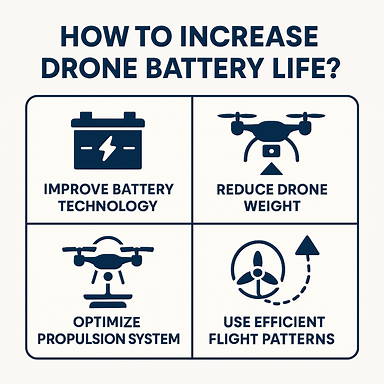
The endurance of a drone is one of the most defining indicators of its practical value. Whether a UAV is deployed for cinematic filming, agricultural monitoring, infrastructure inspection, or emergency response, its ability to remain airborne determines how effectively it can complete a mission. Despite rapid progress in propulsion systems and onboard intelligence, battery limitations remain the primary bottleneck for most electric drones. Enhancing battery life is therefore not a single-point improvement but a systems-level optimization challenge involving chemistry, aerodynamics, electronics, and operational strategy. This article provides a deeply restructured and technically enriched discussion of the methods that can meaningfully extend drone battery life.
2. Battery Chemistry and Energy Storage Improvements
The foundation of longer flight time lies in the energy source itself. Although lithium-polymer and lithium-ion batteries dominate the UAV market, their performance can be significantly influenced by material composition and internal architecture. Modern lithium-ion variants such as NMC and NCA offer higher gravimetric energy density and improved thermal behavior compared to earlier LiPo packs. These chemistries allow drones to store more energy without increasing weight, which directly translates into longer missions.
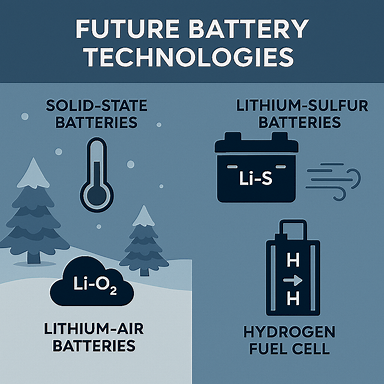
Beyond conventional lithium systems, next-generation technologies are emerging. Solid-state batteries, for example, replace flammable liquid electrolytes with solid conductors, enabling higher energy density and reducing thermal runaway risks. Lithium-sulfur batteries, though still limited by cycle life, promise several times the energy density of current lithium-ion cells. Hydrogen fuel cells and lithium-air concepts also represent long-term possibilities for ultra-long-endurance UAVs. While these technologies are not yet mainstream, they illustrate the direction in which drone power systems are evolving.
3. Structural Optimization and Weight Reduction
Reducing mass remains one of the most effective ways to extend flight time because the power required to generate lift increases proportionally with weight. Advances in materials science have made it possible to build drone frames that are both lighter and stronger. Carbon fiber composites, high-strength polymers, and magnesium alloys are now widely used to minimize structural mass without compromising durability.
Weight reduction is not limited to the frame. Miniaturization of electronic components—flight controllers, GPS modules, cameras, and communication systems—also contributes to improved endurance. Integrating multiple functions into a single board reduces wiring complexity and overall mass. Aerodynamic refinement further enhances efficiency. Streamlined arms, smooth surfaces, and optimized body shapes reduce drag, allowing the drone to maintain altitude with less power.
4. Propulsion System Efficiency
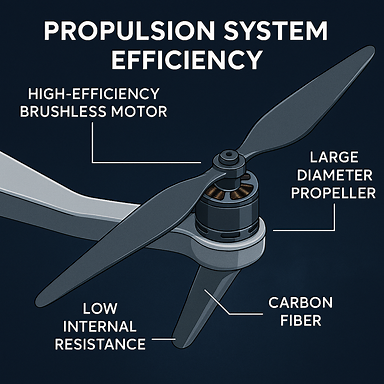
The propulsion system is the largest consumer of energy in a multirotor drone, so even small improvements can significantly extend flight time. Motor selection plays a crucial role. Motors with lower internal resistance, high-quality magnets, and appropriate KV ratings operate more efficiently under load. For heavier drones, larger motors running at lower rotational speeds often provide better thrust-to-power ratios.
Propeller design is equally important. Larger diameter propellers spinning at slower speeds typically generate more efficient lift. Blade geometry, pitch angle, and material stiffness all influence aerodynamic performance. Carbon fiber propellers, for instance, maintain shape under load better than plastic ones, reducing energy loss due to flexing. Electronic speed controllers (ESCs) also contribute to efficiency. Modern ESCs using field-oriented control (FOC) produce smoother motor operation and reduce electrical noise, improving overall power utilization.
5. Intelligent Energy Management and Flight Control
Software optimization is an often overlooked but highly impactful method for extending battery life. Advanced flight controllers equipped with adaptive algorithms can adjust motor output based on real-time conditions, minimizing unnecessary power consumption. Predictive control systems can anticipate wind disturbances and compensate smoothly rather than reacting with abrupt corrections.
Flight path planning also influences energy usage. Efficient mission design avoids sharp turns, sudden altitude changes, and redundant coverage. For mapping tasks, optimizing overlap and adjusting flight speed can significantly reduce energy expenditure. Hovering, which is inherently power-intensive for multirotor drones, can be made more efficient through improved stabilization algorithms that reduce micro-oscillations.
6. Environmental and Operational Considerations
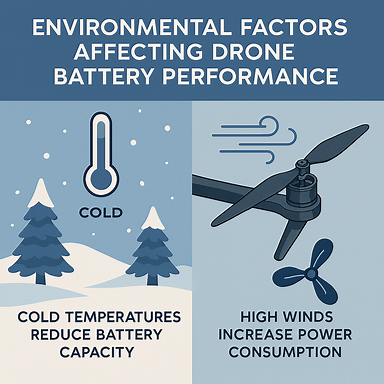
Even the most advanced hardware can underperform if operated poorly. Environmental conditions have a substantial impact on battery life. Low temperatures slow chemical reactions inside lithium batteries, reducing available capacity. High winds force the drone to expend more energy maintaining position. Flying in mild weather conditions therefore maximizes endurance.
Battery conditioning is another critical factor. Pre-warming batteries to an optimal temperature range improves discharge efficiency. Avoiding aggressive throttle inputs, maintaining smooth acceleration, and minimizing unnecessary maneuvers all contribute to longer flight times. Payload management is equally important. Removing non-essential accessories, using lightweight cameras, and balancing weight distribution reduce the power required for stable flight.
Proper battery maintenance extends both immediate performance and long-term health. Storing batteries at partial charge, avoiding deep discharges, and periodically checking internal resistance help preserve capacity over time.
7. Alternative Power Systems for Extended Missions
For applications requiring significantly longer endurance than traditional batteries can provide, hybrid and alternative power systems offer promising solutions. Gas-electric hybrid drones use small combustion engines to generate electricity during flight, enabling multirotor platforms to remain airborne for hours. Hydrogen fuel cell drones, already used in specialized industrial operations, provide long flight times with minimal emissions.
Solar-assisted drones represent another pathway. Fixed-wing UAVs equipped with lightweight solar panels can harvest energy during flight, extending mission duration substantially. Some experimental platforms have demonstrated multi-day endurance by combining solar power with high-efficiency batteries.
8. Application-Specific Strategies
Different drone applications benefit from different endurance-enhancing strategies. Surveying and mapping drones gain the most from optimized flight paths and lightweight imaging systems. Delivery drones require careful payload management and may benefit from hybrid propulsion systems. Inspection drones, which often hover for extended periods, benefit from larger propellers, low-KV motors, and advanced stabilization algorithms that reduce power consumption during stationary flight.
9. Future Directions
The pursuit of longer drone battery life is driving innovation across multiple fields. AI-driven energy optimization, advanced composite materials, and new battery chemistries will continue to reshape UAV capabilities. As solid-state and lithium-sulfur batteries mature, flight times will increase significantly. Fuel cell technology is likely to expand into commercial logistics and long-range surveillance. Improvements in aerodynamics, lightweight structures, and swarm coordination algorithms will further enhance operational efficiency.
10. Conclusion
Increasing drone battery life requires a holistic approach that spans energy storage, structural engineering, propulsion design, intelligent control, and operational discipline. No single improvement is sufficient on its own; meaningful gains come from integrating multiple strategies. As technological advancements continue to accelerate, drones will achieve longer flight times, enabling more complex missions and expanding their role across industries. The future of UAV endurance lies in the convergence of advanced materials, smarter algorithms, and innovative power systems, all working together to push the boundaries of what aerial robotics can accomplish.