
 EN
EN
Introduction
When operating in the field, on emergency missions, or traveling, drone pilots sometimes cannot carry or use the original charger. In these situations, understanding how to charge drone batteries without a dedicated charger becomes crucial.
With the development of USB-C fast charging, intelligent battery management systems (BMS), and wireless power technology, several alternative charging methods have become feasible. However, different methods vary significantly in efficiency, safety, and applicability, and must be used with caution.
This article introduces the following common solutions:
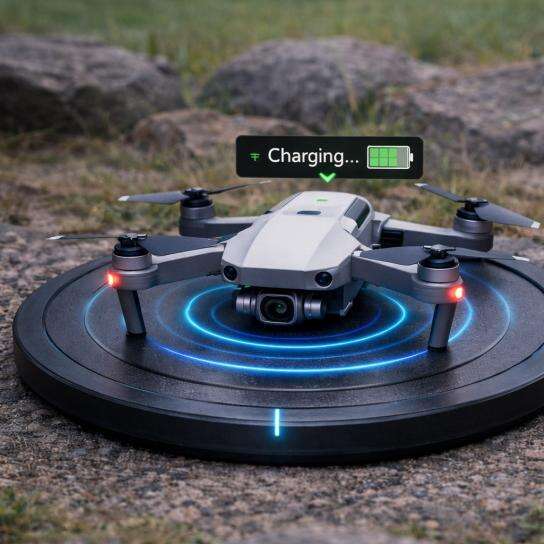
Wireless charging systems (such as the Chushan wireless power docking system)
AA battery emergency charging
Mobile phone charger charging
USB-C power adapter
Smart charging manager
Wireless charging platform
⚠️ Safety Tips: Not all drones support these methods. Incorrect charging may lead to battery damage or safety accidents.
Table of Contents
Technical Principles and Applications of Wireless Charging Pads
Is it Feasible to Charge Drones with AA Batteries?
Which Phone Chargers are Suitable for Drone Battery Charging?
USB-C Adapter Compatibility and Efficiency
How a Smart Charging Manager Works
1. Technical Principles and Applications of Wireless Charging Pads
Wireless charging pads utilize electromagnetic induction or resonant coupling technology to allow drones to charge without plugging and unplugging interfaces. Unlike wireless charging for mobile phones, industry-grade systems (such as the Chushan solution) support higher power and can communicate with the battery BMS.
This solution is mainly used for:
Automatic drone base stations
Industrial inspection and security monitoring
Emergency and surveying tasks
Advantages: Fully automatic, no interface wear, suitable for harsh environments
Disadvantages: High cost, slightly lower efficiency, mainly for industry-level users
2. Is it Feasible to Charge Drones with AA Batteries?
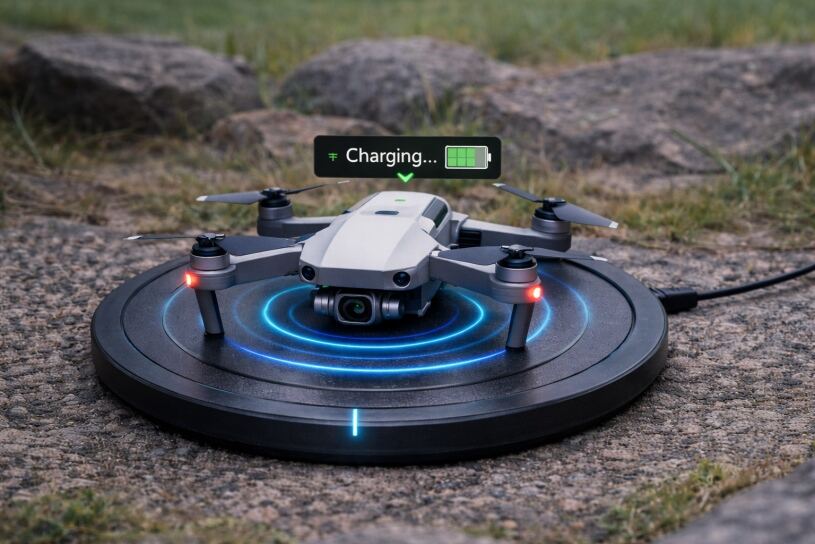
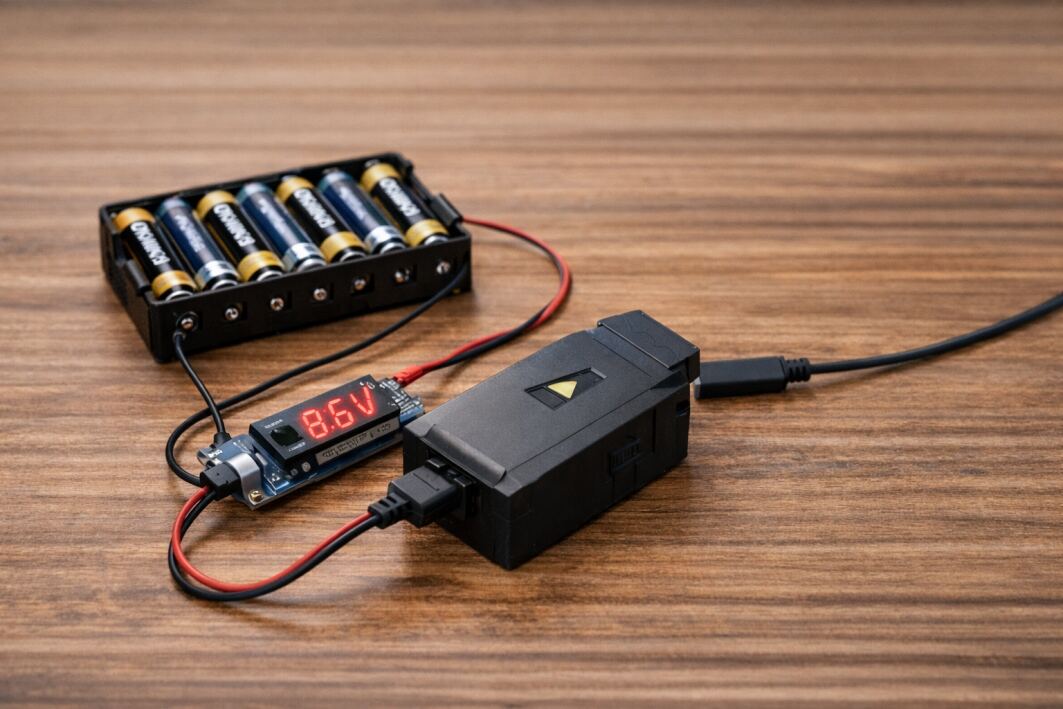
Using AA batteries to charge drones is an extreme emergency solution. By connecting multiple AA batteries in series, the voltage required by the drone can be approached, but the current and stability are severely insufficient.
The problems are:
Extremely low charging efficiency
Lack of overcharge protection
Easily damages lithium batteries
⚠️ Not recommended for use without voltage regulation and protection circuits.
Conclusion: Technically feasible, but not practically useful; only suitable for emergency or experimental use.
3. Which phone chargers are suitable for drone batteries?
Some drones support direct use of phone chargers. Common specifications include:
5V/2A
9V/2A (fast charging)
For example, some Hubson drones can be charged with a 9V/2A phone charger.
Before use, confirm:
Built has a built-in BMS
Interface supports voltage negotiation
Charger parameters match
Advantages: Convenient, readily available
Disadvantages: Slow charging speed, limited compatibility
4. USB-C Adapter Compatibility and Efficiency
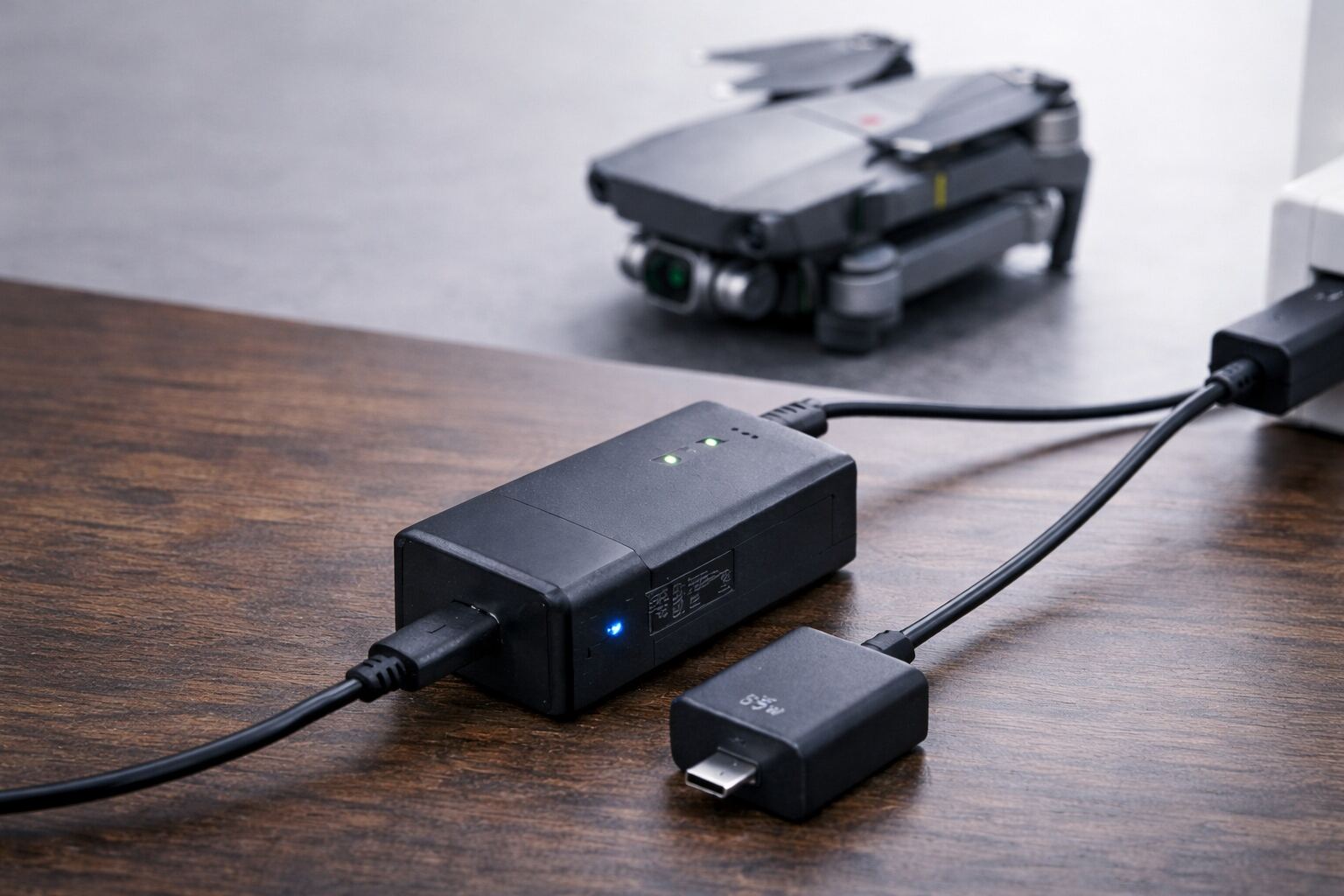
More and more drones support USB-C PD fast charging, such as ANAFI USA smart batteries, which can be charged directly via a USB-C adapter.
Common PD outputs include:
9V / 3A
12V / 3A
20V / 5A
Using a 45W–65W PD adapter, charging efficiency is close to that of the original charger.
Conclusion: USB-C is currently one of the safest and most practical alternative charging methods.
5. How Smart Charging Managers Work
Smart charging managers (such as the DJI Avata 2 Charging Manager) can manage multiple batteries simultaneously and prioritize charging using intelligent algorithms.
Features:
Automatic battery status recognition
Temperature control and balanced charging
Mostly powered by USB-C
While still requiring an external power source, it is highly efficient when the original charger is unavailable.
Summary
Drone batteries can still be charged in various ways without a dedicated charger, but safety and compatibility are paramount.
Overall Recommendations:
✅ USB-C PD Adapter: Preferred Solution
✅ Phone Charger: Compatible with compatible models
⚠️ Wireless Charging Pad: Industrial-grade application
❌ AA Batteries: Emergency Use Only
Smart Charging Manager: Improves multi-battery efficiency
It is recommended that drone pilots prioritize drones and battery systems that support USB-C charging to reduce reliance on dedicated chargers.