
 EN
EN
Comprehensive Guide to Drone Battery Health Maintenance: Maximizing Performance and Safety
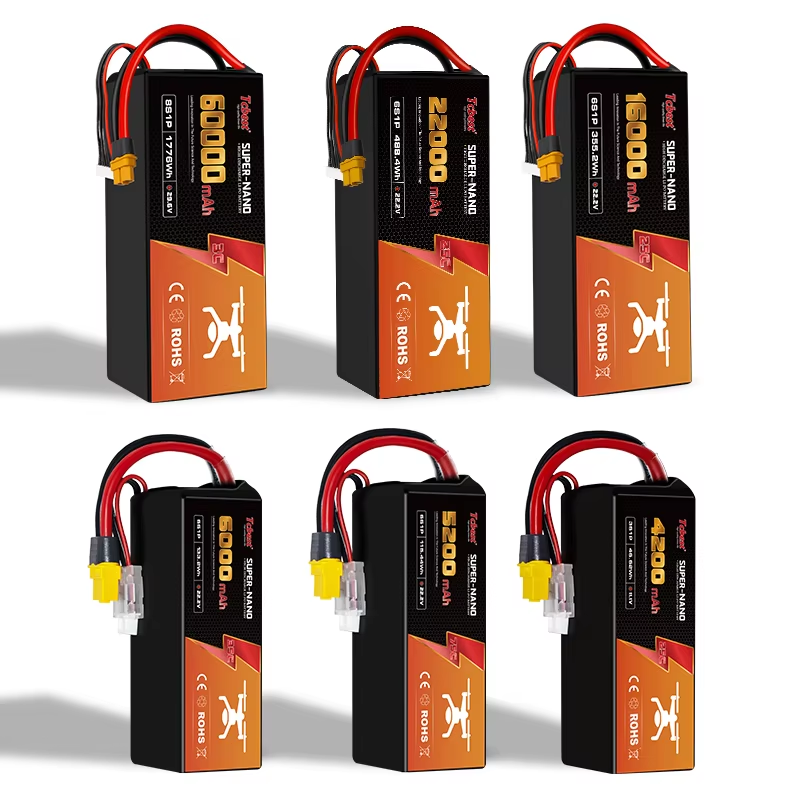
Drones have evolved from niche hobbyist gadgets into indispensable tools across agriculture, cinematography, infrastructure inspection, public safety, logistics and numerous other sectors. At the heart of every multirotor or fixed-wing drone lies its power source — almost invariably a lithium polymer (LiPo) or lithium-ion (Li-ion) battery pack. These high energy density batteries serve as the aircraft’s heart, determining flight endurance, payload capacity and overall system reliability.
Unlike internal combustion engines, which degrade gradually over thousands of operating hours, drone batteries are consumables with finite service life, commonly measured in hundreds of charge-discharge cycles. Neglecting battery maintenance invites a host of hazards: unexpected in-flight power loss, irreversible battery damage, costly equipment replacement and even fire risks. Centered on the critical interplay between physical integrity, electrical performance and intelligent diagnostics, this article outlines a systematic six-pillar methodology for drone battery health maintenance.
1. Physical Inspection: The First Line of Defence
The foundation of any battery maintenance regime is a thorough visual check before every flight. Drone batteries endure severe mechanical and thermal stress: rapid acceleration, high-current discharge, hard landings and ambient temperature fluctuations. Over time, these factors compromise the physical structure of soft or hard-cased battery enclosures. Detailed visual inspections focus on three key anomalies: swelling, punctures and electrolyte leakage.
Swelling is the most prevalent and dangerous warning sign. It occurs when internal chemical reactions generate gas, inflating pouch cells, usually resulting from over-discharging, deep cycling or prolonged storage at high charge levels. A swollen battery will no longer fit snugly inside the drone battery compartment; more critically, it signals potential imminent failure of internal separators, which can trigger short circuits. Even microscopic punctures carry substantial risks. Sharp rocks, carbon fibre propeller edges or rough landings may pierce the outer aluminium laminate film, exposing highly reactive lithium compounds to atmospheric moisture. This triggers immediate oxidation, heat generation and potentially thermal runaway. Leakage manifests as a sweet solvent odour or visible fluid near connector terminals.
Any battery exhibiting these symptoms must be removed from service immediately, placed inside a fireproof LiPo safety bag, and disposed of in compliance with local hazardous waste regulations. This rule is non-negotiable: when in doubt, retire the battery. Physical integrity is a prerequisite for all subsequent electrical testing. Favorable voltage or capacity readings cannot offset structurally compromised cells.
2. Voltage Inspection: Diagnosing Cell Imbalance and Over-Discharge
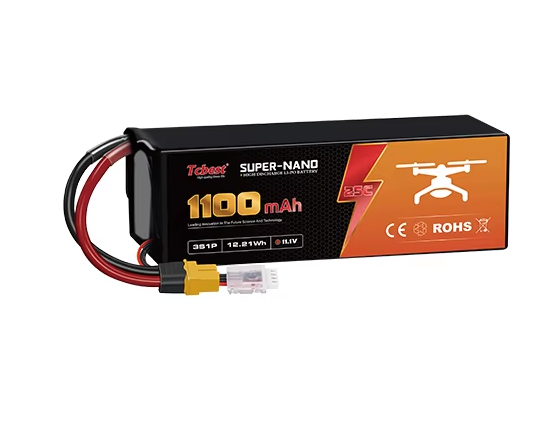
Once physical integrity is confirmed, the next stage evaluates battery voltage conditions. Voltage assessment covers two metrics: total pack voltage and individual cell voltage for series-configured packs.
Take a standard 4S LiPo (nominal 14.8 V) as an example: fully charged total voltage stands at 16.8 V (4.2 V per cell), while storage voltage is approximately 15.2 V (3.8 V per cell). Manufacturer specifications — typically printed on battery labels or user manuals — define absolute minimum safe voltages, generally 3.0 V to 3.3 V per cell under load, and 3.5 V per cell in resting conditions.
A core insight from voltage measurement lies in voltage differential between cells. In a healthy battery pack, voltage variation across all cells should be less than 0.05 V. A differential exceeding 0.1 V indicates cell imbalance. Imbalance means one or more cells have degraded, forcing remaining cells to work harder and discharge more deeply to meet the drone’s power demands. This cascading effect accelerates deterioration of the entire pack.
Low voltage readings — for the full pack or individual cells — are more than numerical alerts; they foreshadow capacity fade, rising internal resistance and complete cell failure. Operators should log voltage data after every flight to track trends, and never rely solely on the drone’s low-voltage alarm, which often activates too late to prevent permanent cell damage.
3. Capacity Testing: The True Benchmark of Flight Endurance
While voltage reflects instantaneous charge status, capacity, measured in milliampere-hours (mAh), reveals a battery’s actual energy storage capability. Over time, irreversible lithium plating and electrolyte decomposition gradually reduce the usable capacity of LiPo batteries.
The gold standard for capacity testing is controlled charge-discharge cycling: use a balance charger to fully charge the battery at 1C, then discharge it at a constant current (typically 0.5C to 1C) down to the manufacturer’s recommended minimum safe voltage, while recording total discharged mAh. This procedure can be completed using a smart charger with discharge functionality. A more practical alternative is hover testing conducted in windless conditions.
For flight-based capacity testing, record total flight duration from takeoff until the first low-voltage alert, and compare this duration against the baseline hover time recorded when the battery was new. For instance, a battery that once sustained 25 minutes of hovering yet only achieves 18 minutes under identical payload and environmental conditions has lost more than 25% of its effective capacity.
Industry best practice dictates retirement when measured discharge capacity falls below 80% of rated nominal capacity. This 80% threshold is not arbitrary: below this level, substantial voltage sag occurs under load, sharply increasing the risk of sudden power loss during climbs, gusts or aggressive manoeuvres. Operators must maintain dedicated logs, either digital or paper, documenting discharge duration for each cycle. This empirical dataset is far more reliable than the battery’s internal fuel gauge, which frequently drifts out of calibration following repeated partial charging cycles.
4. Internal Resistance Testing: The Silent Performance Killer
Internal Resistance (IR) is arguably the most insightful yet widely misunderstood health indicator. Internal resistance represents the opposition to electric current flow within cells, originating from electrolyte ionic conductivity, separator porosity and electrode surface conditions. As batteries age, pathways for lithium-ion diffusion become obstructed, driving internal resistance higher.
Elevated internal resistance manifests in two destructive ways. First, it causes severe voltage sag under high discharge loads (V = I × R). The flight controller may misinterpret this voltage drop as critically low remaining charge and initiate automatic landing, even though considerable energy remains inside the battery. Second, energy dissipated as heat rather than propulsion accelerates chemical breakdown, creating a vicious cycle of degradation.
Measuring internal resistance requires specialised equipment beyond standard multimeters. Dedicated battery analysers (such as Wayne Kerr or iCharger units) or advanced smart chargers with IR testing capability apply a brief high-frequency AC signal to calculate resistance independently for each cell. For new, high-quality LiPo cells, single-cell internal resistance typically ranges from 2 to 6 milliohms (mΩ). Single-cell resistance exceeding 15–20 mΩ warrants immediate attention.
Interpreting internal resistance values is not absolute; resistance rises with falling temperature and varies with state of charge. Operators should standardise measurement conditions: testing at room temperature (~25°C) with cells stabilised at storage voltage (3.8 V per cell). Instead of fixating on absolute figures, track the rate of internal resistance increase across the battery service life. A battery whose resistance doubles within 20 cycles degrades far faster than one with only a 10% rise over 100 cycles. Replacing batteries with abnormally high internal resistance is not merely a recommendation — it is a cost-effective safeguard against in-flight power failures, which can destroy drones valued at thousands of dollars.
5. Charge Cycle Count: Managing End-of-Life Timelines
Cycle count serves as the industry benchmark for estimating remaining battery service life, though it requires careful interpretation. One full cycle is defined as a complete discharge from 100% to 0%, or its cumulative equivalent (for example, two 50% discharges count as one cycle). Modern smart batteries equipped with a Battery Management System (BMS) automatically accumulate cycle counts internally, viewable via drone applications. For non-smart batteries, operators must manually log cycles using spreadsheets or data storage functions on premium chargers.
Manufacturers typically specify that LiPo batteries retain 80% of original capacity for 200 to 300 cycles, while premium lithium-ion batteries for long-endurance drones may claim 500 cycles. However, these figures represent optimistic laboratory conditions: constant 25°C temperature and 0.5C discharge rates. In real-world operation, exposure to extreme heat, deep discharge below 20% state of charge and fast charging at 5C rates can halve service life.
Cycle count should therefore act as a calibration reference rather than a rigid retirement cutoff. A battery with 150 recorded cycles that still passes internal resistance and capacity tests remains airworthy. Conversely, a battery with only 50 cycles displaying high resistance or severe capacity fade should be downgraded for ground testing and training missions. Proactive replacement planning is essential: begin sourcing new batteries when fleet cycle counts near 80% of the manufacturer’s rated lifespan, and phase out the oldest units gradually. This rolling inventory strategy avoids the common predicament where simultaneous ageing of all batteries grounds the entire fleet.
6. Smart Battery Diagnostics: Combining Automation with Manual Verification
The final pillar of this maintenance framework leverages smart battery technology, a hallmark of enterprise-grade drones. Smart batteries integrate microcontrollers that continuously monitor cell voltages, temperatures, cycle counts and even internal resistance in real time. This data transmits from the ground control application (such as DJI GO, GS Pro or Autel Explorer) to operators, with colour-coded health status indicators: green for healthy, yellow for warning, red for critical condition.
Additionally, the BMS actively prevents overcharging, over-discharging and short circuits, and automatically discharges batteries to a safe storage voltage (usually 3.85 V per cell) after 5–10 days of inactivity, mitigating degradation during storage.
These automated functions deliver immense value but are not infallible. Proprietary algorithms embedded within the BMS often do not disclose raw internal resistance or true capacity data. Operators must therefore treat application health reports as primary indicators, not final verdicts. When a smart battery triggers errors such as “cell damage” or “overheating”, takeoff interlocks will activate — an unbreakable safety interlock mechanism. Operators must resolve all application fault alerts either by replacing defective cells (for serviceable packs) or retiring the complete battery assembly.
Diagnostic data also facilitates post-flight analysis. For instance, reviewing peak temperatures recorded during summer operations guides decisions on mandatory cooling intervals between successive battery flights. Ultimately, intelligent systems act as a capable assistant, yet the operator bears ultimate responsibility to cross-validate automated outputs using the physical, voltage, capacity, internal resistance and cycle checks outlined above. This layered verification — technology assistance paired with human review — establishes robust defences against catastrophic battery failure.
Conclusion: Cultivating a Culture of Preventative Vigilance
Drone battery health maintenance is not a one-time inspection, but an ongoing discipline built upon rigorous logging, scheduled testing and conservative decision-making. The six pillars — physical inspection, voltage balancing, baseline capacity testing, internal resistance trend tracking, cycle record-keeping and smart diagnostics — together form a complete hierarchical system.
Physical integrity forms the foundation; without it, all other tests are meaningless. Voltage and internal resistance provide early warnings of chemical ageing, while capacity testing verifies real-world functional performance. Cycle counts enable forward planning for battery turnover, and smart diagnostics deliver real-time alerts. Whenever any pillar signals abnormality, operators must act decisively: retire, recycle or downgrade the battery.
The economic logic is clear: the USD 150 cost of battery replacement pales in comparison to repair bills for a USD 5,000 drone, or worse, liability arising from property damage or personal injury. The operational and emotional costs of losing valuable aerial footage, mission data or time-critical deliveries are equally substantial.
By embedding these checks within pre-flight and post-flight routines — potentially supported by checklist applications or printed log sheets — operators elevate battery maintenance from a trivial chore to professional standard. As drone technology advances at rapid pace, one truth remains constant: the most critical component aboard any drone is not its camera, propulsion system or autopilot, but the silent chemical processes unfolding within its battery. Treat this “chemical system” with respect and conduct regular audits, and it will reward operators with sustained performance, reliability and safety.
This six-pillar guide covers full drone LiPo/Li-ion battery maintenance, detailing physical, voltage, capacity and IR checks, cycle tracking and smart BMS diagnostics to detect hazards, extend lifespan and eliminate in-flight power loss and fire risks for all industrial drone operators.
Table of Contents
- Comprehensive Guide to Drone Battery Health Maintenance: Maximizing Performance and Safety
- 1. Physical Inspection: The First Line of Defence
- 2. Voltage Inspection: Diagnosing Cell Imbalance and Over-Discharge
- 3. Capacity Testing: The True Benchmark of Flight Endurance
- 4. Internal Resistance Testing: The Silent Performance Killer
- 5. Charge Cycle Count: Managing End-of-Life Timelines
- 6. Smart Battery Diagnostics: Combining Automation with Manual Verification
- Conclusion: Cultivating a Culture of Preventative Vigilance