
 EN
EN
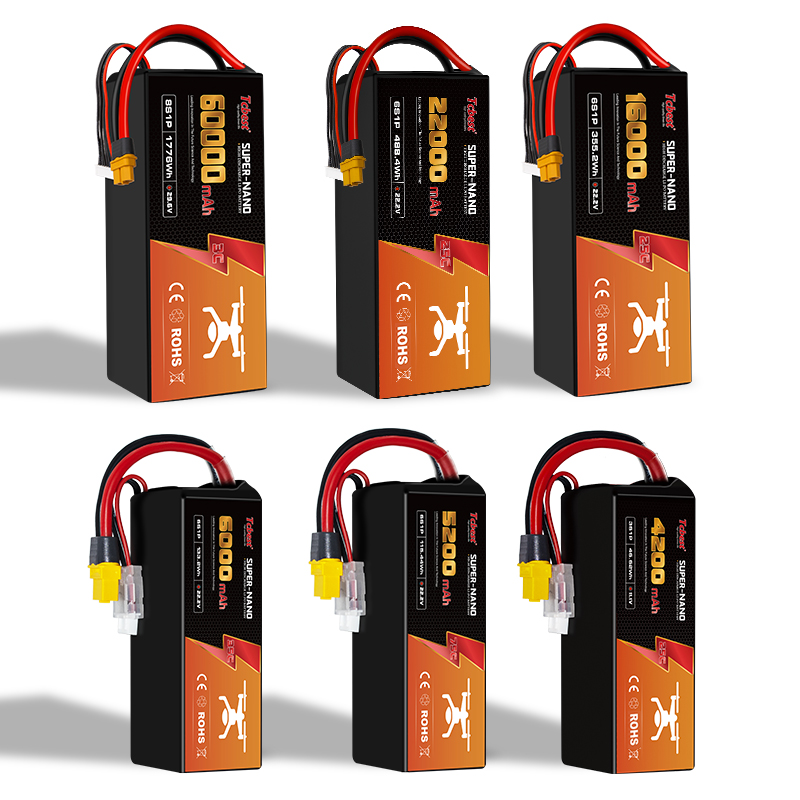
Choosing the right drone battery is essential for flight time, power, reliability, and overall performance. A battery with a larger capacity is not always better because additional size and weight can increase power consumption. The best battery should match the drone’s motors, electronics, physical dimensions, and intended application.
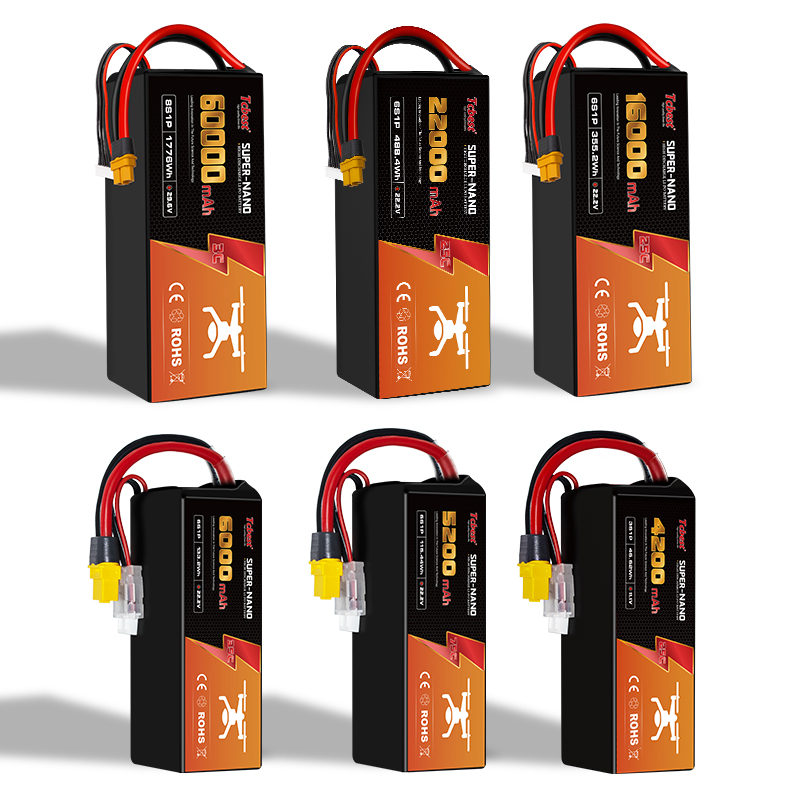
Size and Weight
The battery must fit securely inside or on the drone. Always check its length, width, height, and weight before purchasing.
Larger batteries usually provide more energy, but they also add weight. Extra weight forces the motors to work harder, which can reduce the expected increase in flight time. The goal is to find a battery that provides enough energy without making the drone unnecessarily heavy.
Capacity
Battery capacity is usually measured in mAh or Ah. In general, higher capacity means wlonger flight time.
However, capacity should be balanced with battery weight. A very large battery may reduce efficiency if the drone needs significantly more power to carry it.
Choose the largest practical capacity that your drone can safely support while remaining within its recommended takeoff weight.
Voltage
Battery voltage affects how much power is available to the motors.
Drone batteries are often described by cell configurations such as 4S, 6S, or higher. Before choosing a battery, check the supported voltage range of the motors and ESCs.
Higher voltage can provide more power and may improve efficiency in some systems, but exceeding the rated voltage of the motors or electronics can cause damage.
Always select a voltage that matches the complete drone power system.
Discharge Rate
The discharge rate, often shown as a C rating, indicates how much current a battery can safely supply.
A simple estimate is:
Maximum Current = Capacity in Ah × C Rating
For example, a 5 Ah 20C battery has a theoretical current capability of 100 A.
High-performance FPV drones may require a high discharge rate because their motors draw large amounts of current. Long-endurance drones may benefit more from higher energy density and lower battery weight.
The battery should provide enough current for the motors without adding unnecessary weight.
Connector
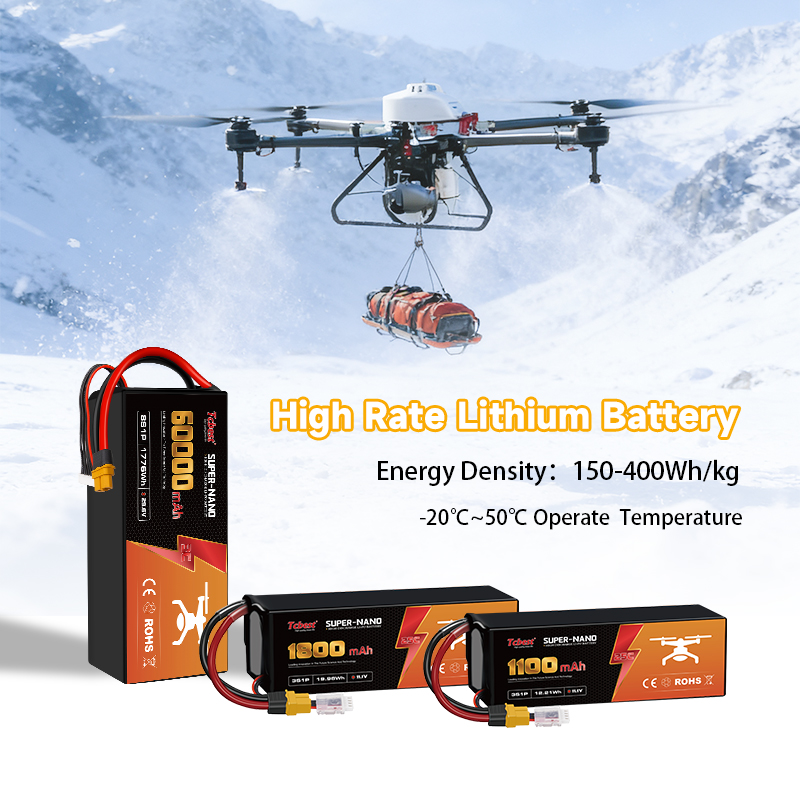
The battery connector must be compatible with the drone.
Common examples include XT60 and EC3 connectors. The correct connector should provide secure contact and support the required current.
For fleets using multiple drones, standardized connectors can make charging and battery replacement more convenient.
Always check connector type, polarity, wire size, and current capability.
Brand and Reliability
Battery quality is important for both safety and performance.
Choose a reliable manufacturer that provides clear information about capacity, voltage, discharge current, dimensions, weight, cycle life, operating temperature, and charging requirements.
For customized drone battery packs, also consider the battery management system, communication functions, connector design, and protection features.
If you are unsure which battery is suitable, it is better to consult the drone manufacturer or battery supplier before making a decision.
Tcbest ARES Battery Example
The Tcbest ARES series is presented as a drone-specific solid-state lithium battery solution.
Its main features include high energy density, lightweight construction, compact size, multiple specifications, and a claimed cycle life of more than 300 charging cycles under suitable operating conditions.
High-energy-density batteries can be useful for UAV applications because they allow more energy to be carried without greatly increasing aircraft weight.
Actual battery life and performance will still depend on charging conditions, operating temperature, discharge depth, flight load, and storage practices.
Choosing Batteries for Different Drone Applications
Different drones require different battery characteristics.
FPV racing drones usually need high discharge capability and strong power output. Photography drones often prioritize stable power and longer flight time.
Agricultural drones need high-capacity batteries that can support heavy payloads and powerful motors. Mapping and surveying drones usually benefit from lightweight batteries with high energy density.
Long-endurance UAVs require a careful balance between capacity, voltage, battery weight, motor efficiency, and aircraft design.
Other Factors to Consider
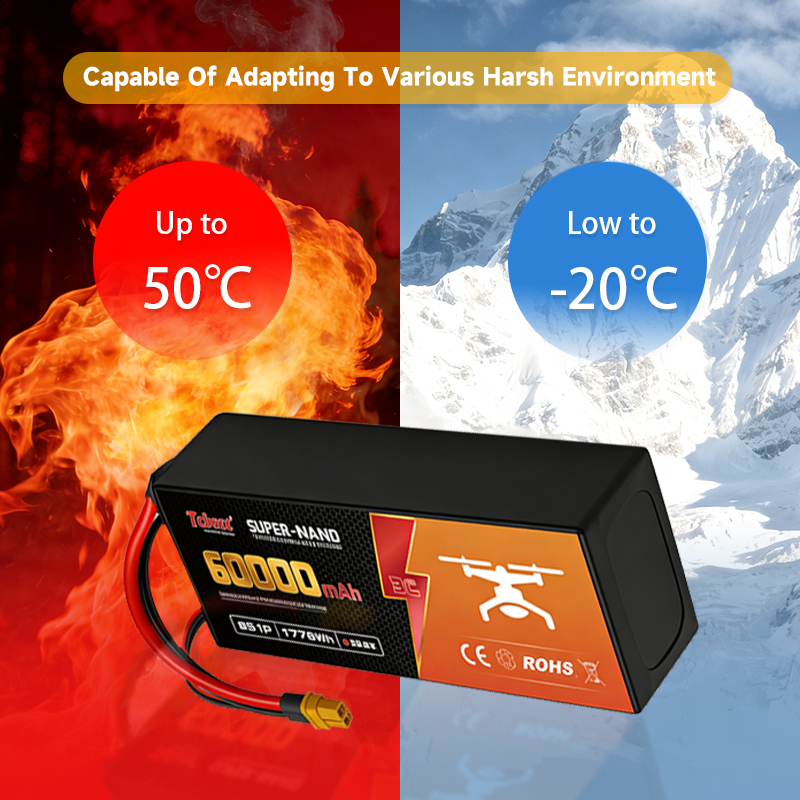
Operating temperature can affect battery performance. Cold weather may temporarily reduce available capacity, while excessive heat can accelerate battery aging.
Charging equipment should also be considered, especially for commercial drone fleets that use several batteries every day.
Battery availability, storage requirements, and transportation rules may also be important when operating drones professionally or internationally.
Conclusion
Choosing a drone battery requires balancing several factors, including size, weight, capacity, voltage, discharge rate, connector type, and reliability.
The battery with the highest capacity or C rating is not always the best choice. The ideal battery is one that matches the drone’s motors and electronics while providing the best balance of flight time, weight, power, and reliability.
Careful battery selection can improve drone efficiency, extend flight time, and provide more stable performance for both hobby and professional UAV applications.
Learn how to choose the right drone battery by comparing capacity, voltage, weight, discharge rate, connector type, and reliability. This guide helps you balance flight time, power, efficiency, and compatibility, making it easier to select a suitable battery for FPV, photography, agricultural, mapping, and professional drones.