
 EN
EN
Introduction
Removing a drone battery may appear to be a simple post flight action, yet in practice it is a procedure that involves safety awareness, mechanical understanding, and careful handling of lithium based power systems. Modern drones rely on compact, high energy batteries that are sensitive to temperature, pressure, and improper manipulation. Because of this, the act of removing a battery is not merely a routine step but a critical part of maintaining the drone’s long term reliability and ensuring safe operation. A well executed removal process helps prevent connector wear, reduces the risk of accidental short circuits, and preserves the structural integrity of both the battery and the aircraft. For operators who fly frequently or rely on drones for professional tasks, mastering this seemingly simple procedure becomes an essential part of responsible UAV management.
Understanding Drone Battery Design
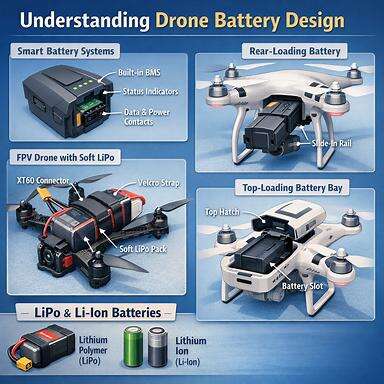
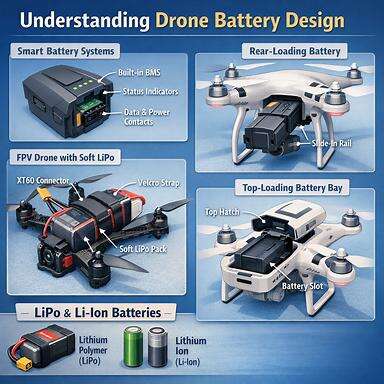
Before attempting to remove a battery, it is important to understand how drone power systems are constructed. Most drones use lithium polymer or lithium ion packs, and many consumer models integrate “smart battery” technology that includes protection circuits, communication pins, and temperature sensors. These batteries are typically installed in rear loading or top loading compartments, secured by latches, rails, or friction fit mechanisms that guide the battery into place. FPV drones, by contrast, often use soft pack LiPos strapped externally to the frame, connected through XT60 or XT30 plugs. Because each design uses a different locking method, the removal technique must adapt accordingly. Applying force in the wrong direction or gripping the wrong part of the battery can easily damage the casing or deform the connectors, so recognizing the specific mechanism of your drone’s battery system is the foundation of safe removal.
Safety Precautions Before Removal
Several safety steps should be taken before physically interacting with the battery. The drone must be completely powered off, with all indicator lights extinguished and the motors fully stopped, because removing a battery while the aircraft is still active can corrupt system data or cause electrical arcing. After flight, the battery should be allowed to cool naturally, as lithium based cells warm up during discharge and may become more vulnerable to pressure or deformation. A brief cooling period also prevents condensation when moving the battery into a cooler environment. Operators should visually inspect the battery area for swelling, cracks, leakage, or debris. Any sign of damage requires extra caution, since swollen LiPo packs can be hazardous if squeezed or bent. Ensuring that the environment is free of metal objects or conductive materials further reduces the risk of accidental short circuits during handling.
Step by Step Removal Process
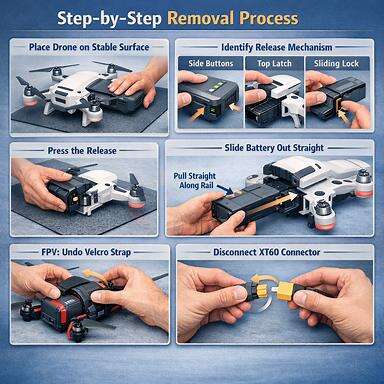
Once the drone is powered down and stable, the removal process can begin. The aircraft should be placed on a flat, secure surface to prevent shifting while pressure is applied to the release mechanism. Most consumer drones use side press buttons, top latches, or sliding locks to secure the battery, and these mechanisms must be fully disengaged before attempting to pull the battery out. The key is to apply firm, controlled pressure to the release points while avoiding any squeezing of the battery itself. With FPV drones, the process differs: the Velcro strap must be loosened first, followed by a careful separation of the XT60 connector by gripping the plastic housing rather than the wires. After the locking mechanism is released, the battery should slide out smoothly along its intended path. Pulling the battery straight out without twisting or rocking it prevents damage to the internal rails or connector pins. If resistance is encountered, the operator should stop and check for obstructions such as dust or misalignment rather than applying excessive force.
Post Removal Handling
After the battery is removed, it should be inspected again for signs of wear or damage. Issues such as swelling, cracked casings, loose terminals, or burn marks indicate that the battery may no longer be safe for use. Even if the battery appears normal, it should be placed in a ventilated area to cool further before storage. Lithium based batteries should be stored at an appropriate voltage—typically around 3.7 to 3.85 volts per cell for LiPo packs—to maintain long term health. Smart batteries often self discharge to storage level automatically, but manual verification is still recommended. Cleaning the battery bay periodically helps prevent debris from interfering with the locking mechanism or electrical contacts. Professional operators often track battery cycles, temperature behavior, and performance trends to identify aging packs before they fail, making post removal inspection a valuable habit.
Special Considerations for Different Drone Types
Different categories of drones require slightly different removal considerations. Consumer camera drones usually feature well designed smart battery systems that slide in and out easily, but their plastic locking mechanisms can wear over time if pressed too aggressively. FPV drones demand more caution because their soft pack LiPos are more vulnerable to puncture and their wiring is exposed. Industrial drones may use dual battery configurations or hot swappable systems, which require waiting for the aircraft to confirm that removal is safe. Fixed wing drones often house their batteries inside the fuselage, meaning operators must avoid pulling on internal wiring or damaging foam structures when accessing the compartment. Understanding these variations ensures that the removal process remains safe across different drone platforms.
Common Mistakes to Avoid
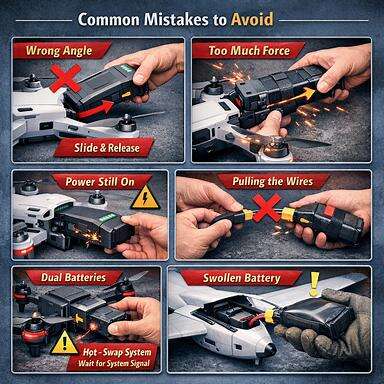
Several common mistakes can compromise safety or damage equipment. Pulling the battery at an angle is one of the most frequent errors, often resulting in bent rails or stressed connectors. Using excessive force is another problem; if the battery does not move easily, the operator should investigate rather than push harder. Removing a battery while the drone is still powered on can cause electrical damage or corrupt system data. Pulling on wires instead of connectors is especially dangerous with FPV drones. Handling a swollen battery without caution is also risky, as swollen LiPos are prone to rupture and should be isolated immediately. Avoiding these mistakes significantly reduces the risk of long term damage.
Troubleshooting Difficult Removals
In some cases, operators may encounter difficulties removing the battery. Debris inside the battery bay can cause jamming, which can often be resolved by gently tapping the drone or using compressed air. Cold temperatures can cause plastic components to contract, making removal harder; allowing the drone to warm slightly indoors usually solves the issue. A broken latch mechanism requires delicate handling, and prying tools should only be used as a last resort. Swollen batteries present the most serious challenge, as they must be removed slowly and without applying pressure to the swollen areas. Once removed, they should be placed in a fireproof container and disposed of according to local regulations.
Conclusion
Proper battery removal is not just a procedural step but a long term investment in the health of the drone. Consistent, careful handling reduces wear on connectors, prevents accidental damage, and extends the usable life of the battery. It also contributes to safer operation, as damaged or improperly handled batteries are a leading cause of drone malfunctions. By understanding the design of the battery system, following safety precautions, and applying correct removal techniques, drone operators can ensure that their equipment remains reliable and safe throughout its service life.
Summary
Proper drone battery removal requires understanding battery types, locking mechanisms, and safety steps. Key actions include powering down, cooling, identifying release systems, and avoiding force or wire pulling. Different drone types need tailored handling. Careful removal prevents damage, extends battery life, and ensures safe, reliable UAV operation.