
 EN
EN
Introduction
With the rapid rise of drones across photography, logistics, agriculture, industrial inspection, and recreational activities, public interest in their durability and environmental adaptability has grown significantly. Among the many concerns, one of the most frequently asked questions is: Is the drone battery waterproof?
This question is far from trivial. The battery is the heart of any unmanned aerial vehicle (UAV); without reliable power, the aircraft cannot function. Exposure to water can lead to catastrophic failure, safety hazards, or irreversible damage to both the battery and the drone. For drone operators, engineers, and hobbyists, understanding the relationship between drone batteries and water resistance is therefore essential.
This article examines the topic in depth. It clarifies the true meaning of “waterproof,” explains how drone batteries are constructed, distinguishes between waterproof drones and waterproof batteries, analyzes risks associated with water exposure, discusses engineering challenges, and explores emerging waterproof‑battery technologies. Real‑world scenarios, best practices, and common misconceptions are also addressed. Ultimately, the answer is clear: drone batteries are not waterproof, though the full explanation is more nuanced.
1. Understanding the Meaning of “Waterproof”
Before evaluating whether drone batteries are waterproof, it is necessary to define the term in an engineering context. Water resistance in electronics is commonly measured using the IP (Ingress Protection) rating system, which classifies protection against dust and water.
Key IP ratings include:
• IPX4: Protected against splashes
• IPX7: Protected against temporary immersion
• IPX8: Protected against continuous immersion
• IP67: Dust‑tight and immersion‑resistant
• IP68: Dust‑tight and long‑duration immersion‑resistant
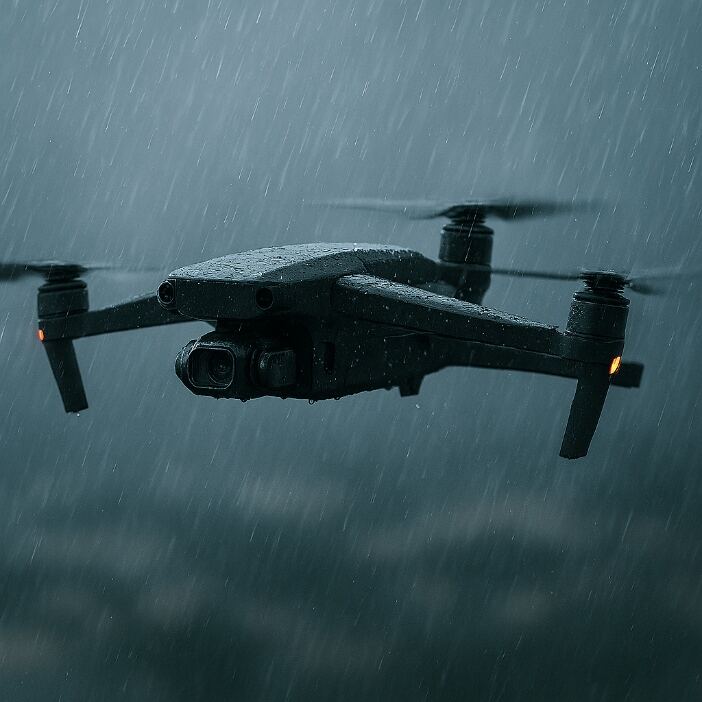
Many drones marketed as waterproof fall into the IP67 or IP68 categories. However, these ratings typically apply to the drone’s airframe, not the battery. Batteries contain electrical contacts, ventilation paths, and chemically active cells, making complete waterproofing extremely challenging.
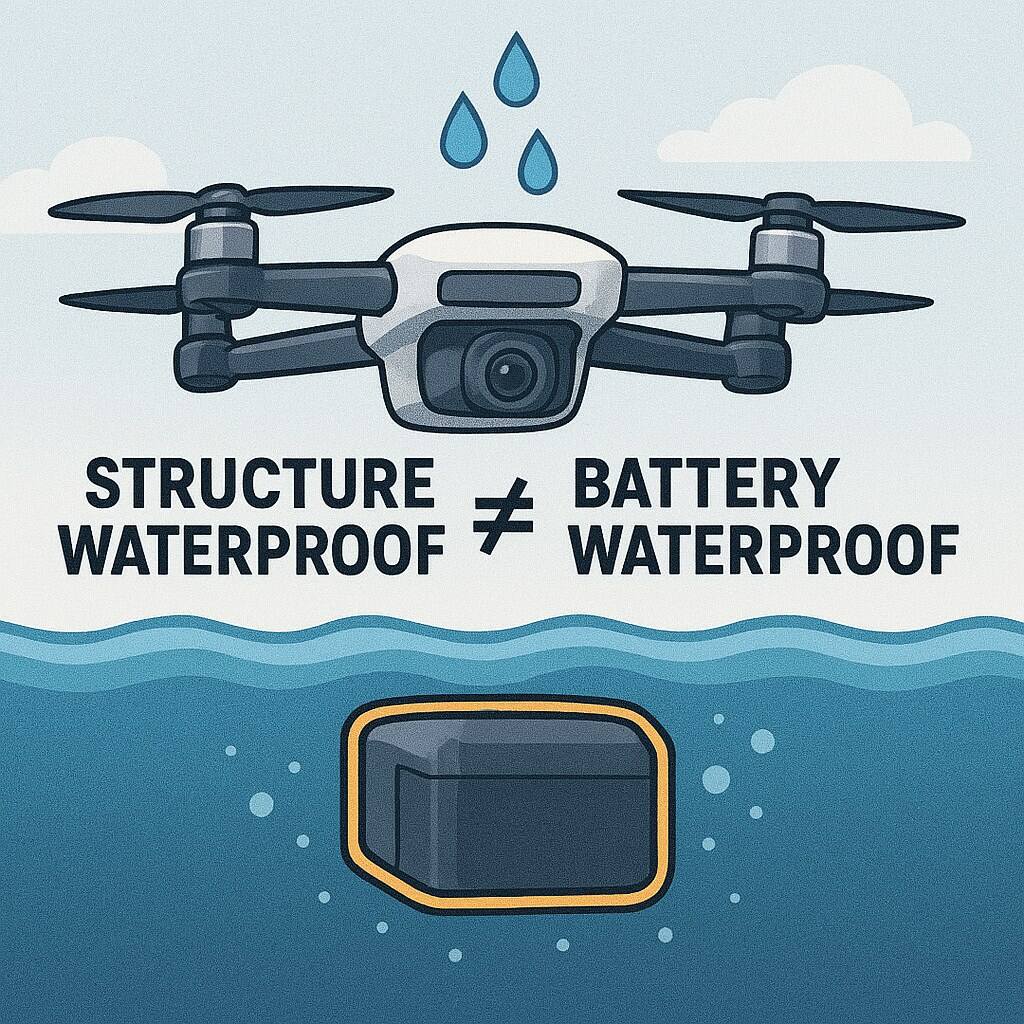
This distinction between waterproof drones and waterproof batteries is one of the most misunderstood aspects of UAV design. A drone capable of landing on water does not necessarily contain a waterproof battery; instead, the battery is usually protected by a sealed compartment.
2. Construction of Drone Batteries
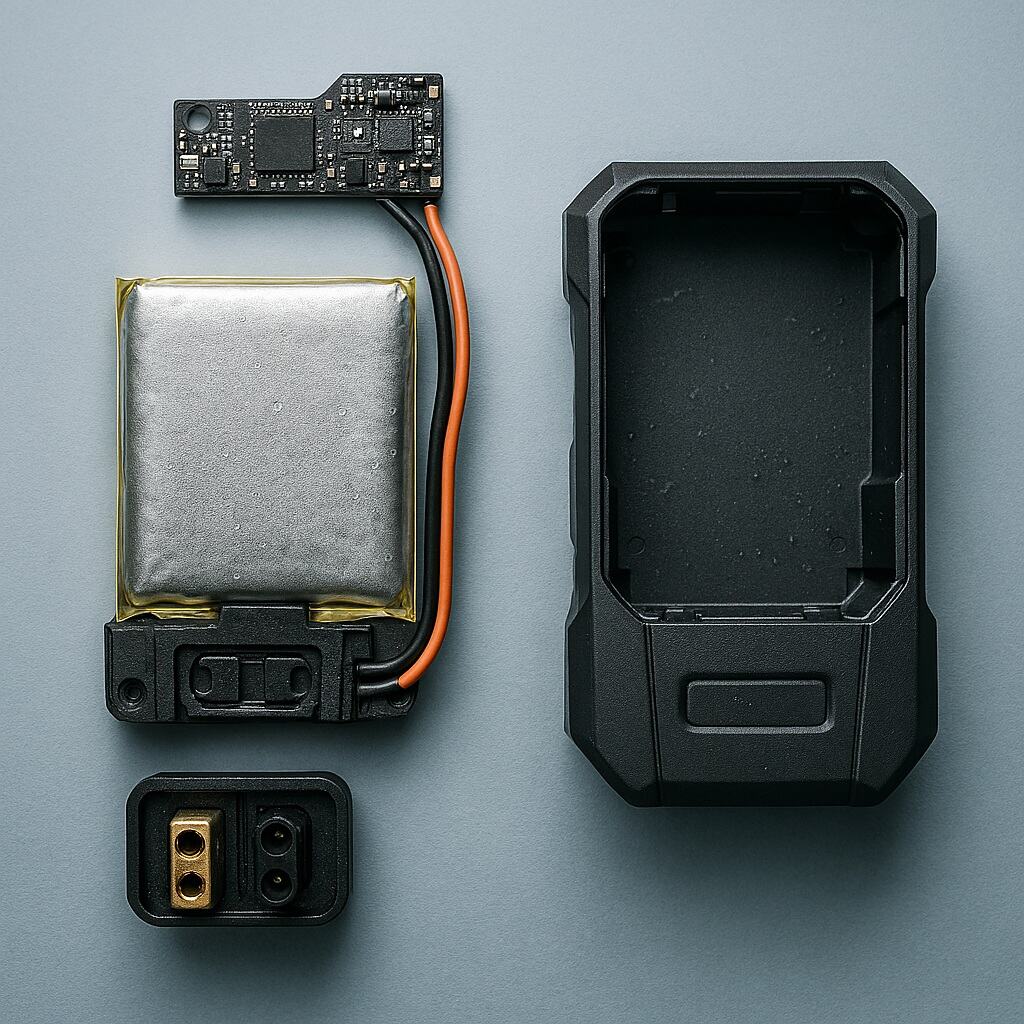
Modern drones primarily use lithium‑polymer (LiPo) or lithium‑ion (Li‑ion) batteries due to their high energy density and lightweight characteristics.
A typical drone battery includes:
• Lithium battery cells
• Battery Management System (BMS)
• Power connectors
• Heat dissipation structures
• Outer casing
2.1 Lithium Battery Cells
Lithium cells are hermetically sealed but not waterproof. If water reaches the terminals, it may cause:
• Short circuits
• Corrosion
• Thermal runaway
• Fire or explosion
2.2 Battery Management System (BMS)
The BMS is highly sensitive to moisture. Even prolonged humidity can degrade solder joints and circuitry.
2.3 Power Connectors
Connectors must remain exposed for charging and power delivery, making waterproofing impractical.
2.4 Heat Dissipation Requirements
Batteries generate heat during operation. A fully sealed enclosure would trap heat, increasing the risk of swelling or failure.
3. Are Drone Batteries Waterproof?
The direct answer is no — standard drone batteries are not waterproof. They are not designed to withstand immersion, heavy splashing, or prolonged exposure to rain.
Waterproof drones achieve protection through:
• Sealed battery compartments
• Rubber O‑rings
• Pressure‑locking mechanisms
If the compartment is damaged or improperly sealed, the battery becomes immediately vulnerable.
4. Why Drone Batteries Are Not Waterproof
Several engineering and safety constraints prevent drone batteries from being waterproof:
• Heat dissipation challenges
• Need for exposed electrical contacts
• Weight limitations
• Cost and manufacturing complexity
Waterproofing adds weight, traps heat, and increases cost without providing significant benefits for most users.
5. Waterproof Drones vs. Waterproof Batteries
Some drones are designed for marine environments, but their waterproofing comes from the drone structure, not the battery.
Waterproof drone features include:
• Sealed fuselage
• Hydrophobic coatings
• Waterproof motors
• Sealed battery compartments
If water reaches the battery:
• Short circuits
• Mid‑air power loss
• Battery swelling or ignition
6. Risks of Water Contact with Drone Batteries
Water exposure can cause both immediate and long‑term damage:
• Short circuits
• Corrosion
• Chemical reactions with lithium
• Battery swelling
Even small amounts of moisture can degrade battery performance and safety.
7. Can Drone Batteries Be Made Waterproof?
Some hobbyists attempt DIY waterproofing using:
• Silicone sealants
• Heat‑shrink tubing
• Conformal coatings
However, these methods:
• Trap heat
• Block connectors
• Void warranties
• Increase fire risk
Manufacturers strongly advise against such modifications.
8. Best Practices for Operating Drones Near Water
To reduce risk:
• Use drones with sealed battery compartments
• Avoid heavy rain
• Inspect seals before flight
• Never insert a wet battery
• Dry batteries thoroughly
• Store batteries properly
These practices significantly improve safety.
9. Future of Waterproof Battery Technology
Promising research areas include:
• Solid‑state batteries
• Water‑resistant electrolytes
• Self‑healing coatings
• Fully sealed modular power units
These technologies remain experimental but may enable waterproof batteries in the future.
Conclusion
So, is the drone battery waterproof?
No. Drone batteries are inherently vulnerable to water, and even waterproof drones rely on sealed compartments rather than waterproof battery designs. Engineering constraints — heat dissipation, exposed contacts, weight, and cost — make fully waterproof batteries impractical today.
However, with proper design and careful operation, drones can function safely in wet environments without exposing the battery to water. As technology advances, more sophisticated waterproofing solutions may emerge, but for now, operators must remain vigilant and informed.