
 EN
EN
Introduction
Battery life is one of the most critical factors in the drone flying experience, whether you're a casual user or a professional pilot. The battery determines how long the drone can fly each time and also determines the overall lifespan of the battery.
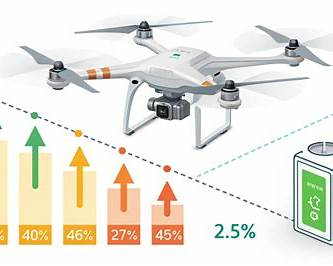
Most modern drones use lithium polymer (LiPo) or lithium-ion batteries, which are known for their high energy density and lightweight design. However, without proper maintenance, these batteries can degrade rapidly. A typical drone LiPo battery can withstand approximately 300 to 500 charge-discharge cycles, but actual lifespan depends on usage and maintenance. To achieve longer flight times and a longer battery life, we need to learn some key battery maintenance techniques.
Challenges to Drone Battery Life
Before we discuss how to extend battery life, it's necessary to understand why battery life is limited. Drone batteries are often the first component to experience problems because:
Drones often require high current output, especially during takeoff, rapid maneuvers, or hovering, which quickly drains the battery.
Batteries are extremely sensitive to temperature—overheating or undercooling can severely impact performance and lifespan.
Incorrect charging habits (overcharging, charging while the battery is still hot, using an unsuitable charger, etc.) can accelerate the chemical aging of the battery's internal structure.
Excessive load or harsh flight environments can cause the motors to consume more power, thus putting greater stress on the battery.
By taking appropriate measures to address these issues, we can significantly extend battery life and improve the flight experience.
Tip 1: Never overcharge the battery
Overcharging is one of the most common problems that damage battery health. Although more and more smart batteries and chargers have protection mechanisms, leaving the battery plugged in after it is fully charged still increases internal chemical stress.
Why is overcharging harmful?
Leaving the battery at 100% charge for an extended period puts greater stress on its internal chemical structure, thus accelerating aging. In extreme cases, if the protection fails, the battery may swell, overheat, or even catch fire.
Best Practices
✔ Use the manufacturer-recommended dedicated charger to charge the battery. Do not use incompatible power supplies or universal chargers.
✔ Disconnect the power source promptly after the battery is fully charged.
✔ Avoid charging in high-temperature environments, such as under direct sunlight or inside a closed car.
This charging habit helps maintain a healthier internal battery condition, thus extending overall lifespan.
Tip 2: Charge the battery promptly
Another common but easily overlooked principle is: do not leave the battery in a very low charge state for extended periods.
Discharge and Battery Chemistry
When a LiPo or Li-ion battery is at 0% charge, its internal chemical structure experiences stress, leading to irreversible capacity loss. This phenomenon is called over-discharge, and because voltage readings may lag behind actual conditions, many drone pilots may not realize that the battery has been damaged.
Beneficial Charging Habits
✔ Charge the battery as soon as possible after landing; do not leave the battery idle with a low charge for too long.
✔ Ensure the battery has cooled naturally before charging; charging at high temperatures accelerates damage.
✔ If the drone will not be used for an extended period, maintain the battery charge between 30% and 60%. This type of moderate charge state is more stable than 100% or 0%, better maintaining battery health.
Following these habits can prevent the battery from remaining in extreme conditions for too long, thus slowing down the aging process.
Tip 3: Use Detachable Smart Batteries
Using "smart batteries" or multiple independent batteries is another important strategy for improving battery management and lifespan.
Advantages of Smart Batteries
Smart batteries typically have a built-in Battery Management System (BMS) that can:
● Monitor the voltage of each cell in real time.
● Automatically balance the cells.
● Prevent overcharging and over-discharging.
These features help the battery always operate in a safer and healthier state, resulting in a longer lifespan than ordinary batteries.
Benefits of Configuring Multiple Batteries
Instead of relying on a single battery:
✔ Prepare several smart batteries for rotation during a flight session, thus distributing the load.
✔ Slow down battery degradation while avoiding frequently using the same battery to its critical voltage.
✔ A multi-battery strategy reduces the risk of "driving the battery to its limit," a deep discharge that severely damages battery life.
A modular management approach allows for more efficient battery use and a more stable flight experience.
Tip 4: Choose a larger capacity battery
Using a higher capacity battery can extend battery life to some extent—but there's a principle: it must be properly matched to the drone's specifications and needs.
The impact of capacity on lifespan
Larger battery capacity:
Stores more energy, leaving more charge remaining after completing a flight mission.
Shallow discharge (the battery isn't completely depleted) causes less chemical stress on the battery, contributing to a longer overall cycle life.
⚠ However, larger capacity often means greater weight. The extra weight requires the drone to generate more power to maintain flight, potentially offsetting some of the advantages of increased capacity.
How to choose the right capacity
✔ Refer to and follow the capacity range recommended in the drone's instruction manual.
✔ If you plan to upgrade the battery capacity, ensure that the flight control system, power system, etc., can withstand the additional load.
✔ While increasing capacity, consider overall flight efficiency, rather than simply pursuing maximum capacity.
When capacity is properly matched with the drone's structure, this upgrade can effectively result in longer flight time and a gentler battery discharge depth.
Tip 5: Reduce Overall Weight
The overall weight of the drone is directly related to battery life. The greater the weight, the heavier the burden on the battery.
Why is weight important?
Every extra bit of weight added to the drone means the motors have to consume more electrical energy to maintain flight stability.
Higher current output leads to greater battery heat and chemical stress, thus accelerating aging.
How to reduce weight?
✔ Remove unnecessary accessories, such as spare cameras, lights, or suspension loads (if not necessary for the current mission).
✔ Use lightweight components whenever possible (such as lightweight brackets, carbon fiber parts, etc.).
✔ Optimize equipment configuration; don't let extra weight become a burden on the battery.
A lighter drone is more energy-efficient, easier to control, and also better for long-term battery health.

Additional Battery Maintenance Recommendations
In addition to the main tips above, here are some widely accepted and equally important battery maintenance methods:
● Avoid Extreme Temperatures
Batteries dislike high temperatures, especially during charging. Overheating accelerates battery aging and can even be dangerous. Furthermore, extreme low temperatures can temporarily reduce battery performance.
Recommended Practices: Store batteries in a cool, dry place; allow batteries to reach room temperature before flying or charging.
● Smooth Flight Habits
Rapid acceleration, rapid pitch, or prolonged hovering significantly increases current consumption, thus increasing the battery load and generating more heat.
Recommendation: Maintain smooth flight maneuvers and reduce overly aggressive control inputs.
● Maintain Regular Maintenance
Check battery contacts for cleanliness, swelling, or deformation; update smart battery and drone firmware promptly. This prevents minor issues from becoming major problems.
Conclusion
Extending drone battery life is not a complex technology, but rather a combination of scientific charging, proper discharging, good flight habits, and using the correct equipment. While batteries can be replaced, good maintenance habits will allow batteries to fly longer and more safely in your hands.
Whether you are a beginner or a seasoned pilot, as long as you stick to the habits mentioned above, you will get a more stable flight experience and longer battery life.