
 EN
EN
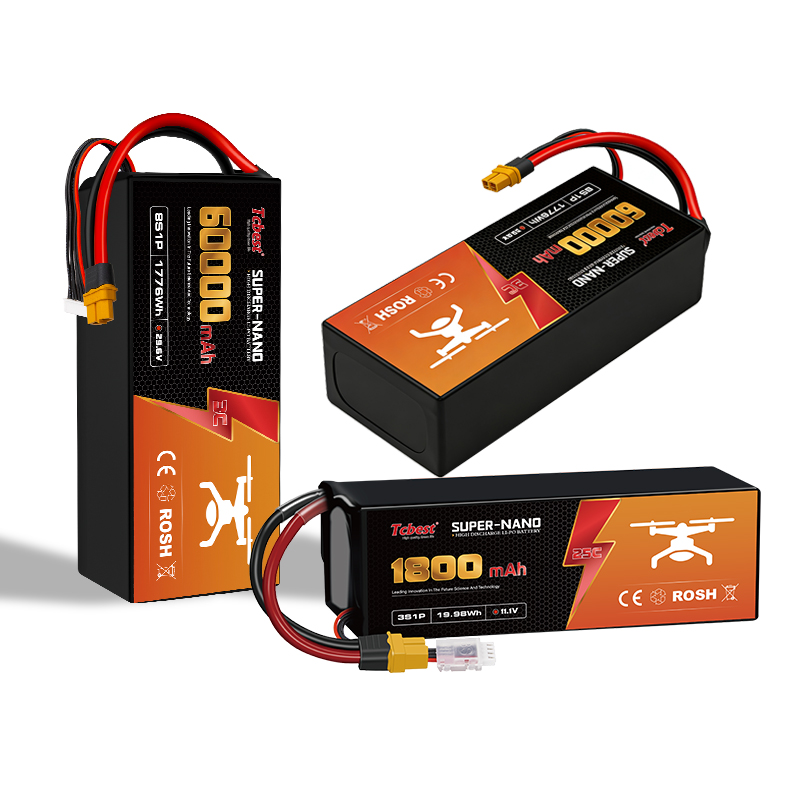
Drones rely heavily on lithium-based batteries, typically lithium polymer (LiPo) or lithium-ion variants, which offer high energy density but require careful handling. Proper maintenance is not just about extending flight time—it directly affects safety, battery lifespan, and overall performance. This article explains how to avoid over-discharge, understand storage behavior, maintain battery health, and troubleshoot common issues such as swelling.
Understanding Over-Discharge in Drone Batteries
Over-discharge occurs when a lithium battery is drained below its safe voltage threshold. For most drone batteries, this threshold is around 3.0V per cell, though manufacturers often set conservative limits to protect the battery.
When a battery is over-discharged:
- The internal chemical structure begins to degrade.
- Copper dissolution can occur inside the cell, leading to permanent damage.
- The battery may enter a deep discharge or “hibernation” state.
- In severe cases, it may become unsafe to recharge.
Drone firmware typically prevents over-discharge by forcing an automatic landing when voltage is low. However, users can still unintentionally stress batteries by repeatedly flying to critically low levels or storing batteries in a depleted state.
To avoid over-discharge:
- Stop flying when battery reaches 20–30%, rather than pushing to 0%.
- Avoid leaving batteries unused at low charge levels.
- Recharge batteries promptly after use if they are below storage range.
An example: If you consistently land your drone at 10% battery, the cells experience deeper stress cycles compared to landing at 25%, significantly shortening battery lifespan over time.
Storage and Self-Discharge Behavior
Lithium batteries naturally lose charge over time due to internal chemical reactions. This process is called self-discharge. In drone batteries, this is often controlled by built-in battery management systems (BMS), which may slowly discharge a fully charged battery down to a safer storage level automatically.
Key points about self-discharge:
- Fully charged batteries degrade faster during storage.
- Extremely low charge during storage can lead to deep discharge.
- Temperature strongly affects discharge rate and battery health.
For storage longer than 10 days, the recommended charge level is 40–65%. This range minimizes stress on the battery’s الكيمي structure and reduces capacity loss over time.
Ideal storage conditions:
- Temperature: 22–28°C (72–82°F)
- Environment: Dry, well-ventilated, away from direct sunlight
- Avoid: Hot cars, humid areas, or freezing temperatures
If a battery is stored at 100% charge for extended periods, the high voltage accelerates electrolyte breakdown. Conversely, storing near 0% risks irreversible cell damage.
Many modern drone batteries automatically discharge to storage level after a few days. However, relying solely on this feature is not ideal—manual monitoring ensures better longevity.
Recommended Storage Practices
To maintain optimal battery health when not in use:
1. Discharge or charge the battery to 40–65%.
2. Remove it from the drone if storing for extended periods.
3. Store in a fire-resistant container or LiPo-safe bag if possible.
4. Check battery level periodically (every 1–2 months).
A practical scenario: If you plan to travel and won’t use your drone for two weeks, avoid leaving batteries fully charged from your last flight. Instead, run the drone briefly or use controlled discharge to bring the battery into the recommended range.
Periodic Charge and Discharge Cycles
Even when not in regular use, lithium batteries benefit from periodic cycling to maintain chemical activity and accurate calibration of the battery management system.
The recommendation is to perform a full charge/discharge cycle at least once every 3 months.
A “full cycle” typically means:
- Charge the battery to 100%.
- Use the battery in flight until it reaches around 15–20%.
- Allow it to cool.
- Recharge to storage level or full, depending on usage plans.
This process helps:
- Maintain accurate battery percentage readings.
- Prevent capacity drift.
- Keep internal chemical reactions balanced.
However, avoid excessive full cycles, as each cycle contributes to wear. The goal is maintenance, not frequent deep cycling.
Day-to-Day Battery Maintenance
Routine care significantly impacts how long your drone batteries last. Good habits reduce degradation and ensure consistent performance.
Key maintenance practices:
- Allow the battery to cool completely after flight before charging. Charging a hot battery increases internal resistance and accelerates aging.
- Avoid charging immediately after intense flights, especially in warm environments.
- Use only manufacturer-approved chargers to ensure prop
Drones mostly use high-energy-density LiPo or lithium-ion batteries requiring careful care. Stop flying at 20–30% power to avoid damaging over-discharge. Store batteries at 40–65% charge in cool dry spaces, do a full charge-discharge cycle every 3 months, cool batteries before charging and use official chargers to extend lifespan and guarantee safety.