
 EN
EN
1. Introduction
Lithium Polymer (LiPo) batteries and lithium-ion smart batteries serve as the core power source of unmanned aerial vehicles (UAVs). The health status of batteries directly determines flight endurance, power stability and operational safety. Various battery faults caused by cell aging, improper operation and unsuitable environments may merely shorten flight time and trigger automatic return-to-home, or lead to severe consequences such as aircraft crash, cell swelling, thermal runaway, fire and equipment damage.
Being proficient in identifying typical battery faults, mastering standardized troubleshooting procedures and scientific maintenance methods can effectively avoid flight risks, improve operational stability and extend the cycle life of batteries. This article systematically sorts out ten common UAV battery faults, provides complete troubleshooting and disposal solutions, and offers standardized maintenance specifications for different scenarios, applicable to both consumer aerial photography UAVs and industrial operation UAVs.
2. Common UAV Battery Faults, Causes and Troubleshooting Solutions
2.1 Excessive Voltage Drop Under Load
Fault Manifestations: After takeoff with a fully charged battery, the voltage of single cells drops sharply under high-load conditions such as climbing, accelerating and hovering in strong winds. The APP will pop up a low-voltage warning, and the aircraft will trigger automatic return-to-home in advance.
Core Causes: Sharp rise in internal resistance of cells in low-temperature environments, increased internal resistance due to battery cycle aging, irreversible cell damage from previous deep discharge, and instantaneous high power output exceeding the battery discharge rate.
Troubleshooting & Solutions
Preheat batteries indoors to above 10°C before flight in cold weather;
Avoid sudden throttle pushes and continuous high-speed climbing during aerial photography in strong winds or heavy-load operations;
Test the internal resistance of each cell with a balance charger. Batteries with an internal resistance difference exceeding 0.05Ω are identified as aged;
Immediately eliminate batteries with excessive internal resistance and severe voltage drop, and prohibit further flight use.
2.2 Severe Battery Capacity Degradation
Fault Manifestations: The battery can be fully charged normally, yet flight endurance is significantly shortened under identical flight conditions, and power drains rapidly after full charge.
Core Causes: The battery has reached its rated cycle life; long-term storage at full charge or zero charge; storage or flight under high temperatures; frequent deep discharge that damages the chemical structure of cells.
Troubleshooting & Solutions
Adjust batteries to the standard storage voltage of 3.80–3.85V per cell for long-term idle storage;
Land the aircraft when the remaining power reaches 20%–30%, and never store batteries with fully drained power;
Calibrate capacity via complete charge-discharge cycles regularly. Replace batteries directly when their cycle count exceeds 300 and the remaining capacity drops below 80% of the factory rating.
2.3 Battery Short Circuit (High-Risk Fault)
Fault Manifestations: The charger reports an error instantly upon charging, the battery heats up drastically, and the aircraft fails to power on, carrying severe risks of fire and explosion.
Core Causes: Damaged power cords, metal debris bridging contacts, damaged internal cell separators, and deformed oxidized plugs causing short-circuit between positive and negative poles.
Troubleshooting & Solutions
Inspect plugs and wires for damage and exposed metal parts before every use;
Cut off power immediately once a short circuit is confirmed. Isolate the battery separately in a fireproof LiPo bag and dispose of it as hazardous waste in compliance with regulations;
Fit insulating caps on battery electrodes during storage to prevent metal objects from contacting poles.
2.4 Failure to Charge After Deep Discharge
Fault Manifestations: Batteries left depleted for a long time cannot be detected by the charger, with no charging current generated.
Core Causes: Single-cell voltage falls below the safety threshold of 3.0V, leading to irreversible chemical damage to cells and lockout of the Battery Management System (BMS).
Troubleshooting & Solutions
Never store fully depleted batteries after flight; replenish power to storage voltage promptly after landing;
For slightly over-discharged batteries, use dedicated low-voltage activation equipment for low-current pre-charging. Proceed with normal balance charging only after single-cell voltage rises above 3.3V;
Do not attempt to activate swollen, deformed or leaking over-discharged batteries; discard them directly.
2.5 Complete Failure to Charge / Charger Error Alerts
Fault Manifestations: No charging response after connecting to the charger, abnormal flashing indicator lights, or device prompts of abnormal cells.
Core Causes: Defective charger or charging cables, oxidized loose balance plugs, locked battery BMS boards, and severe imbalance between individual cells.
Troubleshooting & Solutions
Cross-test with original certified chargers and intact cables to rule out faulty charging equipment;
Wipe metal contacts of balance plugs to remove oxide layers and water stains;
Measure the voltage of each cell with a multimeter and perform balance charging first if the voltage difference exceeds 0.1V;
Reset the battery firmware of smart batteries via supporting parameter tuning software; replace the battery if lockout cannot be recovered.
2.6 Cell Overcharging
Fault Manifestations: The battery swells abnormally after charging, runs hot during flight, and single-cell voltage exceeds the standard full-charge voltage of 4.2V.
Core Causes: Incorrect charger parameter settings, disabled balance charging function, and outdated chargers lacking automatic power-off protection.
Troubleshooting & Solutions
Use dedicated balance chargers matching the cell series count and enable cell balancing mode during charging;
Supervise the entire charging process manually, disconnect power immediately once fully charged, and avoid long-term floating charge;
Discontinue use and dispose of batteries even with slight swelling.
2.7 Abnormal Battery Overheating
Fault Manifestations: The battery casing becomes scaldingly hot during flight or charging, and the APP triggers a high-temperature alarm.
Core Causes: Sustained high-load flight, operation under direct sunlight in high-temperature summer environments, increased internal resistance from cell aging, and excessive charging current.
Troubleshooting & Solutions
Return and land immediately upon receiving high-temperature alerts; cool the battery to room temperature before charging;
Avoid flight under midday direct sunlight and charging in confined poorly ventilated spaces;
Adhere strictly to the standard charging rate within 1C and refrain from high-power fast charging.
2.8 Aircraft Fails to Recognize the Battery
Fault Manifestations: A battery abnormality prompt pops up after power-on, takeoff unlocking is unavailable, and no battery data is displayed on the APP.
Core Causes: Oxide and dust accumulated on battery metal contacts, incompatible firmware versions between the aircraft and battery, and mismatched communication protocols of non-standard third-party batteries.
Troubleshooting & Solutions
Clean metal contacts of the battery and aircraft with cotton swabs dipped in anhydrous alcohol to remove oxide dirt;
Synchronously upgrade the firmware of the aircraft and battery via supporting software;
Restart the device and retest; replace with compliant batteries if using non-original compatible batteries.
2.9 Battery Communication Failure
Fault Manifestations: Data including power level, temperature and cycle count displayed on the APP is garbled, voltage readings fluctuate erratically, and real-time cell data disappears.
Core Causes: Poor contact of communication terminals, abnormal BMS firmware, and bent or loose plug pins.
Troubleshooting & Solutions
Clear dust on contacts and inspect plugs for bending or looseness;
Refresh the battery BMS firmware to fix bugs in communication protocols;
Replace the battery if errors persist after multiple repairs, indicating damaged internal communication boards.
2.10 Under-Voltage Lockout (UVLO)
Fault Manifestations: The battery locks completely after low-power flight, unable to power on or charge normally.
Core Causes: Deep discharge in a single flight, long-term storage at low power, and excessive cell voltage difference triggering hardware protection.
Troubleshooting & Solutions
Follow the specification of returning when remaining power reaches 20%–30% and avoid forced full power depletion;
Maintain standard storage voltage during long-term idle storage and calibrate capacity by recharging every 3 months;
Test cell voltage difference after lockout; perform balance charging first if the voltage difference exceeds the standard, then conduct normal charge-discharge cycles.
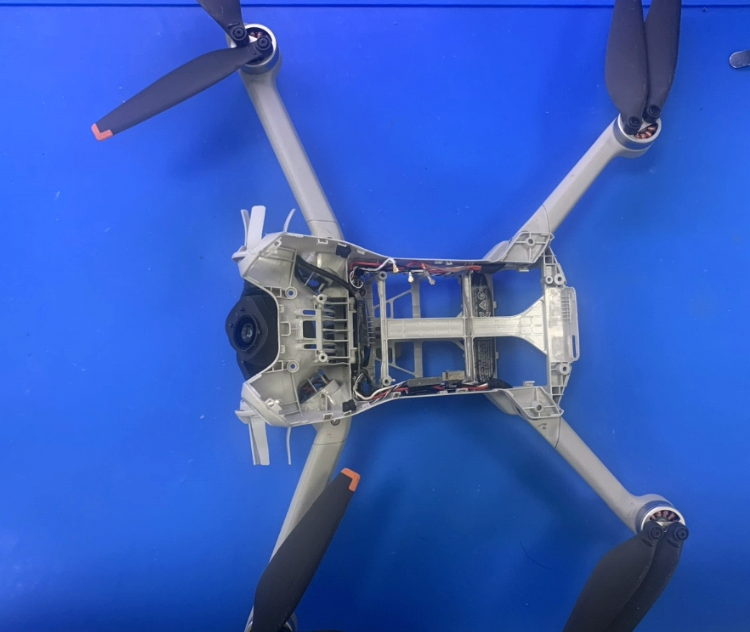
3. Standardized Best Practices for UAV Battery Maintenance
(1) Storage Specifications
Short-term storage (within 7 days): Maintain 50%–60% power with single-cell voltage at 3.80–3.85V, store in cool, dry conditions at normal temperature (10–25°C).
Long-term storage (over 10 days): Adjust to storage voltage, place in a fireproof LiPo bag away from sunlight, car interiors and heat sources; complete a full charge-discharge cycle every 3 months to calibrate capacity.
Prohibited operations: Long-term storage at full charge (4.2V per cell), storage at zero power, and refrigeration in fridges (condensed water vapor may cause short circuits).
(2) Charging Specifications
Only use original certified chargers, charge at the rated rate marked on the battery, and enable balance charging by priority.
Let hot batteries cool down to room temperature after flight before charging.
Disconnect power promptly once fully charged; avoid prolonged continuous charging. Supervise charging manually with fire extinguishing materials nearby.
Keep a safe distance between multiple batteries during charging; stacking batteries for charging is forbidden.
(3) Discharge Standards During Flight
Initiate return-to-home when remaining power hits 25% for regular aerial photography flights, and land with no less than 20% power left.
Reserve more than 30% redundant power for flights in low temperature, strong wind or heavy-load scenarios.
Avoid frequent rapid acceleration, extreme climbing and long-time full-throttle hovering to reduce sustained high-load voltage drop of cells.
(4) Routine Visual Inspection & Periodic Calibration
Visually inspect batteries before and after every flight: Check the casing for swelling, extrusion damage, electrolyte leakage and black oxidized plugs.
Establish a numbered battery log to record cycle counts and fault records; rotate multiple batteries for use to prevent excessive wear of a single unit.
Calibrate voltage difference, internal resistance and full capacity after every 10 flight cycles.
(5) Temperature Control Guidelines
Preheat batteries before flight at temperatures below 0°C; warm up slowly at low altitude after takeoff and avoid instantaneous high-power output.
Cease flight and charging when ambient temperature exceeds 35°C.
Avoid transporting batteries in closed car compartments exposed to direct sunlight; store batteries separately and insulated during transit.
4. Conclusion
The battery is a core component determining flight safety of UAVs. Various issues including abnormal voltage, overheating, communication faults and cell aging can directly trigger flight accidents. Adhere to three core principles in daily use: pre-flight inspection, standardized charge-discharge and scientific storage. Identify early warning signs such as severe voltage drop, swelling and excessive cell voltage difference to eliminate hidden safety hazards at the source.
Batteries with cell swelling, repeated lockout, severely excessive internal resistance or residual capacity below 80% are irreparable. They must be withdrawn from service and disposed of as hazardous lithium waste in compliance with relevant regulations. Standardized maintenance procedures can maximize battery discharge performance, extend service life, and fundamentally safeguard personnel safety and aircraft property.
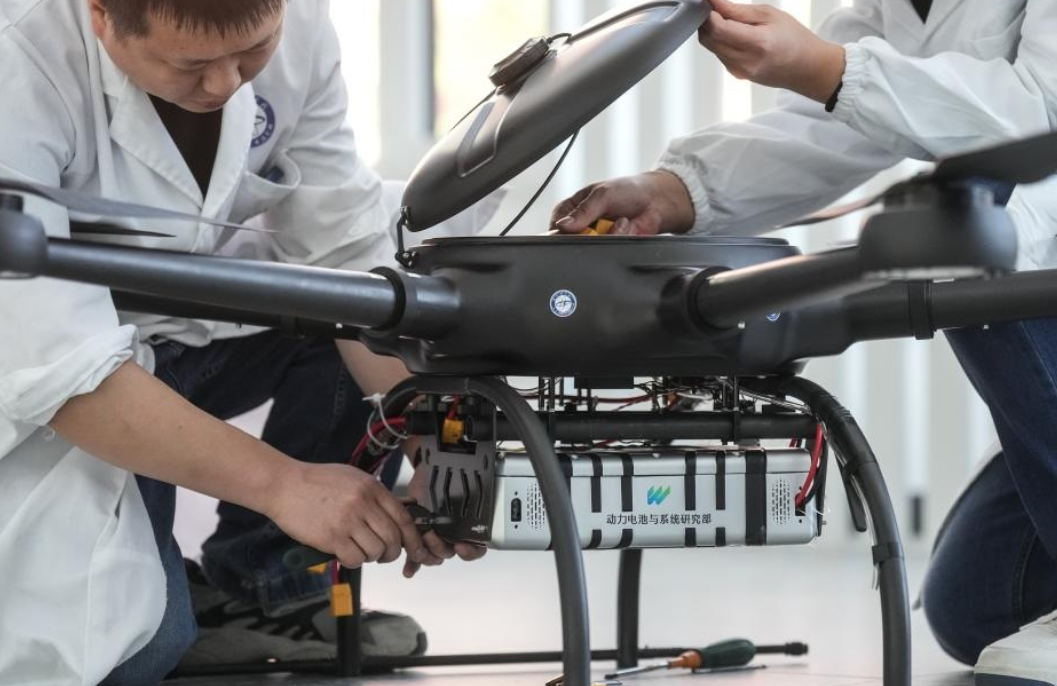
5. Industry Technology Trends & Development Directions
UAV battery technology keeps advancing. High-energy-density lithium polymer batteries and solid-state lithium batteries are gradually commercialized. They deliver upgrades in cell stability, low-temperature discharge performance and flame retardancy, effectively reducing risks of swelling and thermal runaway while extending overall flight endurance.
Optimized intelligent Battery Management Systems (BMS) can monitor real-time voltage, internal resistance and temperature of each cell, and issue early warnings of cell aging and faults. Equipped with APP intelligent storage mode and automatic cell balancing functions, they greatly lower manual maintenance barriers, providing more stable and safer power solutions for both consumer and industrial UAVs.