
 EN
EN
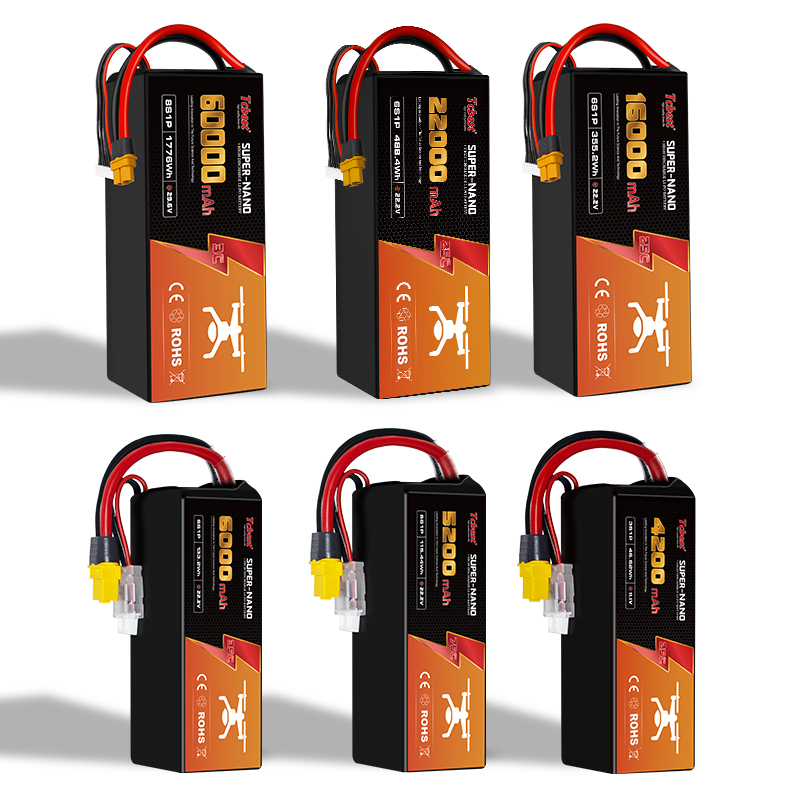
Drone battery life is one of the most important factors affecting flight performance, operating costs, and the overall user experience. Whether you fly a compact consumer drone for photography, manage a professional aerial-inspection fleet, or develop a heavy-lift UAV platform, longer battery life means more productive time in the air and fewer interruptions on the ground.
However, “battery life” can mean two different things. It may refer to how many minutes a drone can fly on one charge, or it may mean how many times the battery can be recharged before its capacity and performance noticeably decline. Improving both requires more than simply installing a larger battery. Battery chemistry, pack design, cell quality, aircraft weight, weather, charging habits, and flight style all matter.
This article explains how drone battery life is measured, what flight times to expect, what affects real-world performance, and how premium high-density cells such as 21700 lithium-ion cells can help extend flight time and long-term battery durability.
Two Ways to Measure Drone Battery Life
When discussing drone batteries, it is useful to separate flight time per charge from charge-cycle lifespan. They are related, but they measure different aspects of battery performance.
Flight time per charge
Flight time per charge is the number most drone operators focus on first. It measures how long the aircraft can remain airborne before the battery reaches its safe landing threshold.
For a consumer camera drone, this may mean the difference between capturing an entire scene in one flight or needing to land halfway through. For an industrial drone, additional minutes can mean covering more terrain per sortie, inspecting a larger section of infrastructure, or reducing the number of battery swaps required during a workday.
Manufacturers often advertise maximum flight time under controlled conditions: no wind, ideal temperature, minimal payload, steady flight, and a new battery. Real-world results are usually lower because pilots face wind, maneuvering, payload demands, temperature changes, and battery aging.
Typical real-world flight times include:
Consumer drones: approximately 20 to 40 minutes of practical use.
Leading consumer and prosumer models: around 34 to 51 minutes under favorable conditions.
Professional multirotor platforms: roughly 40 to 50 minutes, depending on payload and operating conditions.
Fixed-wing UAVs: up to two hours or more because forward flight is generally more energy-efficient than hovering.
Multirotor drones consume significant power because their motors must continuously generate enough thrust to support the full aircraft weight. Fixed-wing drones, by comparison, use lift generated by their wings once they are moving forward, which can substantially reduce energy demand during cruise flight.
Charge-cycle lifespan
Charge-cycle lifespan measures how many recharge cycles a battery can complete before its usable capacity drops below an acceptable level. A battery does not suddenly stop working after a certain number of cycles. Instead, it gradually loses capacity, develops greater internal resistance, experiences more voltage sag under load, and may become less reliable in cold weather or high-demand flights.
For drone operators, cycle life affects both safety and cost. A pack with a longer usable life requires replacement less often and can maintain more consistent flight performance over time. This is particularly important for commercial fleets, where dozens or hundreds of battery packs may be used regularly.
A “cycle” does not always mean charging from 0% to 100%. For example, using 50% of a battery’s capacity one day and another 50% the next day is roughly equivalent to one full cycle. In practice, shallow charge and discharge cycles are often less stressful than repeated full-depth cycles.
The goal is therefore twofold:
Maximize the number of safe, useful flight minutes from each charge.
Preserve battery capacity and power capability over as many cycles as possible.
Estimating Drone Flight Time
A simple way to estimate theoretical drone flight time is:

For instance, if a drone uses a 5,000 mAh battery and draws an average of 10,000 mA, or 10 A, in flight:
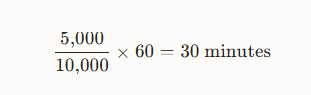
This calculation is useful for early design estimates, but it should not be treated as a guaranteed real-world flight time. A drone’s current draw is not constant. Takeoff, climbing, fighting wind, hovering, fast acceleration, carrying payloads, and landing can all cause changing power demand.
In addition, a battery’s stated capacity is generally measured under a defined test condition. When a pack is discharged at high current, its usable capacity can be lower than the nominal rating. This happens because of voltage sag and internal resistance. If the voltage drops too quickly under load, the drone may reach its low-voltage cutoff earlier, even if some energy remains in the cells.
For a more practical estimate, designers and pilots should account for:
Reserve capacity needed for a safe landing.
Increased current draw during aggressive flight.
Reduced performance at low temperatures.
Battery aging over repeated cycles.
Payload weight and drag.
Wind conditions and altitude.
Voltage losses caused by wiring, connectors, and the battery-management system.
A conservative operational plan is more valuable than chasing the maximum theoretical number. For most applications, landing with an appropriate safety reserve is better than attempting to drain the battery to its absolute limit.
Why Cell Choice Matters
The individual cells inside a battery pack determine much of its performance. Capacity alone is not enough. A cell must also deliver sufficient current, remain stable under load, manage heat effectively, and retain useful capacity through repeated charging cycles.
Two widely used cylindrical lithium-ion cell formats for drone packs are 21700 and 18650 cells.
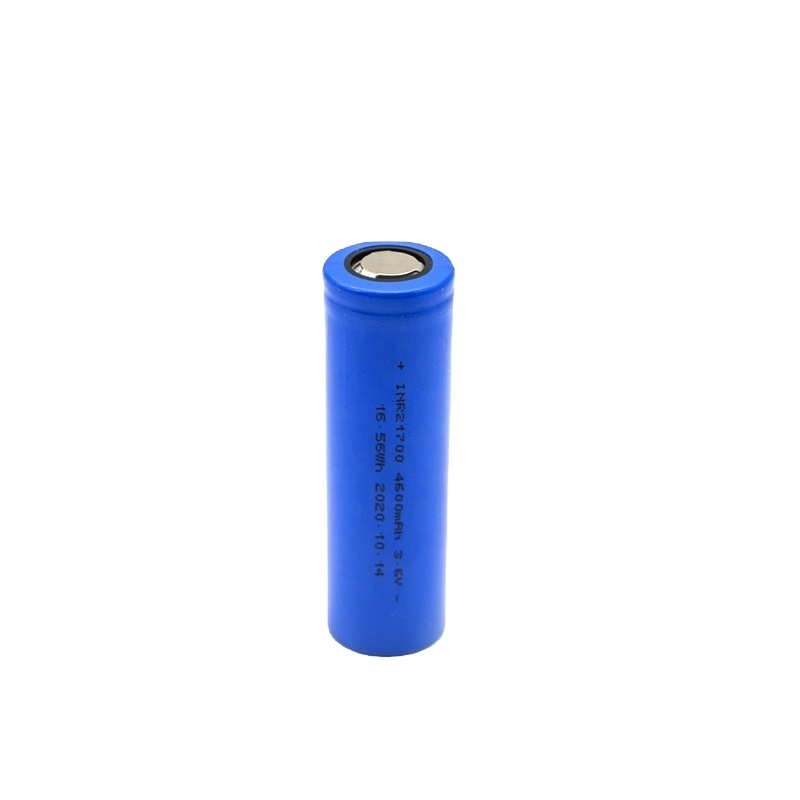
21700 cells
A 21700 cell is larger than a traditional 18650 cell, which gives it the potential to store more energy per cell. In drone applications, this can support high energy density while reducing the number of cells, connections, and interconnect losses needed in a battery pack.
High-quality 21700 cells are often selected for applications requiring a balance of energy capacity and power output. Their advantages can include:
Higher capacity per cell, enabling more total energy in a compact pack.
Strong power delivery for demanding takeoff, climbing, and maneuvering conditions.
Lower voltage sag when paired with the correct cell chemistry and pack design.
Faster charging capability in cells designed for higher charge rates.
Improved energy density, which can help reduce battery mass for a given amount of energy.
For drone applications, lower voltage sag is especially valuable. A battery that maintains its voltage more effectively under load can provide steadier power to motors and flight electronics. That can support more consistent thrust, improved control response, and greater usable flight time before the aircraft reaches its low-voltage threshold.
18650 cells
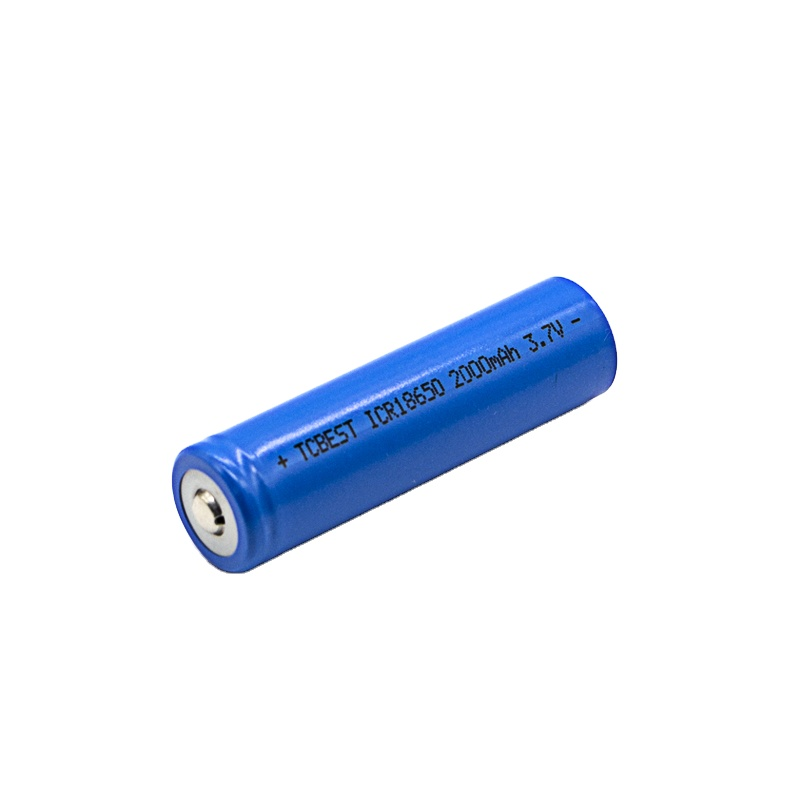
The 18650 cell format has a long history in battery-powered applications. It remains a practical option for many drones and UAV systems, particularly where proven performance, thermal behavior, and long cycle life are priorities.
Quality 18650 cells can offer:
Reliable cycle-life characteristics.
Good thermal performance when properly integrated.
Broad availability across different capacity and discharge-rate ranges.
A well-established supply chain and pack-design ecosystem.
Consistent performance for moderate-power drone applications.
The choice between 21700 and 18650 cells should not be made on size alone. The best option depends on the drone’s voltage requirement, peak-current demand, payload, target endurance, thermal design, charging method, and safety requirements.
A lightweight aerial-photography drone may prioritize energy density and compact packaging. A heavy-lift multirotor may require cells with a high continuous-discharge capability. A fleet used in hot or cold environments may put additional emphasis on thermal stability and voltage consistency.
Battery Capacity and Pack Design
Drone battery performance depends on the entire pack, not only on the individual cells. Engineers must balance capacity, voltage, discharge rate, weight, cooling, wiring, and protective electronics.
Capacity versus weight
Higher battery capacity generally means more stored energy, but it also tends to increase pack weight. This creates a design tradeoff: a heavier battery can provide more energy, yet the drone needs more power to lift it.
The objective is not simply to install the largest possible pack. It is to achieve the best energy-to-weight balance for the aircraft. A battery with a high watt-hour-per-kilogram value can provide more usable energy without imposing an excessive weight penalty.
In practical terms, the best battery is often the one that provides sufficient energy and power while keeping the aircraft’s takeoff weight within its efficient operating range.
Voltage and cell arrangement
The way cells are connected also matters. Cells in series raise pack voltage, while cells in parallel increase total capacity and current capability.
A higher-voltage pack can reduce current for a given power level. Since electrical losses increase with current, higher voltage can improve efficiency in the wiring and power system when the motors, electronic speed controllers, and other components are designed for it.
For example, a drone requiring 1,000 watts of power draws about 45.5 A from a 22 V battery, but only about 22.7 A from a 44 V battery. The actual system design is more complex than this example, but the principle remains important: increasing voltage can reduce current demand and associated heat losses.
C-rate and discharge capability
C-rate describes how quickly a battery can be charged or discharged relative to its capacity. A 5 Ah cell discharged at 5C can theoretically supply 25 A. A cell’s continuous discharge rating, however, must be distinguished from its short-duration peak rating.
Drones often require short bursts of high power during takeoff, rapid acceleration, climbing, braking, or wind compensation. The battery pack must be able to handle these demands without excessive heat or voltage drop.
A battery that is too small or has insufficient discharge capability may experience:
Noticeable voltage sag.
Reduced thrust during demanding maneuvers.
Premature low-battery warnings.
Increased cell temperature.
Faster degradation over time.
Greater safety risk if operated beyond its specifications.
High energy density is important, but it must be paired with low internal resistance and appropriate current capability. The ideal pack delivers stable voltage and adequate current without adding unnecessary weight.
Airframe, Payload, and Weight
Battery life is inseparable from aircraft efficiency. Even an advanced battery cannot fully compensate for an inefficient airframe or an unnecessarily heavy payload.
Every additional gram requires more thrust from the motors. More thrust means more current draw, which reduces flight time and places greater stress on the battery. This effect is especially pronounced for multirotor drones, where all lift is produced by the propulsion system.
Reducing unnecessary weight
One of the most effective ways to increase flight time is to reduce unnecessary mass. Potential areas for optimization include:
Lighter airframe materials where structural requirements allow.
Efficient motors and appropriately sized propellers.
Compact landing gear and mounting hardware.
Reduced cable length and lower-resistance electrical connections.
Streamlined payload integration.
Elimination of redundant or nonessential accessories.
The battery itself is often the heaviest single component in a drone. Improving battery energy density can therefore have an outsized impact. A higher-density cell can allow the same energy capacity at a lower weight, or more energy at a similar weight.
In large UAV platforms and heavy-payload configurations, a small percentage improvement in battery mass or usable energy can produce meaningful operational gains. A better cell choice can help a drone carry equipment more efficiently, maintain stable voltage under load, and complete a mission with a larger energy reserve.
Payload planning
Payload should be treated as part of the energy budget. Cameras, thermal sensors, LiDAR units, gimbals, delivery packages, communication equipment, and protective enclosures all affect flight time.
Before a mission, operators should consider not only the payload’s weight but also its aerodynamic impact. A bulky or poorly positioned payload can increase drag, particularly on fixed-wing and hybrid VTOL drones. It can also change the center of gravity, forcing the flight controller and motors to work harder to maintain stability.
A well-integrated payload preserves efficiency. A poorly integrated one can reduce flight time even if its weight is relatively modest.
Environment and Flight Style
A drone’s battery may perform very differently in a calm indoor test compared with a cold, windy outdoor mission. Environmental conditions and pilot behavior have a direct influence on energy consumption.
Temperature
Lithium-ion batteries perform best within a moderate temperature range. Cold conditions slow electrochemical reactions and increase internal resistance. As a result, a battery may show lower usable capacity, greater voltage sag, and weaker high-current performance in low temperatures.
Hot weather creates different challenges. High temperatures can accelerate battery degradation and increase the risk of thermal stress, particularly during charging or high-power discharge. Batteries should be allowed to cool after flight before being recharged, especially after demanding operations.
Wind and altitude
Wind increases power demand because the drone must work harder to maintain position or ground speed. Headwinds are particularly costly for fixed-wing aircraft and forward-moving multirotors. Gusty conditions can also cause frequent motor-speed adjustments, increasing average current draw.
Altitude may affect performance as well. Thinner air can require propellers to spin faster or motors to work harder to generate the same lift. This can raise power consumption and reduce available flight time.
Hovering versus cruising
Hovering is energy-intensive for multirotor drones because the motors continuously produce lift without gaining aerodynamic assistance from forward motion. Smooth forward flight can sometimes be more efficient, depending on the aircraft design and speed.
Aggressive maneuvers, rapid acceleration, high-speed flight, repeated climbing, and sudden direction changes all raise current demand. They can reduce flight time and increase battery heating.
For longer endurance, fly smoothly whenever the mission allows:
Avoid unnecessary rapid acceleration and hard braking.
Use efficient cruise speeds instead of maximum-speed flight.
Minimize prolonged high-power hovering.
Plan routes to avoid repeated climbs and detours.
Land with a safety margin rather than pushing the pack to its limit.
How to Extend Drone Battery Life
Extending battery life requires a combination of hardware choices and everyday operating practices. The most reliable results come from treating the battery as a critical flight component rather than a disposable accessory.
Trim weight and raise energy density
Reducing aircraft weight is one of the most direct ways to lower current draw. Use lightweight materials, efficient motors, optimized propellers, and only the payload required for the mission.
Battery energy density also matters. High-density 21700 cells can help designers pack more energy into a given weight and volume. In applications where a battery solution approaches approximately 260 Wh/kg at the cell level, the potential endurance advantage can be significant, though pack-level energy density will be lower once wiring, housing, protection circuitry, thermal materials, and structural components are included.
Charge smart
Charging habits have a major effect on long-term battery health. Always use a charger designed for the battery chemistry and pack configuration. If the battery includes a management system, use compatible charging equipment and follow the manufacturer’s current and voltage limits.
Avoid charging immediately after a hot flight. Let the pack cool first. Likewise, do not charge a battery that has been exposed to freezing temperatures until it has returned to a safe operating range.
Shallow cycles can help preserve long-term capacity. Constantly draining a battery to near-empty and charging it to maximum capacity places more stress on lithium-ion cells than operating within a moderate state-of-charge range. For daily use, it is often beneficial to avoid unnecessary deep discharge. Full charges may still be appropriate before a mission when maximum endurance is required, but storing a battery at 100% for long periods is generally not ideal.
Avoid deep discharge
Deep discharge can harm battery health and create safety concerns. A drone should not be flown until the battery is completely depleted. Voltage can drop rapidly under load near the end of a discharge cycle, especially in cold conditions or with an aging pack.
Set sensible low-battery warnings and return-to-home thresholds. These settings should account for wind, distance from the launch point, payload, temperature, and the possibility that the drone may need extra energy to return safely.
A battery with low voltage at rest may recover slightly when the load is removed, but that does not mean it is safe to continue flying. Voltage recovery can be misleading; the pack may still be close to its practical discharge limit.
Store for longevity
Long-term storage is one of the most overlooked parts of battery care. Batteries should generally be stored at a partial state of charge rather than fully charged or nearly empty.
A practical storage target is approximately 40% to 80% state of charge, depending on the battery type and manufacturer guidance. Store packs in a cool, dry, stable environment away from direct sunlight, moisture, flammable materials, and extreme temperatures.
Avoid leaving batteries in vehicles, garages, or outdoor spaces where temperatures can rise or fall sharply. Do not store batteries at freezing temperatures, and do not leave them fully charged for extended periods unless the manufacturer specifically recommends it.
Before using a stored battery, inspect it for swelling, damage, corrosion, loose connectors, unusual odor, or abnormal heating. Damaged packs should not be flown or charged.
Extending Flight Time With Tcbest Battery Cells
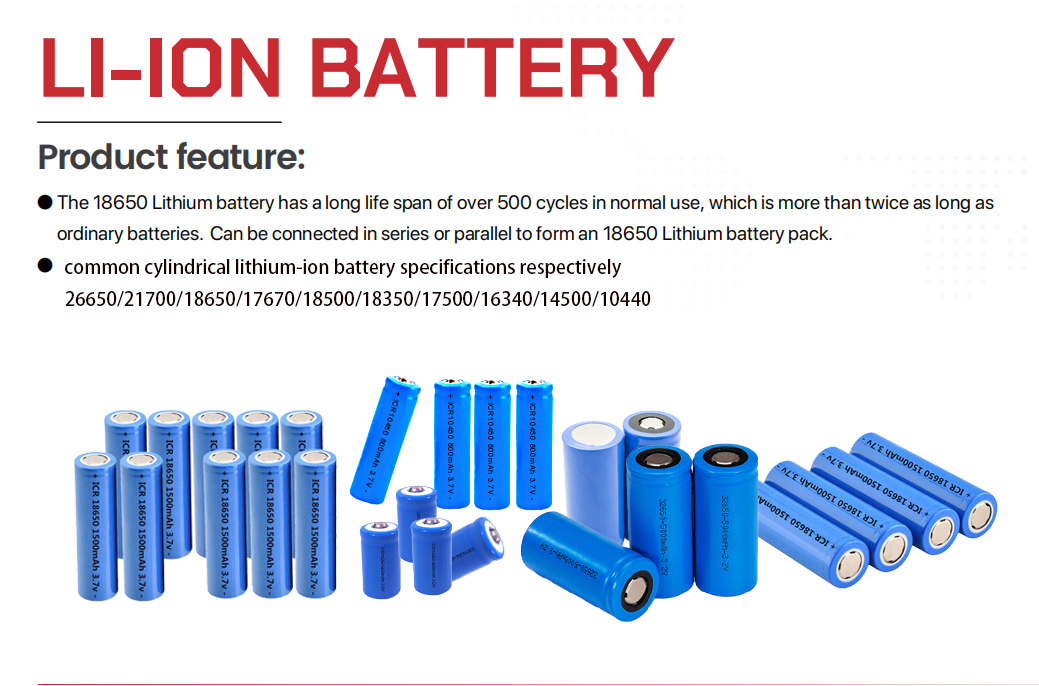
For drone manufacturers and battery-pack designers, cell selection is a strategic performance decision. Tcbest’s battery portfolio emphasizes characteristics that are especially relevant to UAV applications: high energy density, stable voltage delivery, thermal behavior, fast-charging potential, and cycle-life durability.
A high-performance INR 21700 cell designed around a 5.0 Ah capacity, 5C fast-charge capability, and more than 10C discharge capability can provide a strong foundation for demanding drone battery systems. The exact pack performance will depend on cell configuration, battery-management design, cooling, connectors, wiring, aircraft weight, and mission profile, but these cell-level characteristics address several of the main challenges facing drone operators.
Stable power under load
During takeoff, climbing, and high-wind operation, drones need rapid power delivery. Cells with low voltage sag can help maintain more stable output when current demand rises. This supports steadier motor performance and may reduce the likelihood of an early low-voltage warning caused by momentary load spikes.
For aerial imaging, inspection, mapping, and heavy-payload work, stable voltage can also help maintain predictable aircraft behavior throughout the flight.
Fast turnaround between missions
Fast charging can be valuable when flight operations require frequent battery rotation. A 5C-capable charging design may reduce downtime when it is implemented within safe thermal and battery-management limits.
However, fast charging should always be matched with a properly engineered charging system. The charger, pack layout, BMS, connectors, and cooling strategy must all be designed to handle the intended charge rate safely. Faster is not automatically better if it creates excessive heat or accelerates battery wear.
Durability in challenging environments
Drones frequently operate in conditions that are less forgiving than laboratory tests: hot worksites, cold mornings, high elevations, wind, dust, and repeated high-power flight cycles. Premium cells with strong thermal behavior and low internal resistance can better support reliable performance in these conditions.
For rugged airframes and demanding climates, battery quality contributes to more than flight time. It affects voltage stability, motor response, charging consistency, maintenance requirements, and confidence in the battery’s remaining energy.
Final Considerations
Making a drone battery last longer is not about one isolated upgrade. Longer flight time comes from balancing capacity, cell chemistry, discharge capability, voltage, aircraft weight, propulsion efficiency, payload, weather conditions, and pilot technique.
To improve endurance, use a battery pack with high energy density and sufficient power capability, keep the aircraft as light and aerodynamically efficient as possible, and fly smoothly with realistic safety reserves. To extend charge-cycle lifespan, avoid deep discharge, manage charging temperature, store batteries at a moderate state of charge, and use high-quality cells designed for the application.
For UAV builders and fleet operators, premium 21700 cells can provide a valuable combination of capacity, power delivery, low voltage sag, and long-term durability. When thoughtfully integrated into a well-designed battery pack, they can help drones fly longer, perform more consistently, and remain productive through more charge cycles.
Learn how to make a drone battery last longer by improving flight efficiency, reducing unnecessary weight, choosing suitable lithium-ion cells, and following proper charging and storage practices. This guide explains flight time, battery lifespan, pack design, temperature effects, payload planning, and practical ways to improve drone performance and reliability.