
 EN
EN
Abstract
The operational continuity of unmanned aerial vehicles (UAVs) is fundamentally constrained by the availability and proper maintenance of their onboard electrochemical energy storage systems. While manufacturer-supplied chargers are engineered to ensure compliance with the stringent requirements of lithium-based battery chemistries, real-world UAV deployments frequently occur in environments where such equipment is unavailable. This paper develops a systems-level analytical framework for understanding how drone batteries may be recharged in the absence of their original chargers. Drawing on principles from electrochemistry, power electronics, and UAV energy-management research, the study evaluates alternative charging pathways, identifies their technical feasibility, and delineates the safety boundaries within which such methods can be responsibly employed.
1. Introduction
The proliferation of UAV technologies across scientific, industrial, and commercial domains has intensified the need for reliable and adaptable energy-management strategies. Lithium-Polymer (LiPo) and Lithium-Ion (Li-ion) batteries—owing to their high specific energy and favorable discharge characteristics—remain the dominant power sources for UAV propulsion systems. However, these chemistries impose strict operational constraints, particularly during charging, where deviations from prescribed voltage, current, or thermal conditions can precipitate irreversible degradation or catastrophic failure.
In field operations, UAV users may encounter scenarios in which the original charging apparatus is lost, damaged, or otherwise inaccessible. The central challenge is therefore to determine whether alternative charging mechanisms can replicate the electrochemical environment required for safe and efficient energy replenishment. This paper addresses this challenge by examining the theoretical foundations, engineering requirements, and practical limitations of non-standard charging approaches.
2. Electrochemical and Engineering Foundations of UAV Battery Charging
2.1 Lithium-Based Battery Chemistries
LiPo and Li-ion batteries operate through reversible lithium-ion intercalation processes. Their performance and longevity depend on maintaining:
● Voltage stability within narrow electrochemical windows
● Controlled current flow to prevent lithium plating
● Thermal equilibrium to avoid accelerated SEI degradation
● Cell balance in multi-cell configurations
These constraints are not arbitrary; they arise from the intrinsic thermodynamics and kinetics of lithium-ion transport. Any alternative charging method must therefore approximate the conditions under which these reactions proceed safely.
2.2 The CC–CV Charging Paradigm
The canonical charging protocol for lithium-based batteries is the Constant Current–Constant Voltage (CC–CV) method. During the CC phase, the battery is charged at a fixed current until it reaches its maximum allowable voltage. The CV phase then maintains this voltage while the current gradually tapers. This dual-phase approach minimizes stress on the electrode materials and mitigates the risk of lithium plating.
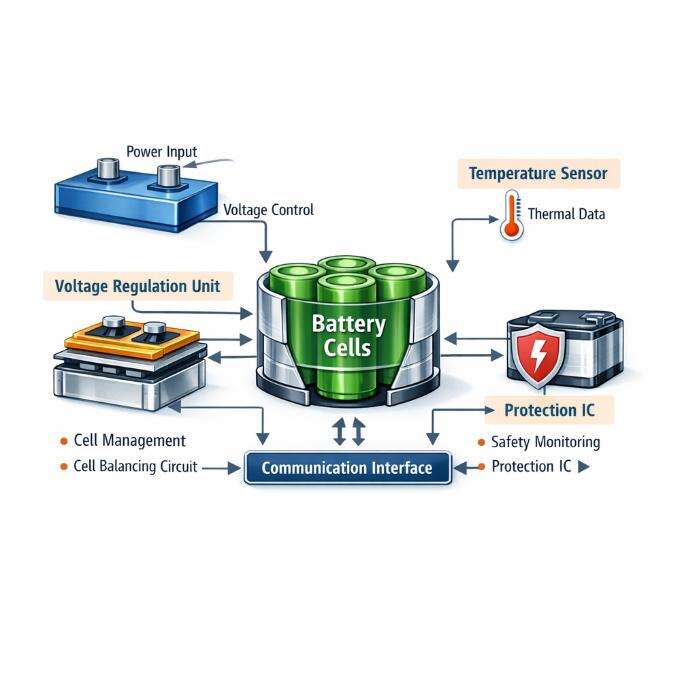
2.3 Battery Management Systems (BMS)
Many consumer UAVs incorporate smart batteries equipped with BMS modules that perform:
● Real-time voltage and current regulation
● Thermal monitoring
● Cell balancing
● Fault detection
The presence of a BMS significantly broadens the range of viable charging alternatives, as the battery itself can compensate for irregularities in the external power source.
3. Alternative Charging Mechanisms: A Technical and Analytical Review
3.1 Universal Balance Chargers
3.1.1 Functional Architecture
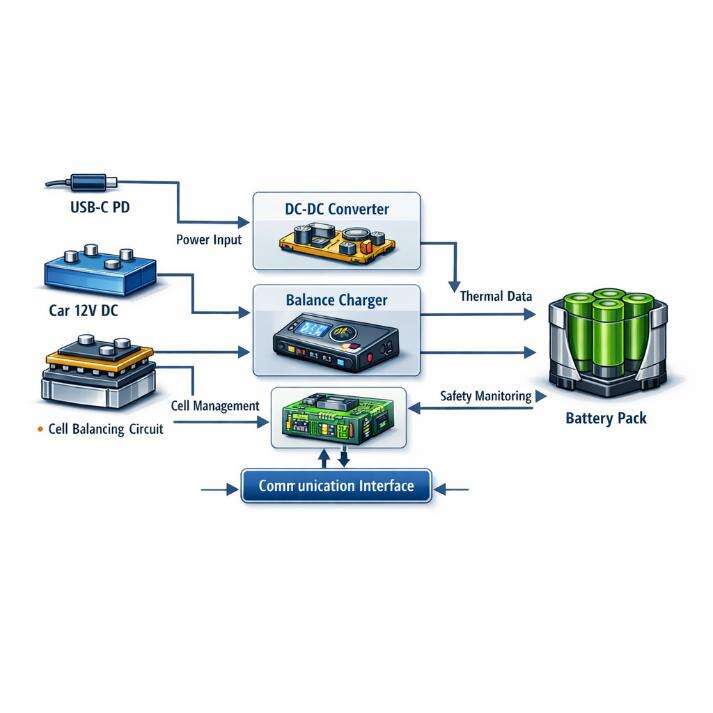
Universal balance chargers are microcontroller-based power-conditioning devices capable of executing CC–CV charging while simultaneously equalizing cell voltages. Their internal algorithms dynamically adjust current and voltage to maintain electrochemical stability.
3.1.2 Technical Merits
● High fidelity to manufacturer-specified charging profiles
● Integrated safety mechanisms
● Compatibility with diverse battery configurations
From an engineering standpoint, this method most closely replicates the behavior of OEM chargers and is therefore the most technically defensible alternative.
3.2 USB-C Power Delivery for Smart Batteries
3.2.1 Underlying Mechanism
USB-C PD does not inherently support lithium battery charging. Instead, smart batteries incorporate DC-DC converters and protective circuitry that transform USB input into a regulated charging environment. The external power source merely supplies energy; the battery’s internal electronics govern the charging process.
3.2.2 Applicability Constraints
This method is viable only for batteries with embedded BMS. Raw LiPo packs lack the necessary regulation and therefore cannot be safely charged via USB-based systems.
3.3 Vehicle-Integrated Charging Systems
3.3.1 Automotive Electrical Infrastructure
Automobiles provide a stable 12 V DC supply that can be converted into AC or regulated DC using power inverters. This infrastructure can support balance chargers or drone-specific car chargers, making vehicles a practical mobile charging platform.
3.3.2 Engineering Considerations
● Voltage fluctuations must be mitigated
● Engine-off charging risks depleting the vehicle battery
● Thermal management remains essential
3.4 Solar-Driven Charging Architectures
3.4.1 Photovoltaic Integration
Solar panels generate variable DC output dependent on irradiance. When paired with a regulated power station or converter, they can support UAV battery charging in remote environments.
3.4.2 Limitations
● Low charging efficiency
● Environmental dependency
● Need for intermediate regulation hardware
Solar-based charging is therefore best conceptualized as a supplementary or emergency-use mechanism rather than a primary charging strategy.
3.5 Laboratory-Grade Power Supplies (Expert Use Only)
3.5.1 Technical Feasibility
Programmable DC power supplies can emulate CC–CV charging if configured with precision. However, they lack cell-balancing capability, making them unsuitable for multi-cell packs unless paired with external balancing hardware.
3.5.2 Risk Assessment
Due to the high likelihood of misconfiguration, this method is appropriate only for users with formal training in power electronics or electrochemical engineering.
4. Charging Methods That Should Be Categorically Excluded
Several improvised charging techniques frequently appear in online discussions but lack scientific validity. These include:
● Direct connection to phone or laptop chargers
● Charging via unregulated DC sources
● Connecting LiPo packs directly to automotive batteries
Such methods violate fundamental electrochemical constraints and pose severe safety hazards, including thermal runaway and cell rupture.
5. Charging Efficiency and Temporal Dynamics
Charging duration is influenced by:
● Battery capacity
● Input power availability
● Efficiency of the charging circuitry
Balance chargers typically achieve the highest efficiency, while solar-based systems exhibit the lowest. USB-C PD occupies an intermediate position, constrained primarily by its power-delivery ceiling.
6. Safety Framework for Non-Standard Charging
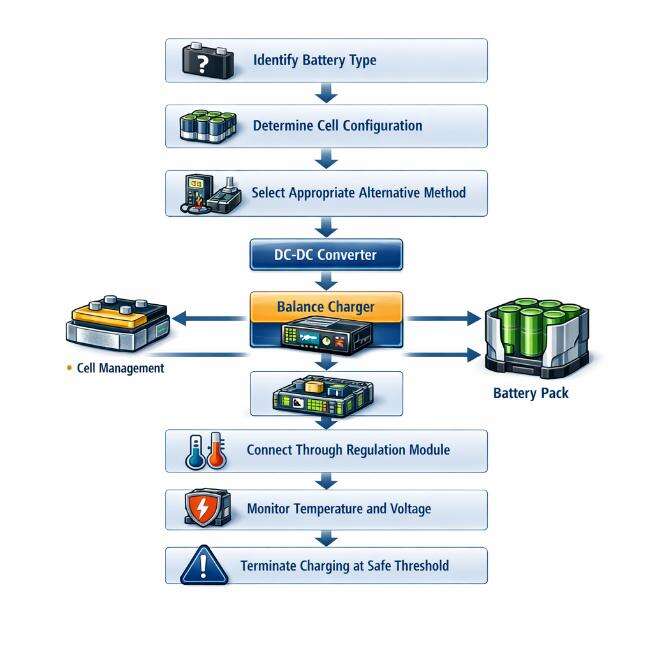
A rigorous safety protocol should include:
● Continuous thermal monitoring
● Use of fire-resistant containment systems
● Avoidance of unattended charging
● Verification of voltage and current parameters
These measures mitigate the inherent risks associated with lithium-based energy storage.
7. Emergency Measures and Operational Preparedness
When no charging equipment is available, the most reliable solutions involve:
● Borrowing compatible chargers
● Visiting RC hobby shops
● Utilizing public or professional charging stations
Long-term preparedness strategies include maintaining redundant chargers, carrying PD-capable power banks, and assembling modular field charging kits.
8. Conclusion
Charging a drone battery without its original charger is technically feasible under specific conditions. The viability of alternative methods depends on the presence of protective electronics, the availability of regulated power sources, and the user’s understanding of lithium-battery behavior. By adopting engineering-informed practices and adhering to safety protocols, UAV operators can maintain operational continuity even in resource-constrained environments.