
 EN
EN
Η πρόβλεψη του χρόνου πτήσης ενός drone μπορεί να φαίνεται απλή υπόθεση της ανάγνωσης του φύλλου προδιαγραφών ενός κατασκευαστή, ωστόσο στην πράξη αποτελεί έναν από τους πιο λεπτομερείς υπολογισμούς στον τομέα των αυτόνομων αεροσκαφών. Ο χρόνος πτήσης δεν είναι μια σταθερή χαρακτηριστική ιδιότητα, αλλά ένα επερχόμενο αποτέλεσμα των αλληλεπιδράσεων μεταξύ ηλεκτρικών, μηχανικών, αεροδυναμικών και περιβαλλοντικών παραγόντων. Οι μηχανικοί, οι πιλότοι και οι ερευνητές βασίζονται όλοι σε ακριβείς εκτιμήσεις διάρκειας λειτουργίας για τον σχεδιασμό αποστολών, τον σχεδιασμό συστημάτων πρόωσης και την αξιολόγηση τεχνολογιών μπαταριών. Κατά συνέπεια, η κατανόηση του τρόπου υπολογισμού του χρόνου πτήσης ενός drone απαιτεί μια ολιστική προσέγγιση του drone ως ενός συστήματος μετατροπής ενέργειας, και όχι ως συλλογής απομονωμένων στοιχείων.
Στο επίκεντρο του υπολογισμού βρίσκεται η σχέση μεταξύ αποθηκευμένη ενέργεια και κατανάλωση δύναμης μπαταρία ενός drone λειτουργεί ως αποθήκη χημικής ενέργειας, η οποία μετατρέπεται σε ηλεκτρική ενέργεια και στη συνέχεια σε μηχανική ώση. Η διάρκεια της πτήσης εξαρτάται από το πόσο γρήγορα εκφορτώνεται αυτή η αποθήκη. Παρόλο που η βασική αρχή θυμίζει το μοντέλο κατανάλωσης καυσίμου παραδοσιακών αεροσκαφών, η ηλεκτρική προώθηση εισάγει μοναδικά χαρακτηριστικά, όπως η πτώση τάσης (voltage sag), μη γραμμικές καμπύλες εκφόρτισης και απόδοση εξαρτώμενη από τη θερμοκρασία. Αυτοί οι παράγοντες καθιστούν την εκτίμηση της διάρκειας πτήσης τόσο τεχνικά ενδιαφέρουσα όσο και λειτουργικά κρίσιμη.
Για να ξεκινήσουμε, πρέπει να ποσοτικοποιηθεί η ενέργεια που είναι διαθέσιμη στη μπαταρία ενός drone. Τα περισσότερα καταναλωτικά και επαγγελματικά drones χρησιμοποιούν μπαταρίες λιθίου-πολυμερούς (LiPo) ή λιθίου-ιόντος (Li-ion), των οποίων η χωρητικότητα εκφράζεται συνήθως σε χιλιοστοαμπέρ-ώρες. Ωστόσο, η χωρητικότητα μόνη της δεν καθορίζει την ενέργεια· πρέπει επίσης να ληφθεί υπόψη η τάση. Η συνολική ενέργεια μιας μπαταρίας είναι το γινόμενο της χωρητικότητάς της επί την ονομαστική τάση, και εκφράζεται σε βατ-ώρες. Αυτή η μετατροπή είναι απαραίτητη, διότι η κατανάλωση ισχύος μετράται σε βατ και η διάρκεια λειτουργίας αποτελεί τελικά τον λόγο των βατ-ωρών προς τα βατ. Ακόμη και αυτή όμως η μετατροπή δεν αποδίδει πλήρως τη συμπεριφορά στην πραγματικότητα. Οι μπαταρίες σπάνια παρέχουν την πλήρη ονομαστική τους χωρητικότητα λόγω της εσωτερικής αντίστασης, της γήρανσης και των ορίων ασφαλείας όσον αφορά την ελάχιστη τάση. Ως αποτέλεσμα, οι μηχανικοί συνήθως εργάζονται με την «χρησιμοποιήσιμη ενέργεια», μια μειωμένη τιμή που αντικατοπτρίζει τους πρακτικούς περιορισμούς αντί των εργαστηριακών προδιαγραφών.
Μόλις κατανοηθεί η διαθέσιμη ενέργεια, η προσοχή εστιάζεται στην κατανάλωση ενέργειας του drone. Για πλατφόρμες πολυρότορων, η πρόωση απορροφά το επικρατούν μερίδιο της ενεργειακής κατανάλωσης. Κάθε κινητήρας πρέπει να παράγει επαρκή ώθηση για να αντισταθμίσει το βάρος του drone, ενώ η ισχύς που απαιτείται για την παραγωγή αυτής της ώθησης αυξάνεται ραγδαία καθώς αυξάνεται το φορτίο. Η σχέση μεταξύ ώθησης και ισχύος διέπεται από την αεροδυναμική των πτερυγίων και την απόδοση των κινητήρων, οι οποίες και οι δύο μεταβάλλονται με την ταχύτητα περιστροφής. Ένα drone που παραμένει ακίνητο στον αέρα (hover) σε ένα άνετο επίπεδο θρόμπλ (throttle) καταναλώνει σημαντικά λιγότερη ισχύ από ένα που λειτουργεί κοντά στη μέγιστη ικανότητα ώθησής του. Γι’ αυτόν τον λόγο, ακόμη και μικρές προσθήκες φορτίου μπορούν να μειώσουν εμφανώς τη διάρκεια πτήσης: ωθούν το σύστημα πρόωσης σε μια λιγότερο αποδοτική περιοχή λειτουργίας.
Η ισχύς στην καθαρή επίπεδη πτήση (hover) χρησιμοποιείται συχνά ως βάση για την εκτίμηση της διάρκειας λειτουργίας, καθώς αντιπροσωπεύει μια σταθερή κατάσταση. Η μέτρηση του ρεύματος και της τάσης κατά την καθαρή επίπεδη πτήση παρέχει μια άμεση εκτίμηση της κατανάλωσης ισχύος. Ωστόσο, οι πραγματικές αποστολές σπάνια αποτελούνται αποκλειστικά από καθαρή επίπεδη πτήση. Η πτήση προς τα εμπρός, η ανοδική πτήση, η επιβράδυνση και οι ελιγμοί επιβάλλουν όλοι δυναμικά φορτία στους κινητήρες. Ο άνεμος εισάγει επιπλέον μεταβλητότητα, αυξάνοντας ενδεχομένως δραματικά την κατανάλωση ισχύος. Για τον λόγο αυτό, οι υπολογισμοί διάρκειας λειτουργίας που βασίζονται αποκλειστικά σε δεδομένα καθαρής επίπεδης πτήσης τείνουν να είναι υπεραισιόδοξοι. Πιο ακριβείς προβλέψεις απαιτούν κατανόηση του τρόπου με τον οποίο η ισχύς μεταβάλλεται καθ’ όλη τη διάρκεια του προφίλ αποστολής.
Η μοντελοποίηση βασισμένη στην αποστολή διαιρεί ένα πτήση σε τμήματα—απογείωση, ανοδική πτήση, πτήση σε κρουαζιέρα, καθοδική πτήση και προσγείωση—και αναθέτει μια τιμή ισχύος σε καθένα. Η απογείωση και η ανοδική πτήση απαιτούν συνήθως τη μεγαλύτερη ισχύ, ενώ η καθοδική πτήση μπορεί να απαιτεί ελάχιστη ισχύ. Η ισχύς κρουαζιέρας εξαρτάται από την ταχύτητα στον αέρα, την αεροδυναμική αντίσταση και τη μεταφορική άνωση. Τα πολυρότορα drones υφίστανται μια μέτρια μείωση της ισχύος κατά την προωθητική πτήση, επειδή η ροή του αέρα μέσω των πτερυγίων γίνεται πιο αποτελεσματική, αλλά αυτό το πλεονέκτημα αντισταθμίζεται συχνά από την αυξημένη αντίσταση που προκαλείται από το πλαίσιο του αεροσκάφους και το φορτίο. Με τη στάθμιση κάθε τμήματος σύμφωνα με τη διάρκειά του, οι μηχανικοί μπορούν να υπολογίσουν μια μέση τιμή ισχύος που αντικατοπτρίζει καλύτερα την πραγματικότητα της λειτουργίας.
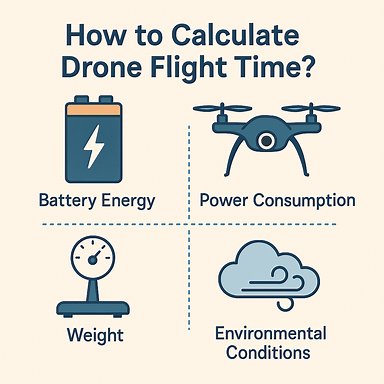
Οι περιβαλλοντικές συνθήκες περιπλέκουν περαιτέρω την εκτίμηση της διάρκειας λειτουργίας. Η πυκνότητα του αέρα μειώνεται με το υψόμετρο και τη θερμοκρασία, μειώνοντας την απόδοση των πτερυγίων και αναγκάζοντας τους κινητήρες να περιστρέφονται με μεγαλύτερη ταχύτητα για να διατηρήσουν την ώθηση. Οι χαμηλές θερμοκρασίες μειώνουν την απόδοση των μπαταριών επιβραδύνοντας τις χημικές αντιδράσεις, ενώ οι υψηλές θερμοκρασίες αυξάνουν το θερμικό φορτίο στους κινητήρες και τους ηλεκτρονικούς ελεγκτές ταχύτητας. Ο άνεμος έχει ιδιαίτερα σημαντική επίδραση: η πτήση ενάντια σε ισχυρό αντίθετο άνεμο μπορεί να διπλασιάσει την κατανάλωση ισχύος, ενώ η πτήση με υπέρθεση (tailwind) μπορεί να τη μειώσει. Δεδομένου ότι η περιβαλλοντική μεταβλητότητα είναι αναπόφευκτη, οι υπολογισμοί διάρκειας λειτουργίας περιλαμβάνουν συχνά ένα περιθώριο ασφαλείας, προκειμένου να διασφαλιστεί ότι το drone θα μπορέσει να επιστρέψει στο σημείο εκκίνησης ακόμη και υπό επιδεινούμενες συνθήκες.
Ένας άλλος σημαντικός παράγοντας είναι η κατάσταση υγείας της μπαταρίας ίδιας. Με την πάροδο του χρόνου, οι επαναλαμβανόμενοι κύκλοι φόρτισης-εκφόρτισης προκαλούν φθορά στην εσωτερική χημεία της μπαταρίας, αυξάνοντας την αντίσταση και μειώνοντας τη χωρητικότητά της. Αυτή η φθορά εκδηλώνεται ως πτώση τάσης κάτω από φόρτιση, γεγονός που μπορεί να προκαλέσει πρόωρα ειδοποιήσεις χαμηλής τάσης και να μειώσει τον χρόνο πτήσης. Η παρακολούθηση της κατάστασης υγείας της μπαταρίας μέσω μετρήσεων της εσωτερικής της αντίστασης και καταμέτρησης των κύκλων φόρτισης-εκφόρτισης επιτρέπει στους χειριστές να προβλέψουν την πτώση της απόδοσης και να αντικαταστήσουν τις μπαταρίες προτού αποδειχθούν αναξιόπιστες. Για τη διαχείριση στόλων μεσοπρόθεσμα και μακροπρόθεσμα, η παρακολούθηση της γήρανσης των μπαταριών είναι εξίσου σημαντική με τον υπολογισμό του χρόνου πτήσης.
Τα χαρακτηριστικά του ωφέλιμου φορτίου επηρεάζουν επίσης την αντοχή με τρόπους που εκτείνονται πέρα από το βάρος. Πολλά επαγγελματικά ωφέλιμα φορτία - όπως σαρωτές LiDAR, πολυφασματικές κάμερες και μονάδες επικοινωνίας - αντλούν ηλεκτρική ενέργεια από την μπαταρία του drone. Αυτή η βοηθητική κατανάλωση πρέπει να προστεθεί στην ισχύ πρόωσης κατά την εκτίμηση της συνολικής χρήσης ενέργειας. Ένα ωφέλιμο φορτίο που καταναλώνει 20 watt μπορεί να φαίνεται ασήμαντο, αλλά σε μια αποστολή 30 λεπτών καταναλώνει 10 βατώρες, κάτι που μπορεί να μειώσει τον χρόνο πτήσης κατά αρκετά λεπτά. Οι μηχανικοί πρέπει επομένως να λαμβάνουν υπόψη τόσο τις μηχανικές όσο και τις ηλεκτρικές επιπτώσεις των ωφέλιμων φορτίων κατά τον υπολογισμό της αντοχής.
Η επιλογή του προωθητή διαδραματίζει εντυπωσιακά μεγάλο ρόλο στη βελτιστοποίηση της διάρκειας πτήσης. Οι μεγαλύτεροι προωθητές με χαμηλότερη κλίση τείνουν να είναι πιο αποδοτικοί στη δημιουργία ώθησης σε χαμηλές στροφές, κάνοντάς τους ιδανικούς για drones που επικεντρώνονται στη διάρκεια πτήσης. Οι μικρότεροι προωθητές με υψηλή κλίση παράγουν περισσότερη ώθηση σε υψηλές ταχύτητες, αλλά είναι λιγότερο αποδοτικοί κατά την πτήση σε στάση. Η εξομοίωση των χαρακτηριστικών του προωθητή με τις απαιτήσεις της αποστολής μπορεί να οδηγήσει σε σημαντική βελτίωση της διάρκειας πτήσης. Παρομοίως, η τιμή KV του κινητήρα —δηλαδή ο αριθμός των στροφών ανά βολτ— επηρεάζει την απόδοση. Οι κινητήρες χαμηλής τιμής KV σε συνδυασμό με μεγάλους προωθητές παρέχουν συχνά ανώτερη διάρκεια πτήσης, καθώς λειτουργούν αποδοτικά σε χαμηλότερες στροφές.
Για να βελτιώσουν τις προβλέψεις διάρκειας λειτουργίας, οι μηχανικοί συχνά βασίζονται σε εμπειρικές δοκιμές. Οι σταθμοί μέτρησης ώθησης παρέχουν λεπτομερείς μετρήσεις ώθησης, ρεύματος, τάσης και απόδοσης για συγκεκριμένους συνδυασμούς κινητήρα-προωθητικής έλικας. Αυτά τα δεδομένα επιτρέπουν στους μηχανικούς να κατασκευάσουν καμπύλες απόδοσης που απεικονίζουν την κατανάλωση ισχύος σε σχέση με την παραγόμενη ώθηση. Γνωρίζοντας το βάρος του drone, μπορεί κανείς να προσδιορίσει την απαιτούμενη ώθηση ανά κινητήρα και να διαβάσει την αντίστοιχη τιμή ισχύος από την καμπύλη. Αυτή η μέθοδος είναι πολύ πιο ακριβής από την εξάρτηση από τις προδιαγραφές του κατασκευαστή ή απλές μετρήσεις σε κατάσταση αιώρησης.
Οι σύγχρονοι drones παράγουν επίσης εκτενή αρχεία τηλεμετρίας που καταγράφουν το ρεύμα, την τάση, τη θέση του γκαζιού και τις στροφές ανά λεπτό (RPM) των κινητήρων καθ’ όλη τη διάρκεια μιας πτήσης. Η ανάλυση αυτών των αρχείων παρέχει ενδείξεις σχετικά με τον τρόπο με τον οποίο μεταβάλλεται η κατανάλωση ενέργειας υπό πραγματικές συνθήκες. Με τον καιρό, οι χειριστές μπορούν να δημιουργήσουν προγνωστικά μοντέλα προσαρμοσμένα στο συγκεκριμένο drone, το φορτίο του και τον τύπο αποστολής. Ορισμένα προηγμένα συστήματα χρησιμοποιούν ακόμη και μηχανική μάθηση για να προβλέψουν τη διάρκεια της πτήσης με βάση ιστορικά δεδομένα, εισόδους σχετικές με το περιβάλλον και παραμέτρους αποστολής.
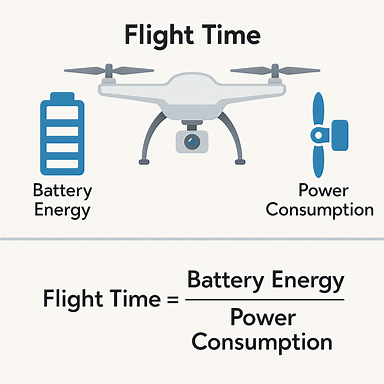
Παρόλη την πολυπλοκότητα αυτών των παραγόντων, ο βασικός υπολογισμός παραμένει εντυπωσιακά απλός: ο χρόνος πτήσης ισούται με τη χρησιμοποιήσιμη ενέργεια διαιρούμενη με τη μέση κατανάλωση ισχύος. Η πρόκληση έγκειται στον ακριβή προσδιορισμό αυτών των δύο τιμών. Η χρησιμοποιήσιμη ενέργεια εξαρτάται από τη χημεία της μπαταρίας, τη θερμοκρασία, τη γήρανση και τα όρια εκφόρτισης. Η μέση κατανάλωση ισχύος εξαρτάται από το βάρος, την αεροδυναμική, την απόδοση του συστήματος πρόωσης, τη δυναμική της αποστολής και τις περιβαλλοντικές συνθήκες. Με τη συστηματική ανάλυση κάθε παράγοντα, οι μηχανικοί μπορούν να παράγουν εκτιμήσεις διάρκειας λειτουργίας υψηλής αξιοπιστίας.
Σε επαγγελματικές λειτουργίες, η εκτίμηση της αντοχής δεν αποτελεί απλώς μια τεχνική άσκηση, αλλά μια απαίτηση ασφαλείας. Οι ρυθμιστικές διατάξεις απαιτούν συχνά από τα τηλεκατευθυνόμενα αεροσκάφη να διατηρούν ενεργειακό περιθώριο για απρόβλεπτα γεγονότα, όπως αλλαγές του ανέμου ή επείγουσες προσγειώσεις. Η ακριβής πρόβλεψη της διάρκειας πτήσης διασφαλίζει τη συμμόρφωση με αυτές τις ρυθμίσεις και μειώνει τον κίνδυνο απώλειας ισχύος στον αέρα. Για εμπορικές εφαρμογές, όπως χαρτογράφηση, επιθεώρηση και διανομή, η αντοχή επηρεάζει άμεσα την παραγωγικότητα και την οικονομική απόδοση. Ένα τηλεκατευθυνόμενο αεροσκάφος που μπορεί να παραμείνει στον αέρα ακόμη και λίγα λεπτά περισσότερο μπορεί να καλύψει σημαντικά μεγαλύτερη έκταση ή να ολοκληρώσει επιπλέον καθήκοντα ανά αποστολή.
Προβλέποντας το μέλλον, οι πρόοδοι στην τεχνολογία των μπαταριών υπόσχονται να μεταμορφώσουν τους υπολογισμούς διάρκειας λειτουργίας. Οι μπαταρίες λιθίου-θείου, οι στερεού ηλεκτρολύτη και οι με ανώδες υψηλής περιεκτικότητας σε πυρίτιο προσφέρουν υψηλότερες πυκνότητες ενέργειας σε σύγκριση με τις σημερινές χημείες LiPo και Li-ion. Οι κυψέλες καυσίμου υδρογόνου και τα υβριδικά συστήματα ισχύος προσφέρουν εναλλακτικές προσεγγίσεις για την επέκταση των χρόνων πτήσης, ιδιαίτερα για μεγάλα drones. Καθώς αυτές οι τεχνολογίες ωριμάζουν, οι μέθοδοι που χρησιμοποιούνται για τον υπολογισμό της διάρκειας λειτουργίας θα εξελιχθούν, αλλά οι βασικές αρχές της ενέργειας και της ισχύος θα παραμείνουν κεντρικές.
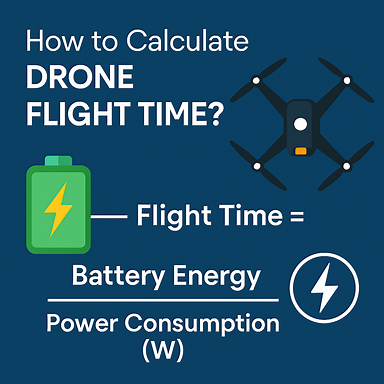
Συνοψίζοντας, ο υπολογισμός της διάρκειας πτήσης του drone απαιτεί μια εξαντλητική κατανόηση του τρόπου με τον οποίο η ενέργεια αποθηκεύεται, μετατρέπεται και καταναλώνεται. Αν και ο βασικός τύπος είναι απλός, η ακρίβεια σε πραγματικές συνθήκες απαιτεί προσεκτική λήψη υπόψη της συμπεριφοράς της μπαταρίας, της απόδοσης του συστήματος πρόωσης, της δυναμικής της αποστολής, των περιβαλλοντικών επιδράσεων και των χαρακτηριστικών του φορτίου. Συνδυάζοντας θεωρητική μοντελοποίηση με εμπειρική δοκιμή και ανάλυση δεδομένων, οι μηχανικοί μπορούν να προβλέψουν με εμπιστοσύνη τη διάρκεια πτήσης και να βελτιστοποιήσουν τα drones για τις ποικίλες αποστολές για τις οποίες σχεδιάστηκαν. Η διάρκεια πτήσης δεν είναι απλώς μια τεχνική προδιαγραφή· αντιπροσωπεύει τη συνολική ποιότητα του σχεδιασμού του drone και την ετοιμότητά του για λειτουργία.